
Information from the Hanoi Market Management Department (QLTT) said that functional forces have just discovered a large-scale line producing and distributing fake Acecook brand instant noodle soup powder, seizing about 250,000 packages of finished products preparing to be put on the market for consumption.
Previously, the Inspection Department under the Hanoi City Market Management Sub-Department received feedback on signs of trading in counterfeit food brands on e-commerce platforms. After reviewing and evaluating grounded information, the Sub-Department assigned Market Management Team No. 24 to deploy professional measures to verify related organizations and individuals.
In the process of monitoring business activities in the e-commerce environment combined with grasping the area, Market Management Team No. 24 discovered unusual signs for the "SOUP POWDER/SOUP POWER" product bearing the "ACECOOK" brand being advertised for sale on e-commerce platforms.
From the initial verification results, Market Management Team No. 24 coordinated with An Khanh Commune Police and An Khanh Commune Economic Department to develop an inspection plan, and at the same time expand verification to trace the origin of goods.
Conducting an inspection of a business household owned by Mr. N.T. C in An Khanh commune (Hanoi), functional forces discovered many "POT SOUP/SOUP POWER" products bearing the sign "ACECOOK" being displayed for sale. The household owner could not present invoices or documents proving the legal origin of the goods.

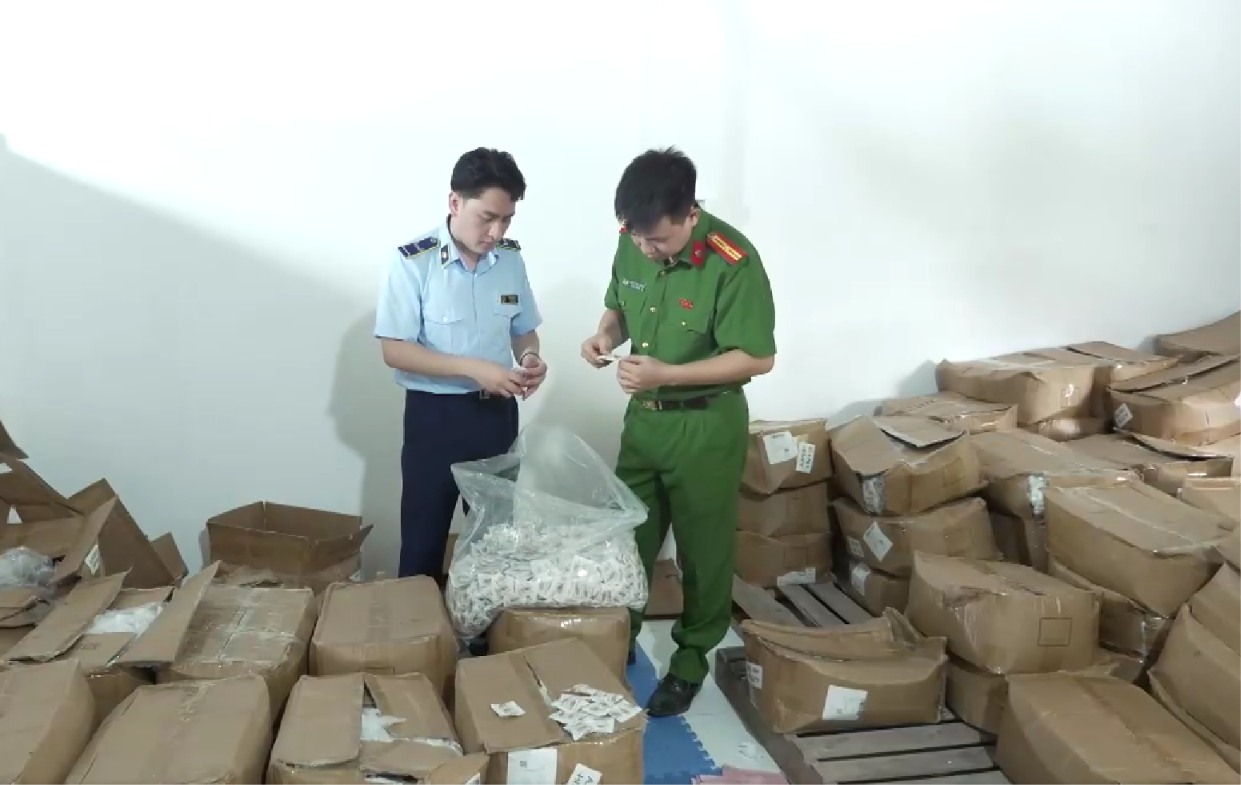
Continuing to expand the investigation, the inspection team discovered that the production facility in Ngai Cau village, An Khanh commune, owned by Ms. T.T. Y, was directly producing soup powder products bearing the "ACECOOK" logo and identification mark.
At the scene, functional forces discovered a large number of raw materials, food additives, pre-printed packaging with the "ACECOOK" brand, raw material mixing systems, automatic packaging machines and many production equipment.
Notably, functional agencies recorded 125 boxes of finished products, equivalent to about 250,000 packs of soup powder, along with 300 other packages of products that have been fully packaged and ready to be put on the market. The facility owner could not present invoices and documents proving the origin of raw materials, packaging and finished goods.
According to records of functional forces, the production facility is located in a damp, unsanitary warehouse in a remote area of Ngai Cau village. More than a dozen types of additives, colorings and flavorings are used to mix into finished soup powder.
All raw materials do not have papers proving legal origin, while the facility also does not meet food safety assurance conditions.
With the automatic packaging system, in just about an hour, the facility can produce thousands of packages of fake soup powder. Through inspection, functional forces seized nearly 200kg of soup powder that had been packaged and prepared to be delivered to consumption outlets.
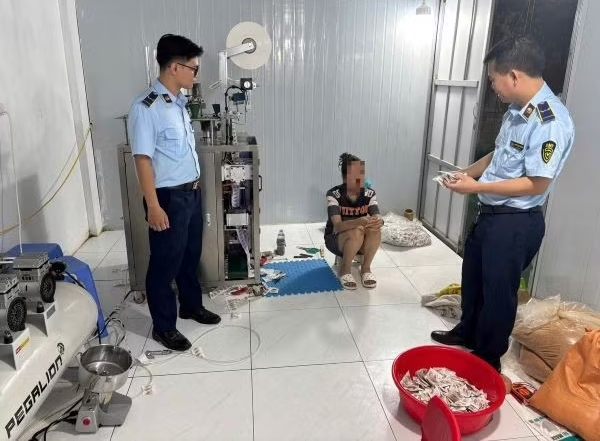
Working with Market Management Team No. 24, representatives of Acecook Vietnam Joint Stock Company confirmed that all "POWDER SOUP/SOUP POWER" products bearing the "ACECOOK" logo and letters discovered at the above-mentioned business households and production facilities are fake goods counterfeiting the Acecook brand that has been protected in Vietnam.
According to functional agencies, products after completion are mainly put on e-commerce platforms for consumption with retail prices from 2,500-2,900 VND per package. Because the packaging is similar to real goods, many consumers are easily confused when ordering.
Initial assessment shows that the case does not only stop at the act of trading in violating goods in the e-commerce environment but has formed an organized chain of production, distribution and consumption of counterfeit goods.
Based on documents and evidence collected, Market Management Team No. 24 determined that the establishment owned by Ms. T.T. Y showed signs of the act of producing and trading counterfeit food as prescribed in Article 193 of the Penal Code. The entire file and related exhibits have been transferred to An Khanh Commune Police for further investigation and handling according to their authority.
The incident continues to sound an alarm bell about the risk of fake food mixing in on e-commerce platforms. Functional agencies recommend that consumers should choose products from reputable stores, carefully check their origin and should not be greedy for cheap goods to avoid affecting their own health and rights.


