
On July 14 (local time), in real-world conditions with many difficulties and limitations in medical equipment, doctors at Level 2 Field Hospital No. 7 (BVDC2.7) of Vietnam at the United Nations Peacekeeping Mission in South Sudan diagnosed early, accurately and successfully operated on a case of acute appendicitis for a Mongolian soldier on duty at UNMISS. This is the 27th surgery performed by BVDC2.7 since deploying its mission at the Mission.
The patient was admitted to the hospital in a state of pain in the right iliac fossa. According to doctors at BVDC2.7, pre-operative diagnosis faces many difficulties because the clinical manifestations are not really typical. Abdominal ultrasound results record images suggesting appendicitis accompanied by end-to-colon inflammation and increased bowel peristaltism, easily confusing with some other digestive diseases.
In conditions where the hospital is not equipped with an abdominal CT scan system, doctors have relied on the close monitoring of clinical developments, assessing abdominal wall reaction signs and paraclinical results to make diagnoses and make timely surgical intervention decisions. This decision is of great significance, helping to prevent the risk of severe progression and dangerous complications for patients.
The surgery was performed at 3:00 PM on the same day. The surgical team was headed by Major, Master, Doctor Phan Van Hau, Head of the Department of Surgery - Specialist, BVDC2.7, as the main surgeon.
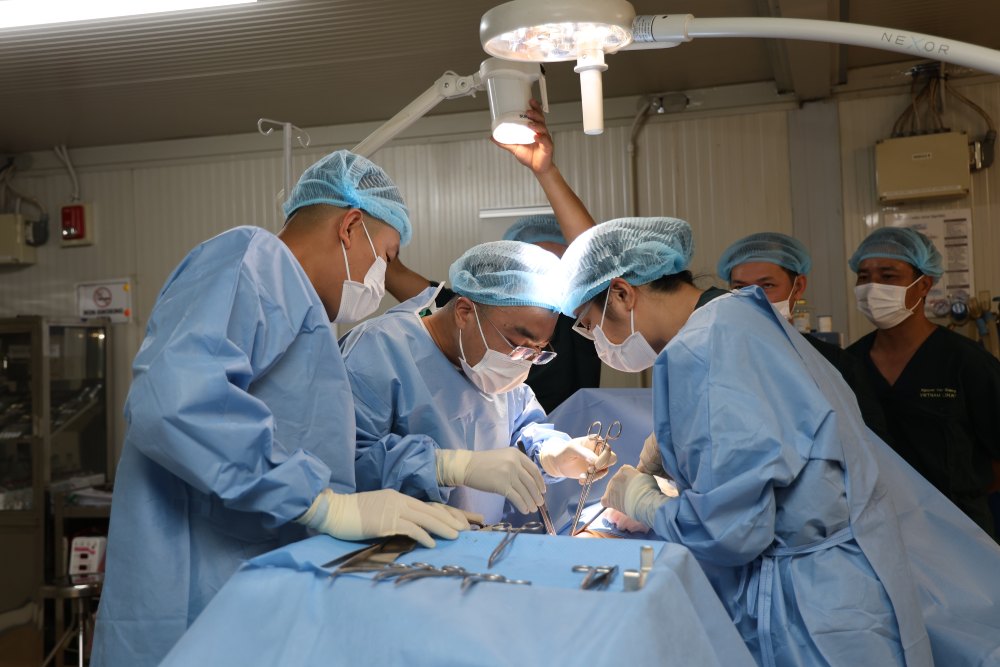
During the surgery, the team recorded that the appendix was located behind the manh tràng, inverted and covered by diaphragm, making it difficult to identify and expose the injury. This is a rare anatomical variant, making it more difficult to identify and access the appendix than in normal cases.
The limited surgical field of the McBurney incision further increased the complexity in the process of dissection and treatment of lesions. However, with professional experience, the smooth coordination of the anesthesia team, nurses and surgeons, inflamed appendix was accurately identified and safely removed.
After about 60 minutes, the team completed the surgery, the patient was awake, vital signs were stable and was transferred to the department to continue monitoring and post-operative care.
Major, Master, Doctor Phan Van Hau said that this is a case with a relatively complex anatomical variant, while the conditions for equipping diagnostic imaging in the field are still limited. Early detection, correct assessment of disease progression and timely surgery decisions are important factors to help the case be handled successfully, ensuring safety for the patient.
The success of the 27th surgery continues to affirm the professional capacity, emergency ability and effective handling of surgical cases of the staff of BVDC2.7.
This is also proof of the spirit of responsibility, professional bravery and dedication of the Vietnamese Green Helmets soldiers in performing the task of taking care of the health of the United Nations peacekeeping force and the international community in South Sudan.


