
Reliable support of society in the "digital information storm
On the occasion of the 101st anniversary of the Vietnamese Revolutionary Press Day (June 21, 1925 - June 21, 2026), General Secretary and President To Lam wrote an article "Vietnamese Revolutionary Press in the Digital Age". The article outlined strategic orientations for the country's press in the context of digital transformation, artificial intelligence (AI), big data and social networks are profoundly changing the media environment.
The article by General Secretary and President To Lam clearly stated that in the digital space, almost every individual can report. Social media accounts can create influence in a certain community.
However, that change does not reduce the role of revolutionary journalism. On the contrary, when there is too much information, society needs reliable addresses to determine what is right, what needs to be verified, what is just crowd emotion or intentional arrangement.
The press must be a place where people come to when they need reliable confirmation, not a place to follow trends. Society needs a reliable place to understand the truth" - General Secretary and President To Lam's article clearly stated.
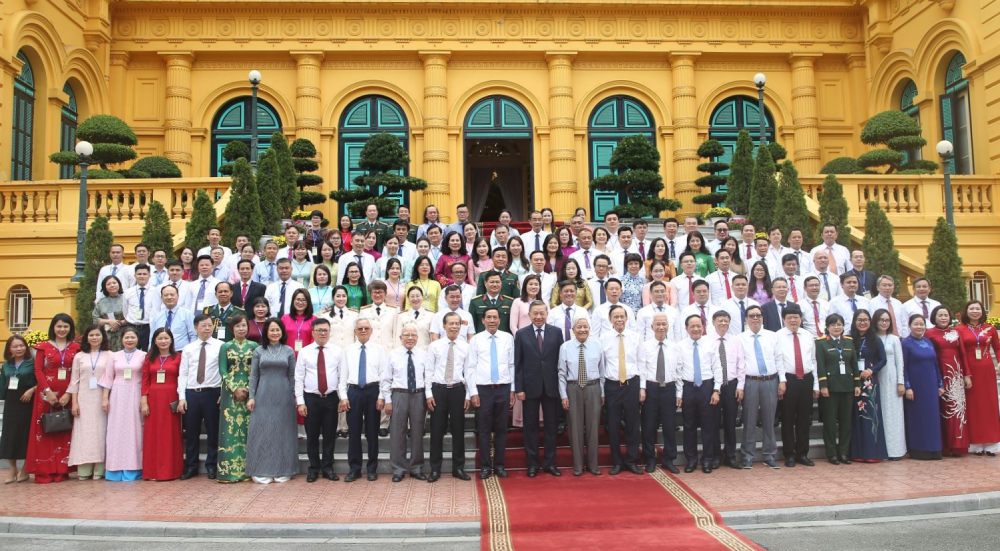
According to Assoc. Prof. Dr. Bui Hoai Son - a full-time member of the National Assembly's Committee for Culture and Society, a major message from the article by General Secretary and President To Lam is that revolutionary journalism must become a reliable support for society in the digital information "storm".
The press cannot compete with social networks by being hasty, sensational or easygoing. The press must affirm itself with the most core thing: Verified truth, responsible information, in-depth analysis, humane attitude and the goal of serving the common interest.
In the digital age, fast is necessary, but right is the foundation. Attractive is necessary, but beneficial to society is value. Widespread spread is necessary, but cannot be traded by commercializing pain, exploiting privacy or chasing after crowd emotions.
A strong press is not the most noisy press, but the press most trusted by the public. A reputable newspaper is not only because it appears the most on the phone screen, but because when society is confused, people come there to know what is right, what needs to be calmly considered, what needs to be protected" - Assoc. Prof. Dr. Bui Hoai Son shared.
Digital journalism is not old journalism placed on a new platform
Also in the article, General Secretary and President To Lam clearly stated that digital transformation of the press cannot be simply understood as adding an electronic page, opening a social media account or equipping modern equipment. It must be a comprehensive innovation in leadership thinking, editorial model, production process, data management, content distribution, public measurement, press economy and professional culture. Digital journalism is not old journalism placed on a new foundation, but a new way of organization in the new context.

According to Assoc. Prof. Dr. Bui Hoai Son, this is the requirement and strategic thinking in implementing digital transformation of the press. The article by the General Secretary and President sets out a very important requirement that digital transformation of the press is not about putting the old way of doing things on a new foundation.
It is not just having an online newspaper, fanpage, video channel, modern studio or data analysis software that means digital transformation. Digital transformation of journalism is first and foremost the transformation of thinking, editorial model, working process, verification capacity, data management, content distribution, copyright protection and building a healthy press economy.
A modern digital editorial office must be a place where data is used to better understand the public, detect problems earlier, verify information more accurately and create more in-depth journalistic products.
Artificial intelligence can help journalists work faster, but cannot replace the conscience, bravery and responsibility of journalists. Technology can help journalism go further, but only professional ethics can help journalism go in the right direction.
That requires each journalist to reinvent themselves. Digital journalists not only know how to write, film, edit, and publish, but also must know how to read data, verify information sources, understand algorithms, grasp public psychology, dialogue with experts and explain policies in easy-to-understand language.
Journalists cannot let social networks lead them, and even more cannot post before verifying later. Before each piece of information, journalists need to ask themselves: is this true, is it necessary, is it beneficial to society, does it cause unreasonable harm to people" - Assoc. Prof. Dr. Bui Hoai Son analyzed.


