
On March 18, continuing the 55th session, the National Assembly Standing Committee gave opinions on the draft Capital Law (amended).
Presenting the basic content of the draft Law, Deputy Minister of Justice Phan Chi Hieu said that the purpose of amending the law is to improve a specific, superior, stable institution with a long-term vision, suitable to the position, role, and unique nature of the Capital.
With that orientation, the new draft focuses on decentralizing power to Hanoi, creating maximum space to increase the proactiveness, creativity and self-responsibility of the Capital's government; and at the same time strengthening the requirements for power control, inspection, supervision and accountability.
According to statistics, 180 powers are assigned to the Hanoi city government, including 49 powers that have been stipulated by the 2024 Capital Law and Resolution No. 258 of the National Assembly; 47 powers that are different from the regulations of higher-level State agencies and 84 new powers that do not have regulations from higher-level state agencies...
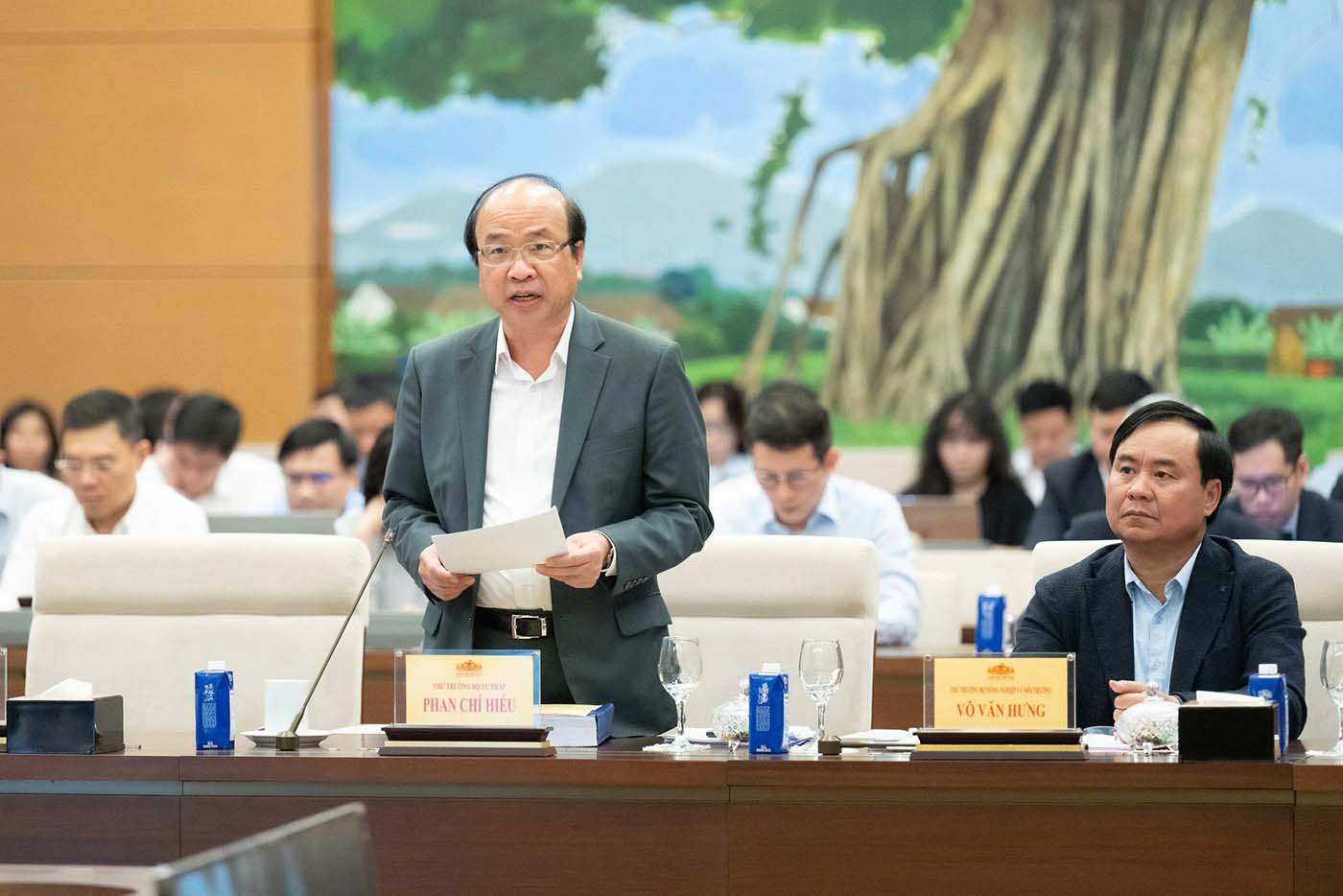
The draft revised Capital Law also stipulates that the City is allowed to decide to pilot new mechanisms and policies, different from laws and resolutions of the National Assembly or for issues not yet regulated by law to be applied within the administrative boundaries of Hanoi city.
Do not pilot mechanisms and policies in the fields of national defense, security, foreign affairs, religion and other fields directly related to national sovereignty according to the provisions of law.
Appraising the draft Law, Chairman of the Law and Justice Committee Hoang Thanh Tung said that the Standing Committee agreed with the comprehensive amendment of the Capital Law in 2024.
Regarding empowering the Capital government to issue regulations with contents different from the regulations of higher-level state agencies, Mr. Hoang Thanh Tung assessed that this is a very strong decentralization mechanism, which can create flexible room in urban management and allow testing new policies suitable to the specific development conditions of the Capital.
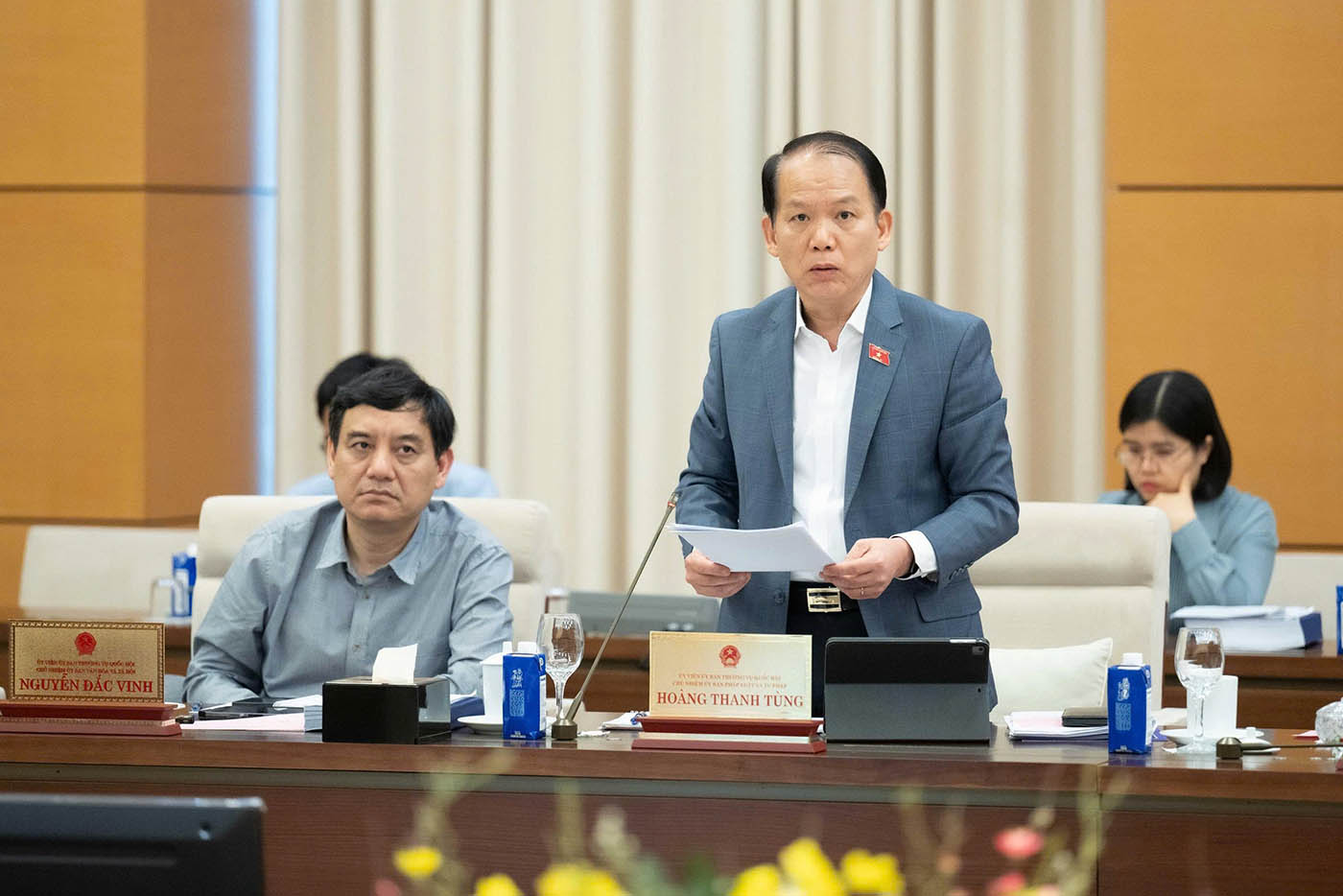
To ensure strong decentralization but still maintain discipline and unity of the legal system, the thẩm tra agency proposes to clarify the scope of fields allowed to issue regulations different from the regulations of higher-level State agencies, and should only be limited to fields associated with specific urban governance requirements or needing to test new policies.
At the same time, it is necessary to clearly stipulate the principles, conditions and procedures for issuing these documents, including the requirement to assess policy impacts and consult relevant agencies and organizations.
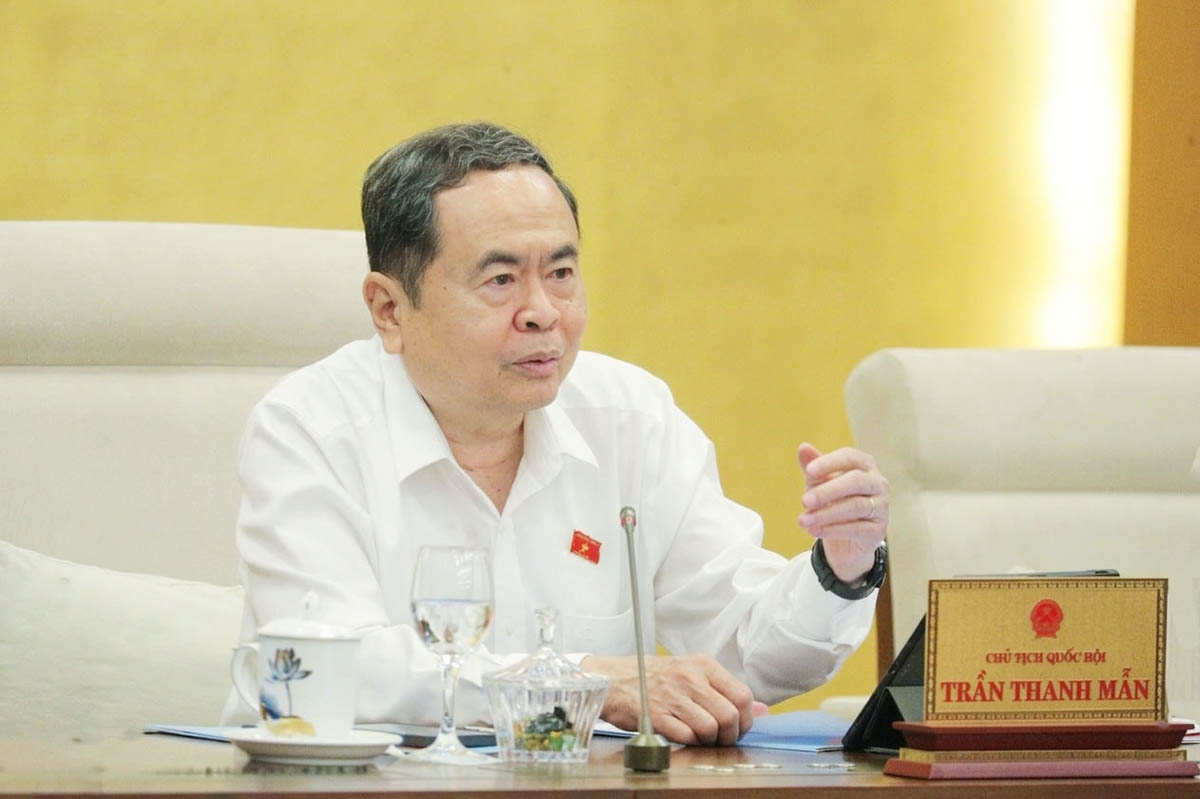
At the meeting, Politburo Member, National Assembly Chairman Tran Thanh Man assessed that the amendment of the Capital Law this time is a historic step forward with a long-term vision, focusing on granting maximum authority, ensuring comprehensive autonomy for the Capital, and creating breakthroughs in administrative procedure reform.
Emphasizing the necessity of maximum decentralization and comprehensive autonomy for Hanoi, resolving prolonged administrative procedure bottlenecks to create development space for Hanoi, but National Assembly Chairman Tran Thanh Man noted that issues such as land and environment are prone to negativity and corruption if there is no control.
Therefore, the National Assembly Chairman said that it is necessary to supplement regulations on publicity and post-inspection and pilot evaluation mechanisms in the draft Law...


