
Expected to reduce nearly half of the number of villages and residential groups
Implementing Plan No. 01 of Hai Phong City People's Committee on arranging and reorganizing villages and residential groups in the area, many localities have urgently deployed conferences to thoroughly grasp, develop projects and collect people's opinions.
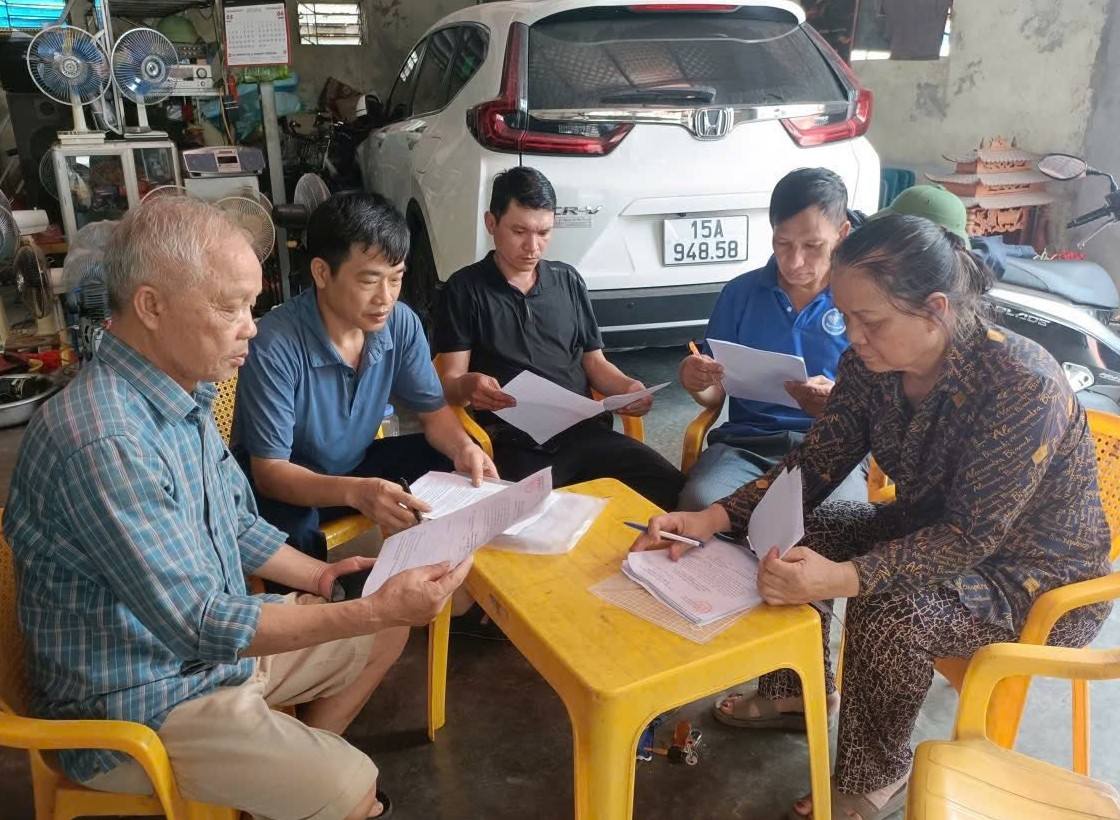
In Hai An ward, the Ward People's Committee has just organized a conference to deploy the arrangement and reorganization of residential groups with the participation of local leaders and representatives of 55 residential groups in the area.
According to the People's Committee of Hai An ward, the locality currently has 55 residential groups with 30,893 households, which were received in their original state from wards in Hai An district before. Based on the new regulations on household size, the locality will implement the arrangement of residential groups that do not meet standards. After arrangement, the number of residential groups will decrease from 55 to 40, and 15 residential groups will be reduced.
For the cultural institution system, the whole ward currently has 30 cultural houses and 1 sports area. After arrangement, 29 cultural houses will continue to be used to serve community activities; one cultural house located within the Ring Road 3 Project will be handed over to serve the project implementation.
Party cell secretaries, heads of residential groups, and heads of Fatherland Front committees in the area all expressed high agreement with the arrangement plan. Many opinions believe that the reorganization of residential groups is necessary to streamline the apparatus, improve the efficiency of state management and create favorable conditions for the implementation of socio-economic development tasks.
In Tien Minh commune, the locality has also organized a conference to deploy the plan to arrange and reorganize villages and guide people to get opinions according to regulations. According to the plan being built, the commune will arrange 38 existing villages into 15 villages, reducing 23 villages. The villages after arrangement basically ensure the scale of households according to regulations, in accordance with geographical conditions, population, historical and cultural traditions, community activities and state management requirements in the locality.
According to the Hai Phong Department of Home Affairs, by the beginning of June 2026, 112/114 communes, wards, and special zones in the city have completed the development of plans to arrange and reorganize villages and residential groups. The review results show that the whole city currently has 3,086 villages and residential groups, including 1,598 villages and 1,488 residential groups. Among them, there are 2,089 units that do not meet the standards for household size according to new regulations of the Government.
According to the combined plan from localities, it is expected that 2,524 villages and residential groups will be arranged. After completion, the whole city will have 1,723 villages and residential groups, a decrease of 1,363 units compared to the present. The naming of new villages and residential groups is implemented based on historical, cultural, traditional, customary and practical management requirements; encouraging the use of existing names before arrangement, ensuring uniformity and avoiding duplication within the same commune-level administrative unit.
Ensuring regimes and policies for non-specialized workers
Along with the arrangement of residential units, Hai Phong also implements policies for non-specialized personnel at the grassroots level. From July 2025 to May 1, 2026, the city has approved 16 rounds of settlement regimes for 1,952 cases subject to streamlining. By the end of May 2026, the whole city still has 1,250 non-specialized commune-level personnel who will continue to be reviewed, arranged or settled according to regulations.
The city also assigns agencies, units, and localities to review, statistically, and promptly resolve regimes for cases of resignation, cessation of participation in activities or continued assignment of work after arrangement; ensure the legitimate rights of grassroots cadres, and create consensus in the process of implementing the plan.
At the same time, assigning the Department of Culture, Sports and Tourism to preside over and coordinate with localities and relevant agencies to develop plans to arrange, arrange, and handle redundant cultural houses and sports areas after arrangement, ensuring the effective use of public assets, meeting the community living needs of the people and in accordance with the general plan of the city.
The plan also requires infrastructure in new villages and residential groups to ensure conditions to serve people's activities and organize community self-management activities, contributing to improving the quality of cultural life at the grassroots level. Propaganda work will continue to be promoted to help people understand the purpose, meaning, and benefits of arranging villages and residential groups, creating consensus on arrangement plans, arranging non-specialized personnel, handling redundant cultural houses and sports areas, and naming new villages and residential groups.


