
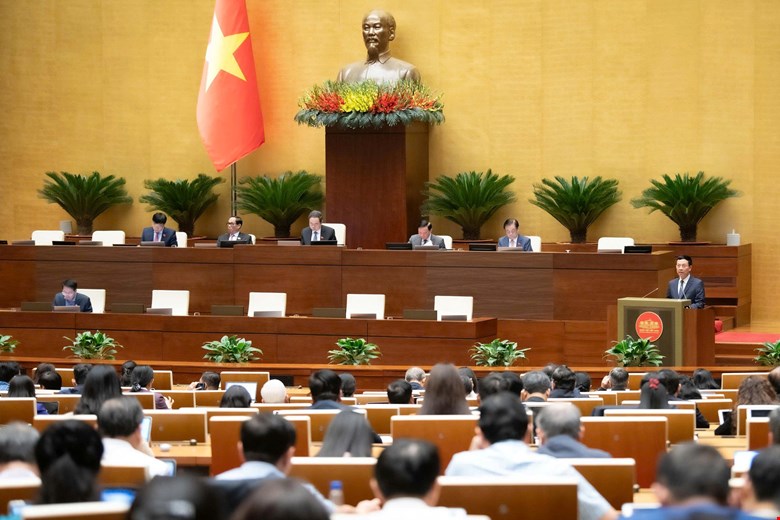
On the afternoon of December 10, the National Assembly passed the Law on Artificial Intelligence (AI) with the overwhelming majority of delegates in favor. The law takes effect from March 1, 2026.
According to the law, suppliers classify AI systems themselves before putting them into use. A system classified as having an average risk or a high risk must have an attached profile.
The law specifically stipulates prohibited acts, including the use of fake elements or simulations of real people and events to deceive or manipulate human perception and behavior in a deliberate and systematic manner, causing serious damage to human rights and legitimate interests.
Taking advantage of the weaknesses of vulnerable groups, including children, the elderly, people with disabilities, ethnic minorities or people with civil act capacity limitations, people with difficulty in perception, people with difficulty in controlling behavior, to cause harm to themselves or others.
Creating or disseminating fake content that can seriously endanger national security, order, social safety, etc.
According to the law, organizations and individuals who violate the provisions of this law and other provisions of the law related to AI will be subject to administrative sanctions or criminal prosecution, and if they cause damage, they must be compensated according to the provisions of civil law.
In case a high-risk AI system is managed, operated and used in accordance with regulations but still causes damage, the implementing party must be responsible for compensating the victims. After compensation, the implementing party requests the supplier, developer or related parties to return the compensation if there is an agreement between the parties.
The responsibility for compensation for damages is exempted in cases where the damage occurred entirely due to the intention of the victim; damages occurred in cases of force majeure or urgent situations, unless otherwise provided by law.
In case the AI system is violated, controlled or illegally intervened by a third party, the third party must be responsible for compensation for damages. In case the implementing party or supplier is at fault for allowing the system to be penetrated, having controls or illegally intervening, it must jointly compensate for damages according to the provisions of civil law.
The Government stipulates in detail the administrative sanctions for violations caused by the AI system.
On the same afternoon, the National Assembly also passed the Law amending and supplementing a number of articles of the Law on Intellectual Property (SHTT). This Law takes effect from April 1, 2026.
Accordingly, the law supplements regulations on management and exploitation of SHTT rights. Specifically, owners of SHTT rights are allowed to use SHTT rights to carry out civil, commercial, investment and other related transactions according to regulations.
The State encourages the exploitation of SHTT rights, use of SHTT rights to contribute capital or mortgage to borrow capital according to the provisions of the law on investment, enterprises, credit and other relevant legal provisions.


