
Concluding at the working session with the Standing Committee of the Ho Chi Minh City Party Committee on the morning of June 13, Prime Minister Le Minh Hung said that the Land Law, Housing Law and Real Estate Business Law will be amended in the near future.
According to the Prime Minister, developing rental housing is a strategic priority and will be specified in the law. Leased housing will be state-owned, not for sale but for long-term lease, possibly up to 30 years, with appropriate rental standards, regulations and conditions.
When developing commercial urban areas, it is necessary to minimize low-rise housing, prioritize apartments and high-rise buildings. "In new urban areas, a part of the area must be allocated for the development of state-owned rental housing, sharing the technical and social infrastructure of the urban area" - the Prime Minister clearly stated.
The Prime Minister emphasized that the State needs to play a leading role by allocating initial investment capital. Ho Chi Minh City needs to review and effectively exploit the surplus land fund and housing fund that has not been used to create more resources for the housing development program.
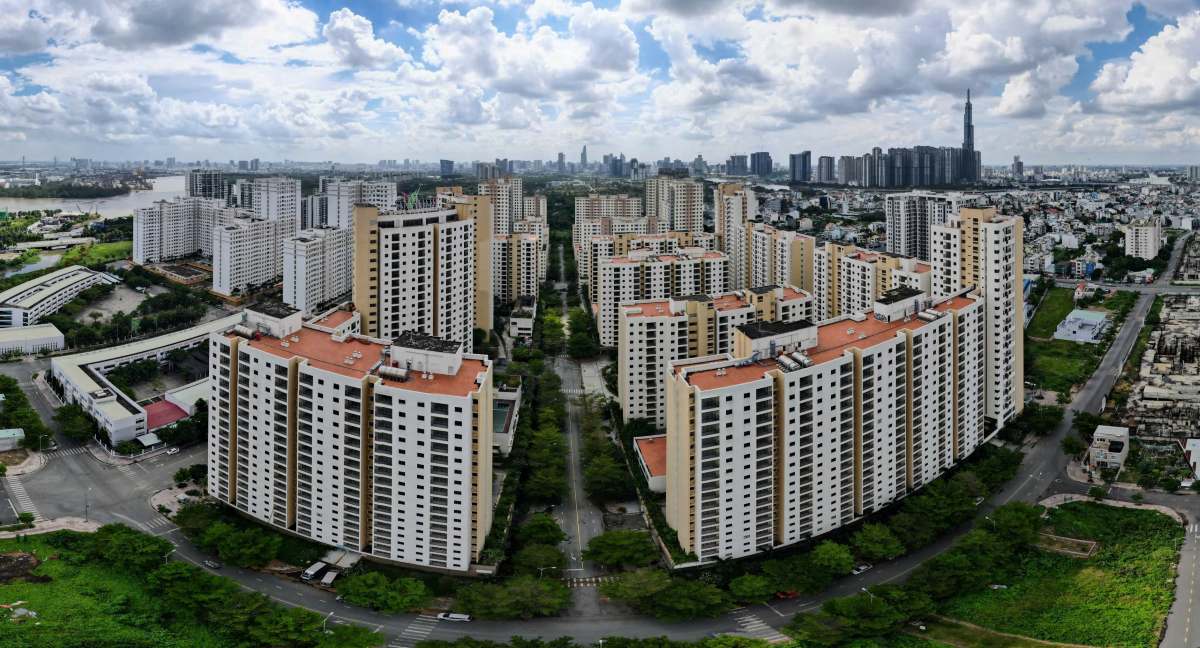
In addition to budget capital, the Prime Minister believes that for sustainable development, it is necessary to strongly mobilize resources from the private sector.
The Prime Minister agreed with Ho Chi Minh City's proposal to build mechanisms to support investors such as long-term capital sources with appropriate interest rates so that businesses can feel secure in investing, operating and exploiting rental housing in the long term.
According to the Prime Minister, the Ministry of Finance and the State Bank have been assigned the task in July to propose financial mechanisms to support this sector. Some solutions being studied include issuing bonds to create capital for the Vietnam Bank for Social Policies or allowing this bank to issue bonds with government guarantees.
In addition, the State Bank may also consider a long-term refinancing mechanism for the Vietnam Bank for Social Policies to create medium and long-term credit sources with reasonable interest rates for social housing and rental housing projects.
The Prime Minister also suggested stronger solutions. For social housing projects that have been completed but have not been sold, Ho Chi Minh City can study a mechanism to propose repurchasing to convert to the rental housing model.
According to the Prime Minister, there are many ways to mobilize resources to develop social housing and rental housing, from the state budget to private capital sources. However, it is important that Ho Chi Minh City proactively propose new mechanisms and policies.
Issues that are not yet regulated by law must be boldly proposed. From now until the end of the year, relevant laws will be completed and promulgated. Ho Chi Minh City needs to identify the goal of strongly developing rental housing, in parallel with continuing to develop commercial housing" - the Prime Minister emphasized.
According to the Ho Chi Minh City People's Committee, the total housing fund for rent belonging to the city's public assets is about 13,668 rooms, apartments and 40,980 student accommodations.
In the coming time, Ho Chi Minh City orients to develop about 10,000 units to serve resettlement and officials and civil servants; about 15,000 worker dormitories in industrial parks and export processing zones; and at the same time, convert about 8,000 units from the resettlement housing fund and surplus public assets to social housing for rent.
Ho Chi Minh City sets a target to develop 50,000 social housing units for rent in the period 2026 - 2030. Currently, 7 businesses and the Ho Chi Minh City Labor Federation have committed to participating in the development of about 15,000 units. It is expected that the first 6,000 units will be started in July 2026.


