
On March 4, the Standing Committee of the Vietnam Fatherland Front Committee of Da Nang City coordinated with the People's Committee, the City Election Committee and the wards: Thanh Khe, An Khe, Hai Chau and Hoa Cuong to organize a meeting between voters and candidates for the 16th National Assembly, term 2026-2031, presenting the action program according to the law at constituency No. 1, Da Nang City.
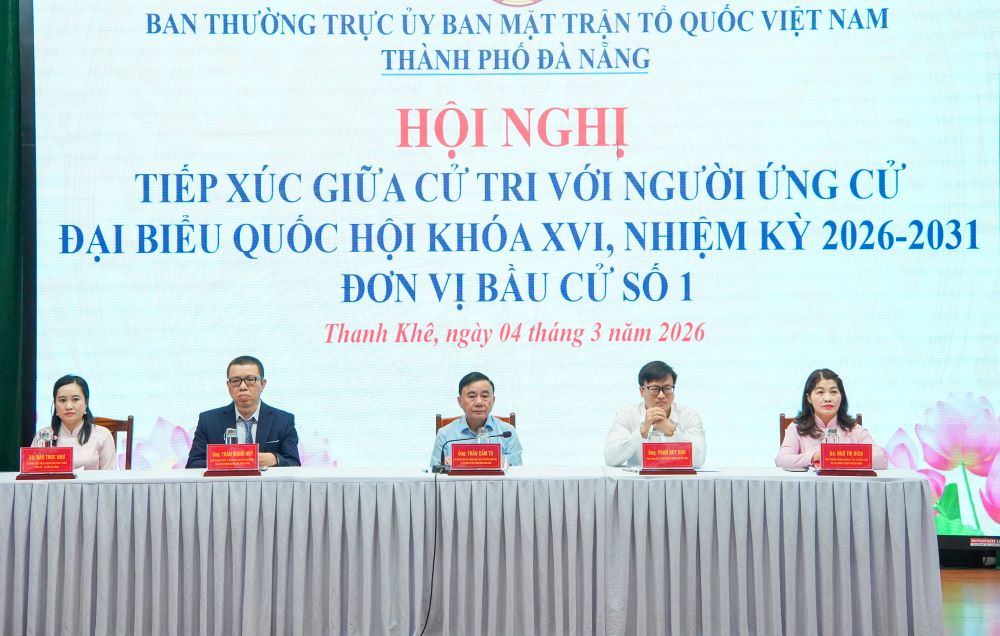
Among them, 5 people participating in the election of National Assembly deputies include: Mr. Tran Cam Tu - Member of the Politburo, Standing Secretary of the Secretariat, Secretary of the Party Committee of Central Party agencies; Mr. Phan Duy Anh - Deputy Director of Da Nang City Department of Finance; Mr. Tran Manh Huy - Chairman of the Board of Directors of HTV Blockchain Solution Joint Stock Company, lecturer of Da Nang University of Architecture; Ms. Ngo Thi Bich - Deputy Head of Price and Public Asset Management Department, Da Nang City Department of Finance; Ms. Dao Thuc Nhu - specialist of Da Nang Institute for Socio-Economic Development Research.
At the conference, Mr. Tran Cam Tu - Standing Secretary of the Secretariat, Secretary of the Party Committee of Central Party agencies, candidate for National Assembly Deputy of the 16th term, term 2026-2031 - answered voters' opinions.
Accordingly, Mr. Tran Cam Tu and the delegation of candidates for the 16th National Assembly session recorded 14 heartfelt and responsible opinions from voters, in which many contents focused on mechanisms and policies to invest in upgrading and renovating works to prevent, combat and minimize damage caused by natural disasters.
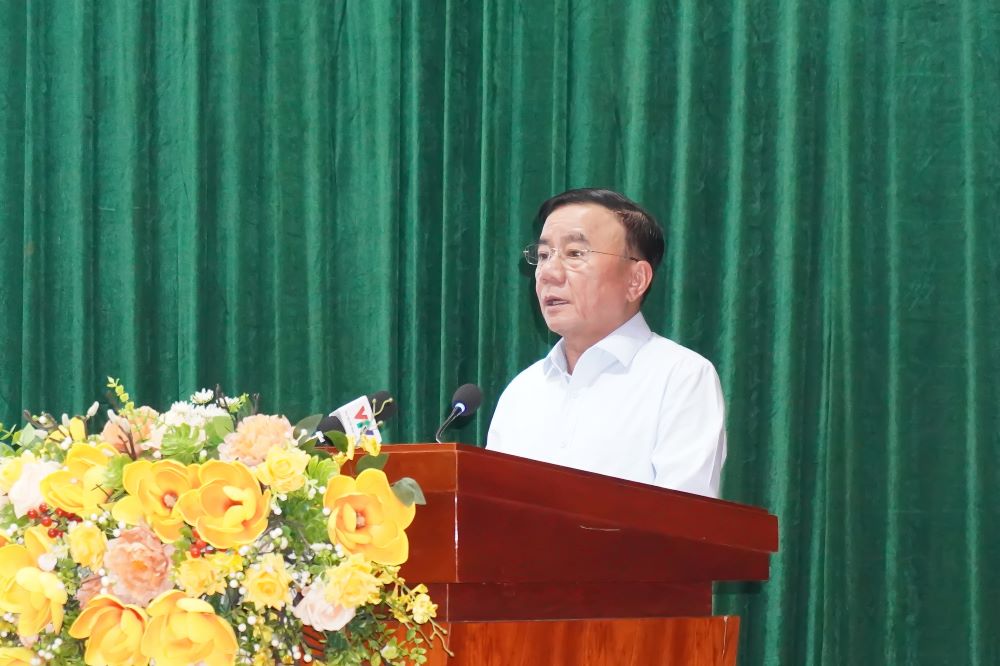
According to the Standing Committee of the Secretariat, Da Nang is a locality that is frequently affected by storms and floods, sea level rise, while the frequency and intensity of natural disasters are increasing.
The requirement is not only to overcome the consequences but also to strongly shift to preventive thinking, proactive adaptation and sustainable development. If we only worry about fighting each storm, it will not be sustainable," he said.
Regarding solutions, he said that he will work with the Politburo, the Secretariat, the National Assembly, and the Government to lead and direct the review and completion of the legal system on disaster prevention and control, irrigation, dykes, and public investment in a synchronous direction, linking socio-economic development planning with disaster prevention and control planning and climate change adaptation.
Along with that, priority is given to allocating medium and long-term resources for essential infrastructure projects that are preventive such as drainage systems, flood prevention, seawalls, regulating lakes, tide control works; investing with focus and key points, avoiding spreading out and ensuring efficiency.
The Standing Committee of the Secretariat also emphasized the study of mechanisms to mobilize resources, promote public-private partnerships in infrastructure investment adapting to climate change, ensuring public interests, security, and long-term safety. In particular, it is necessary to strengthen information disclosure, apply science and technology, build early warning systems and improve community supervision capacity in the management, operation, and maintenance of disaster prevention and control works.
When there is full information and early warnings, the ability to prevent and limit damage will be much higher," Mr. Tu emphasized.


