
Also attending were Politburo members: Nguyen Duy Ngoc, Secretary of the Party Central Committee, Head of the Central Organization Commission; Le Minh Tri, Secretary of the Party Central Committee, Head of the Central Internal Affairs Commission; General Nguyen Trong Nghia, Secretary of the Party Central Committee, Director of the General Department of Politics of the Vietnam People's Army; Nguyen Thanh Nghi, Secretary of the Party Central Committee, Head of the Central Policy and Strategy Commission; General Phan Van Giang, Deputy Prime Minister, Minister of National Defense; General Luong Tam Quang, Minister of Public Security; Tran Luu Quang, Secretary of the Ho Chi Minh City Party Committee,...
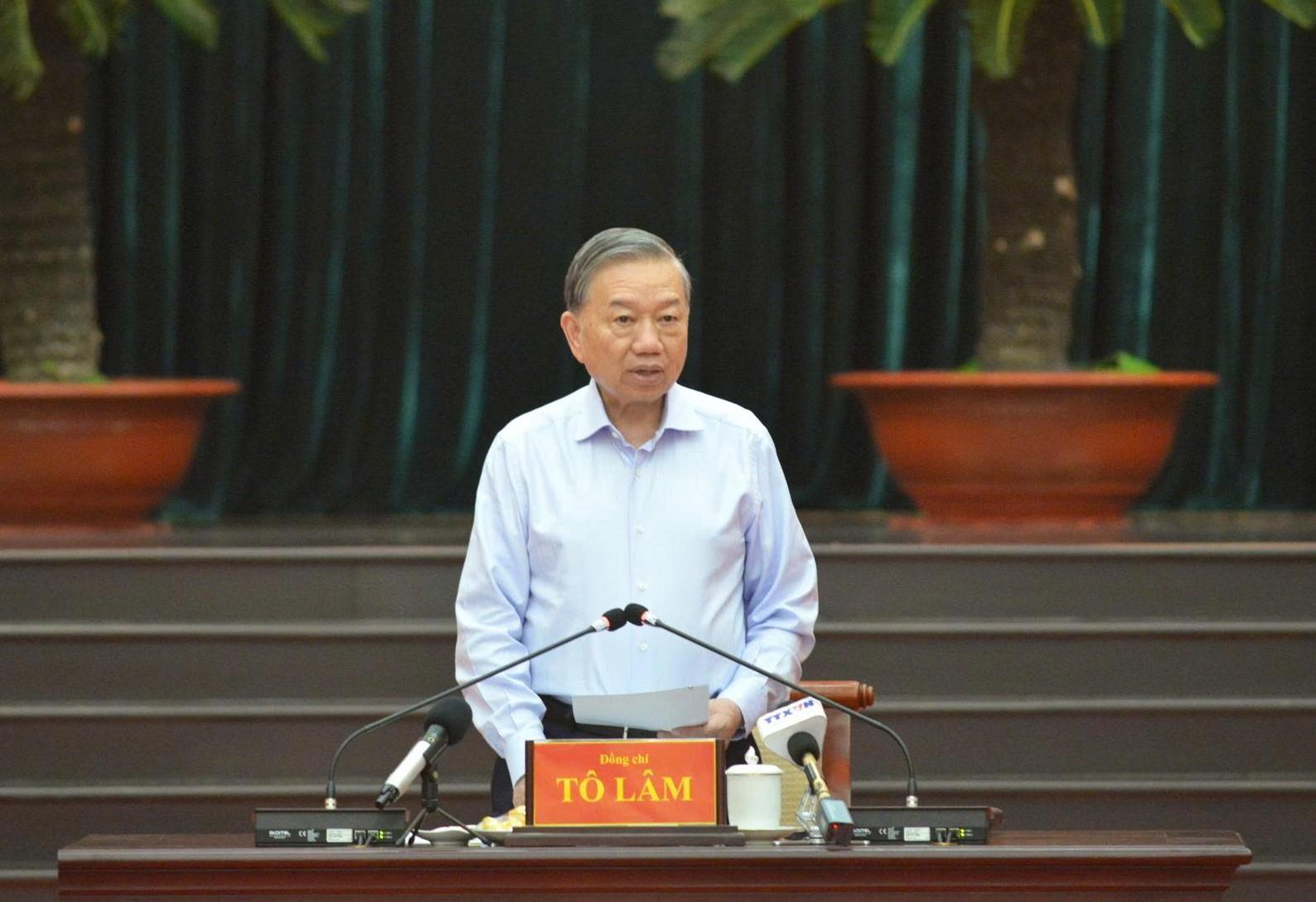
According to the report of the Ho Chi Minh City Party Committee, the thorough grasp and organization of the implementation of the Resolution of the 14th Party Congress has been urgently, synchronously, and methodically implemented by the City from the city to the grassroots level, ensuring that 100% of key cadres and party members are fully educated and absorbed.
In the context of the world economy still facing many fluctuations, Ho Chi Minh City still recorded positive signals. In the first quarter of 2026, GRDP increased by 8.27% (8.57% if crude oil is not included) - the highest level in about 10 years. Total social investment reached 141.781 billion VND, up 10.7%; total retail sales of goods and service revenue increased by 13.3%; industrial production index (IIP) increased by 11%.
Budget revenue reached 247.280 billion VND, equal to 30.8% of the estimate and up 19% compared to the same period. Tourism continued to recover strongly, with revenue of about 150,000 billion VND, welcoming 19.3 million visitors. FDI attraction reached nearly 2.9 billion USD, a breakthrough increase of 219%.
Notably, Ho Chi Minh City has started many large projects with a total capital of nearly 20 billion USD, and at the same time removed obstacles for 831/838 projects, with a total capital of more than 205,000 billion VND, thereby liberating significant resources for development.
The two-level local government model operates smoothly, ensuring continuous public service provision for people and businesses.
In parallel, the City is preparing to organize activities to celebrate the 50th anniversary of the honorable Saigon - Gia Dinh City named after President Ho Chi Minh (July 2, 1976 - July 2, 2026).
Key implementation focuses include: Caring for people with meritorious services, poor households, and workers; promoting the construction of gratitude houses and charity houses; relocating houses along canals and ditches, improving urban aesthetics; accelerating the progress of at least 200 key projects, prioritizing strategic infrastructure with spillover effects.
Some typical projects expected to start construction this time include: Thu Thiem - Long Thanh railway line; Ho Tram - Long Thanh airport expressway; expansion of Nguyen Tat Thanh road associated with riverside park; Cai Mep Ha container port.
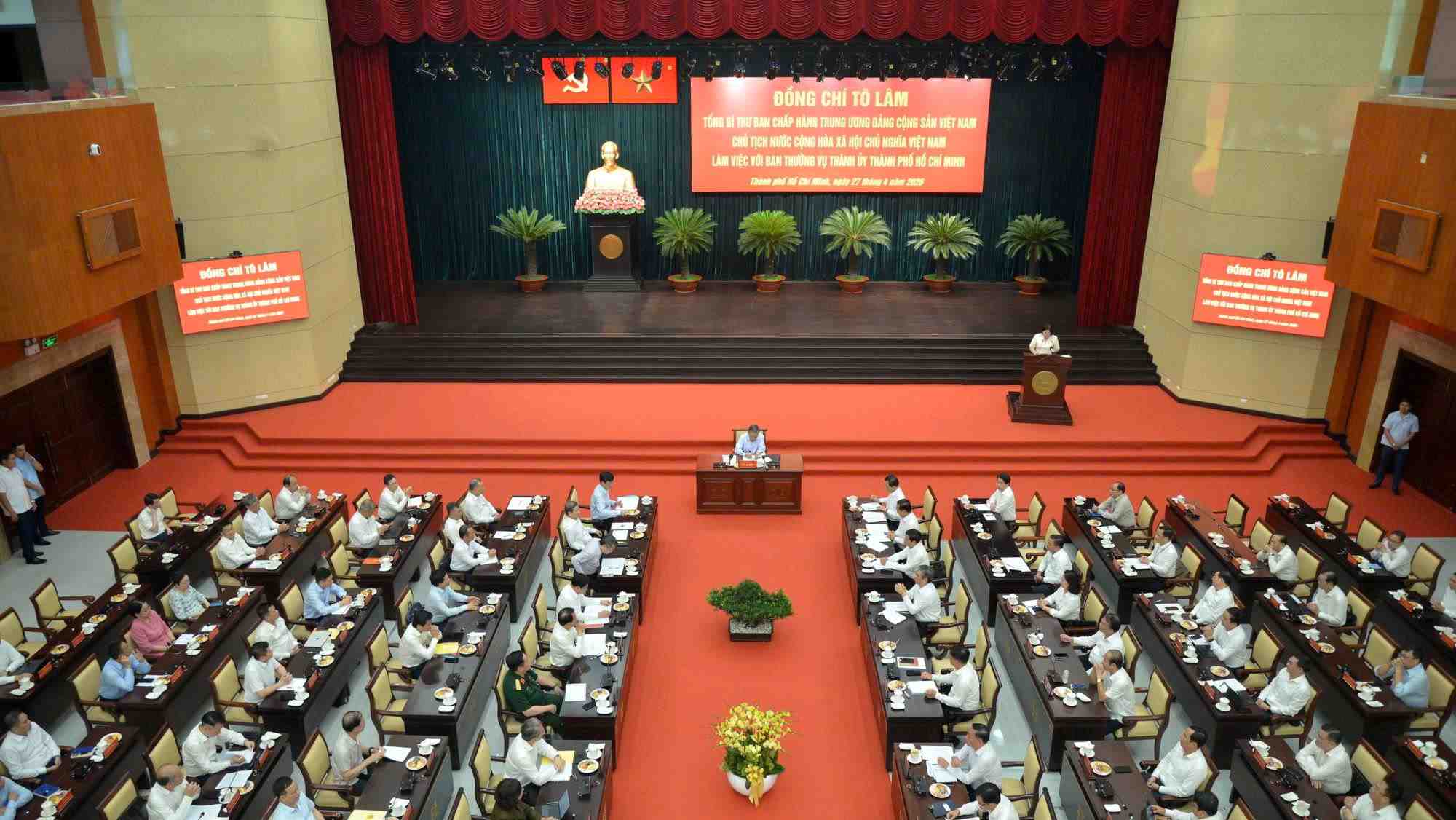
In the coming time, Ho Chi Minh City will focus on synchronously implementing solutions, striving for total social investment capital to reach about 30% of GRDP (equivalent to 1.2 million billion VND).
Ho Chi Minh City also strives to disburse 100% of the public investment capital plan for 2026, about 148,000 billion VND; remove obstacles in site clearance, and promote the start of large projects from many sources of capital.
The city aims to complete 28,500 social housing units in 2026, prioritizing the development of rental housing. At the same time, focus on handling existing problems such as traffic congestion, flooding, environmental pollution and building a drug-free city.
Notably, Ho Chi Minh City is studying the implementation of a free bus policy to reduce personal vehicles, contributing to reducing congestion and pollution.
Ho Chi Minh City will summarize Resolution 31-NQ/TW, as a basis for proposing new resolutions and building the Special Urban Law.
At the same time, the City orients the development of new industries, especially the cultural industry, linking heritage preservation with digital transformation to promote sustainable growth and improve the quality of life.


