
Basically forming a multi-layered, inclusive, and digitized social security system
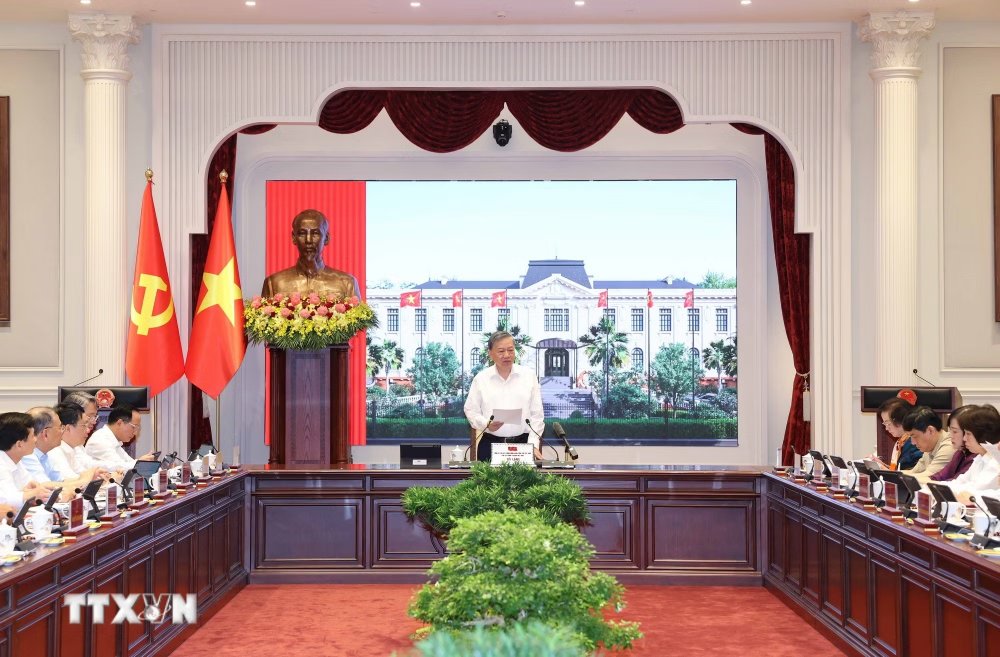
On the afternoon of August 25, in Hanoi, General Secretary and President To Lam chaired a working session with the Government Party Committee and relevant agencies on the implementation of social security policies, especially for vulnerable groups, proposing policies and solutions for the coming time, according to VNA.
Concluding the working session, General Secretary and President To Lam clearly stated that the goal by 2030 is to basically form a multi-layered, inclusive, digitized social security system, ensuring a minimum social security floor for all people.
By 2045, the system must approach standards of developed countries, high income, quality services, sustainable finance, transparent governance, and rapid response to risks.
The minimum social security floor must ensure essential medical care, basic income and development conditions for children, support people of working age when losing jobs, losing livelihoods, childbirth, accidents, disabilities; ensure income and essential care for the elderly.
Social security must be placed in family and intergenerational relationships. Parents' jobs and income are linked to the living conditions, care and education of children; the health and life of the elderly directly affect the whole family.
Expanding social insurance and building a inclusive labor market
General Secretary and President To Lam emphasized that the spirit of "leaving no one behind" must be concretized by verifiable results.
Do not let people fall below the minimum living standard without being detected, children drop out of school due to poverty, people with particularly severe disabilities without caregivers, and families who encounter natural disasters have to wait too long to receive support.
To clearly define the tasks, responsibilities, progress and results, General Secretary and President To Lam clearly stated the establishment of social security records and service focal points.
The Government urgently builds a National Social Security Database, connected to population, insurance, tax, employment, health, education, housing and natural disaster data, ensuring security, safety and privacy. Each citizen has a life cycle social security profile, and each family is fully assessed for their circumstances and needs for support.
Expand social insurance and build a inclusive labor market. Improve flexible insurance packages in terms of contribution level, contribution period and participation method, with appropriate support for low-income people.
Implement job introduction and career guidance for vulnerable and disadvantaged people, prioritizing support for people in difficult circumstances.
Building social housing models to care for single elderly people, lonely elderly people without shelter, ensuring that elderly people do not have to live in temporary houses, leaky houses, and dilapidated houses.
Promptly deploy primary health care, periodic health check-ups, establish health management books to monitor the health of the elderly at commune health levels; ensure fair development opportunities for children and vulnerable people.
Each locality must have a risk map, a list of vulnerable households and solutions.
General Secretary and President To Lam clearly stated the requirement that each locality must have a risk map, a list of vulnerable households and solutions. Development programs, land acquisition, and production arrangement must pay attention to jobs, income and livelihoods, and have plans for retraining, mobility support, unemployment insurance and job creation on the spot. Do not let the poor and vulnerable workers bear the disadvantage of the development process.
The General Secretary and President proposed to innovate governance, finance and social supervision; build a national index on social security, published annually by locality and population group; it is necessary to measure the coverage level, fullness of rights, rate of omissions, resolution time, costs that people have to pay themselves, job placement ability, accessibility of people with disabilities and satisfaction level. Where there are omissions of subjects, slow resolution, and prolonged people's complaints, the head must be responsible and accountable.
The General Secretary and President affirmed that the resources for social security are not only the state budget but also the strength of solidarity, compassion, community responsibility and the will of each citizen.
The State ensures a social security floor and creates opportunities, businesses create sustainable jobs, society promotes the spirit of mutual support, families nurture responsibility, and each person strives to be self-reliant and contribute to the community.
The General Secretary and President clearly stated that strive for every Vietnamese citizen, wherever and in what circumstances, to be protected from major risks, to have access to essential services and to have development opportunities.
That is the foundation for the country to firmly step forward in the new era, so that the achievements of growth truly become the happiness of the people and strengthen the people's trust in the Party and the State. That is also a sustainable social foundation, so that each generation has a reason to believe in the future.


