
From the heart of the Factory to the cataract problem
In the operating process of Dung Quat Oil Refinery, the RFCC workshop (Residue fluid Catalytic Cracking - cracking heavy sedimentary catching) is considered the "heart" of the entire system. This is where the heavy waste from crude oil distillation is converted into light products of economic value such as gasoline, LPG, propylene, diesel and fuel oil.
The RFCC cluster includes four workshops: reaction tower, catalytic regeneration system, product separation and gas - by-products treatment. With a designed capacity of 69,700 barrels/day, RFCC can now operate at more than 110% capacity under optimal conditions - demonstrating the technical and improved capacity of the BSR engineering team.
The core of the entire process is a fine- form of Zeolite catalyst, measuring an average of 70 microns, operating in a "lieuceous Forge" state to break the long machlar structures. The system always has 600650 tons of balanced catalysts; each day, 813 tons of new catalysts need to be added.
The amount of cataracts emitted is almost equivalent to the new amount of cataracts, an average of 10 tons/day. This catalyst was collected at Hopper D-1506 and Silo Fine, then classified according to QCVN 07:209/BTNMT for the hazardous waste threshold. Since the factory was put into operation, the results of waste catalysts have always been below the danger threshold.
However, on March 21, 2023, the assessment unit reported the asen (as) content of the catalytic batch on February 24, 2023 at 8.05 mg/L - far exceeding the threshold of 2 mg/L. If confirmed, this batch of cataracts must be treated as hazardous waste, the cost increases from 736,000 VND/ton to 4.6 million VND/ton.
Faced with this "unusual" result, the Experimental Department's engineers reviewed all sources of raw materials, chemicals, and additives to track down the possibility of As accumulation. The assessment shows that there are not enough sources to exceed the threshold, thereby making an initial assessment: the analysis method of the service unit may be interrupted, causing positive errors.
When BSR engineer gets sick and finds a solution himself
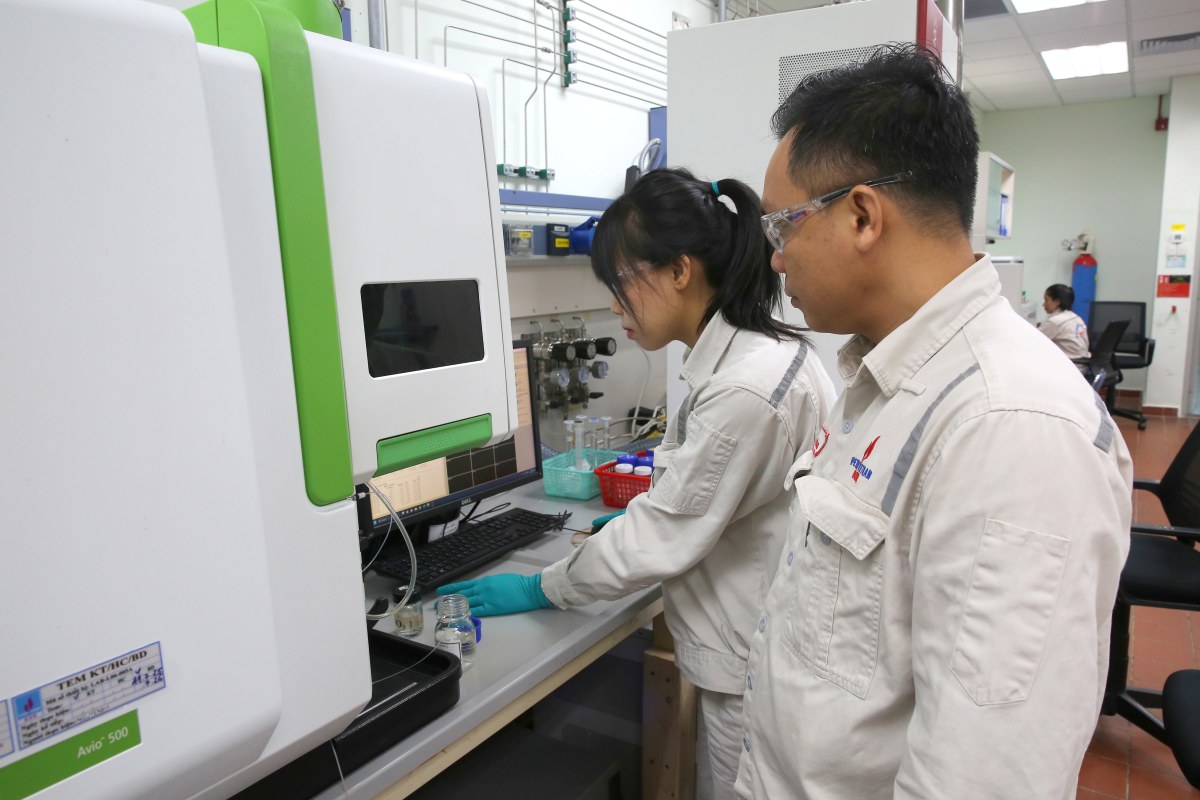
To handle it thoroughly, the BSR Experimental Department's team of engineers led by engineer Vo Tan Phuong has started to build an internal analysis method, completely replacing the hiring of external services. Although the experimental Department's initial design did not include the analysis of separated metals such as asen and antimon, the team proactively took advantage of available equipment especially ICP-OES and rotating equipment to re-establish the metal separation process according to EPA 200.7 & 1311, but was adjusted to suit actual conditions.
This alternative solution helps extract the metal cup from the catalyst into the water without the need for expensive equipment. Notably, the team discovered the rare earth element Lanthan (La) in the Zeolite catalyst as the violator that increased the fake As result. The team has experimented many times, building a noise handling process and optimizing analysis at two waves 193 nm and 197 nm on ICP-OES, improving accuracy.
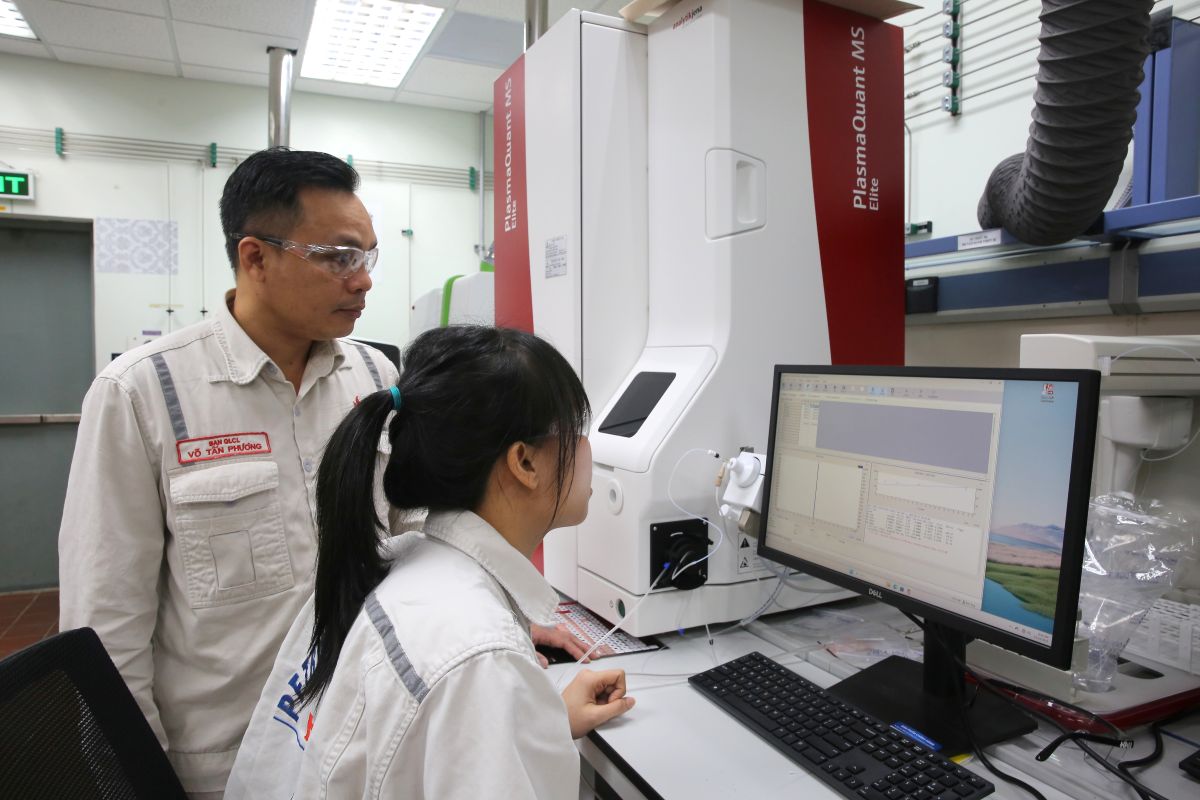
The new method is not only more accurate but also fully meets the ISO 17025 requirements. When applied to RFCC catalytic samples, the results showed that all were below the hazardous waste threshold. BSR also coordinated to transfer the solution to the appraisal unit. After applying BSR's recommendation, they re-analyzed the catching lot 24.2.2023, and this time the As content was within the safety threshold - affirming the correctness of the initiative.
The initiative "Improving the asen and atimon analysis methods (EPA 200.7 & 1311) in RFCC catching to increase the accuracy of test results" won the first prize of the 14th Quang Ngai Provincial Technical Innovation Competition (2024-2025).
Technical - environmental - economic value
Technically, the new method helps the BSR Experimental Department proactively control the quality of catalysts, optimize the dosage of Ni passivator chemicals and accurately classify waste catalysts according to QCVN 07:209/BTNMT, ensuring compliance with the law and minimizing environmental risks.
In terms of economy, the benefits are even more obvious. Previously, each year, about 208 waste cataster samples had to be sent out, with an average cost of 5.28 million VND/shapel. When done by yourself, the cost is only 313,033 VND/shaped. Thus, BSR saves about 1.033 billion VND per year, not to mention the benefits of proactively data and timely technology adjustment.
Mr. Pham Cong Nguyen - Head of BSR Quality Safety Department - commented: this is not just a test or a small step, but a testament to the creative, proactive and scientific spirit of BSR people. From unusual detection, "catching diseases", finding causes to building complete methods, engineers have proven their ability to master technology and the spirit of innovation.
With intelligence and passion, the engineer of the BSR Experimental Department has turned seemingly small operations into solutions that bring benefits of more than 1 billion VND/year. This story shows that at Dung Quat Oil Refinery, every initiative - whether on a laboratory scale or a production line - contributes to building great value for Vietnam's businesses and the petrochemical industry.


