
Regulations on greenhouse gas emission reduction, the requirement for transparency of ESG data from the international market, and the trend of green financial development are posing many requirements but also opening up new opportunities for businesses. These are the contents discussed by experts at the Workshop "Emission Reduction: Opportunities and Challenges for Businesses" co-organized by VietinBank and partners recently in Hanoi.
The workshop attracted the participation of many business representatives from the Northern region along with experts and organizations operating in the fields of ESG, greenhouse gas inventory, carbon credits and sustainable finance.
The workshop takes place in the context of rapidly changing global business as requirements for sustainable development become increasingly popular. If previously sustainable development was mainly seen as a long-term strategy to enhance business image, now many export markets have begun to include environmental, social and governance (ESG) criteria in the process of evaluating and making trade cooperation decisions. In the Vietnamese market, regulations on greenhouse gas inventory are also being researched and designed to gradually shift from incentives to mandatory ones.
Businesses face many challenges
At the workshop, experts assessed that businesses are currently under simultaneous pressure from three main target groups: state management agencies, customers in the supply chain, and investors and financial institutions.
In terms of policy, Vietnam has made a commitment to achieve "zero" net emissions by 2050, while gradually completing the legal corridor related to greenhouse gas emission reduction, greenhouse gas inventory and carbon market development. This poses increasingly specific compliance requirements for businesses. In addition, many export businesses are also having to meet requirements from international partners regarding emission data disclosure, ESG assessment for suppliers or carbon footprint reporting of products.
According to experts at the workshop, emission data and ESG are gradually becoming one of the criteria reflecting the competitiveness of businesses. Transparency of ESG data is also increasingly important in the process of accessing capital, as many financial institutions around the world are expanding green finance and sustainable finance programs.
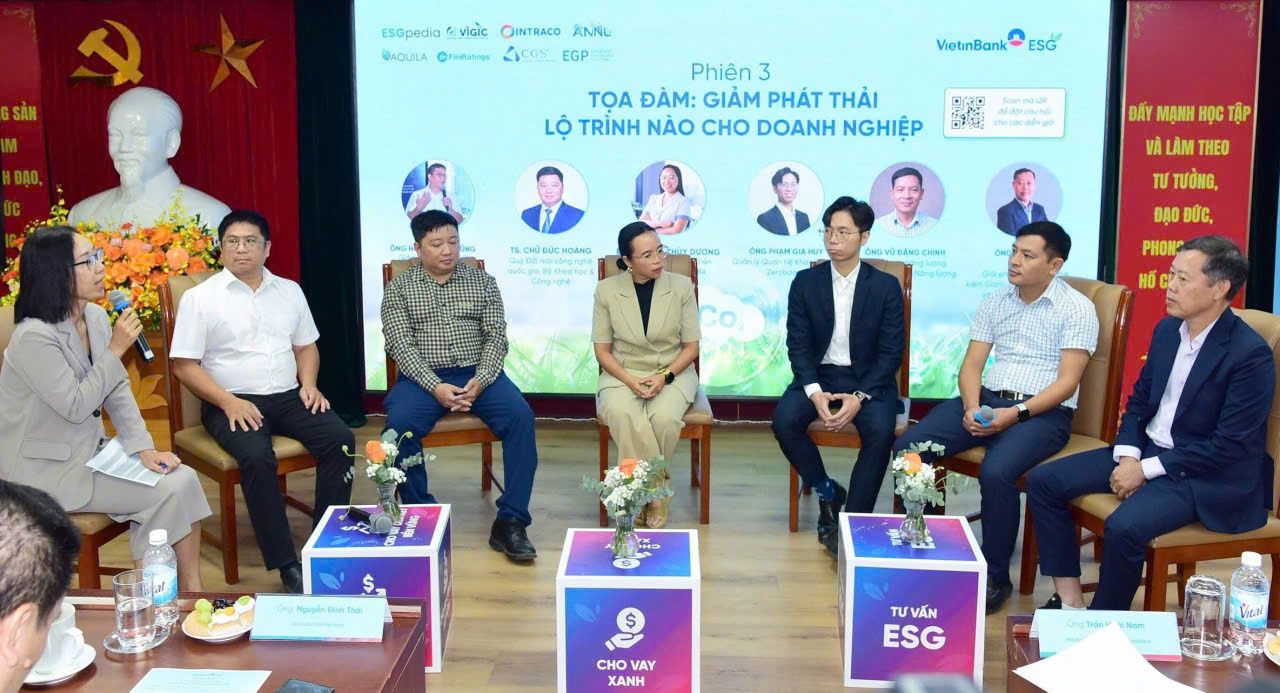
Building emission data – Opportunities for businesses
One content that many delegates were interested in at the workshop was greenhouse gas inventory and emission data management. According to experts, the first step for businesses to build an emission reduction roadmap is to determine the current emission status through greenhouse gas measurement and inventory activities.
Representatives of consulting and technology units said that many businesses are still using manual tools such as Excel to perform emission calculations. However, when the data scale expands, this method may generate many limitations such as difficulty controlling versions, lack of data access and great dependence on personnel.
Meanwhile, digital platforms and technology solutions can support businesses in standardizing data collection processes, reducing errors in data entry and improving information verification capabilities. Experts at the workshop emphasized that businesses do not necessarily have to build a complete system right from the start, but can start from key emissions sources, gradually expand the scope of implementation and improve data management processes over time. Starting early, building foundational data and gradually improving through each report period is considered a suitable approach for most businesses in the current period.
Sustainable linked lending – Pioneering solution from VietinBank
Also at the seminar, VietinBank introduced to the business community the Sustainable Linked Loan (SLL) product. This is the first solution in a series of transformed financial solutions that VietinBank is researching and building to support businesses in implementing sustainable development goals.
Unlike traditional credit models, sustainable linked lending is a financial structure in which loan conditions – especially interest rates – are directly linked to the level of implementation of sustainable development targets of enterprises. VietinBank's pioneering implementation of this structure shows a strong shift from the role of a "capital-providing" bank to a "comcompanying" bank along with the green journey of enterprises.
To participate in the program, building an ESG data system, implementing greenhouse gas inventory and transparency of emission information are considered fundamental factors. The inventory results and emission reports not only help businesses meet the requirements of management agencies, customers and partners but also create more favorable conditions in accessing the Bank's sustainable financial products. Also in this program, VietinBank's partners are willing to provide great incentives for businesses for greenhouse gas measurement and inventory services.
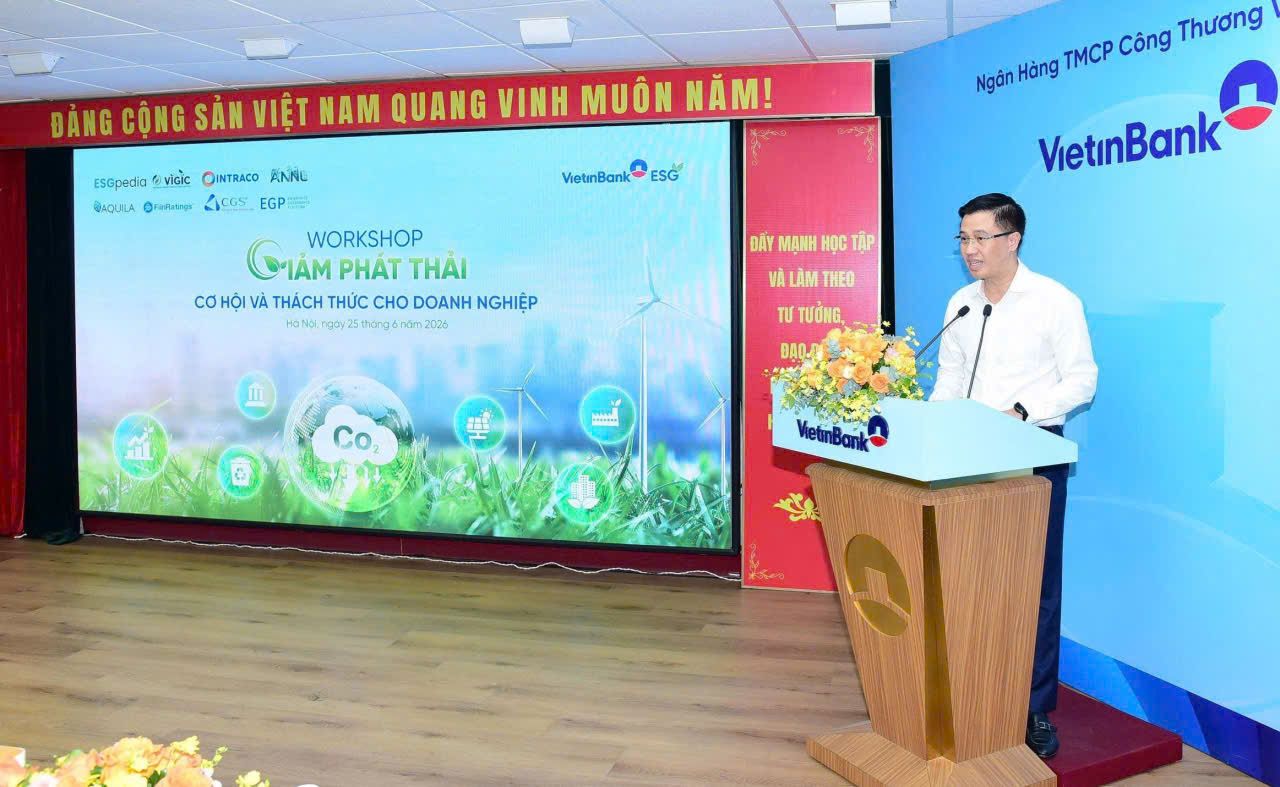
According to Mr. Tran Hoai Nam, Deputy Director of Corporate Planning Division of VietinBank, the sustainable linked lending structure is expected by the Bank to become a popular model in the financial market, contributing to spreading a responsible development mindset and accompanying businesses on the journey to create long-term value for the economy.
Experts attending the workshop also noted that the green transition process may pose many challenges in terms of resources, technology and costs in the early stages. However, early preparation will help businesses be more proactive in meeting market requirements, while improving access to customers, investors and green capital sources in the future.


