
On January 6, Tien Phong Newspaper coordinated with the University of Transport Technology, Hanoi Department of Agriculture and Environment, Hanoi Department of Construction to organize the Workshop "Hanoi Air Pollution Control: Challenges and Actions".
Faced with the increasingly serious air pollution situation, the Government and the People's Council of Hanoi City have continuously issued many important guidelines and policies to improve air quality, control emissions and promote a green and sustainable urban development model.
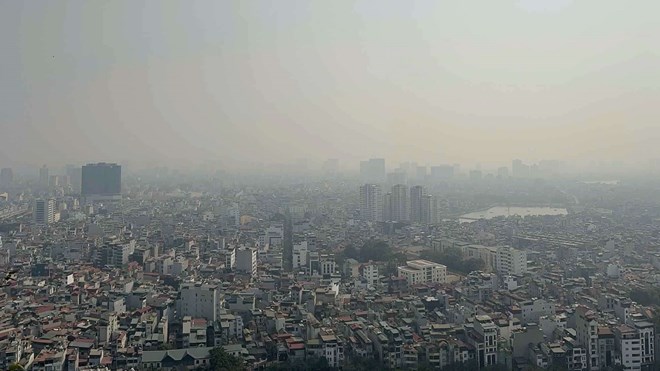
Sharing at the Workshop, Mr. Truong Manh Tuan - Deputy Head of the Environmental Quality Management Department, Department of Environment, Ministry of Agriculture and Environment said that air pollution is on an increasing trend and we must find ways to curb and reverse this trend. The goal by 2030 is to strictly control emissions to increase the number of days with good and average air quality to 80%, striving to reduce the average annual PM2.5 dust concentration by 20% compared to the measured level of 2024, bringing this index below 40μg/m3.
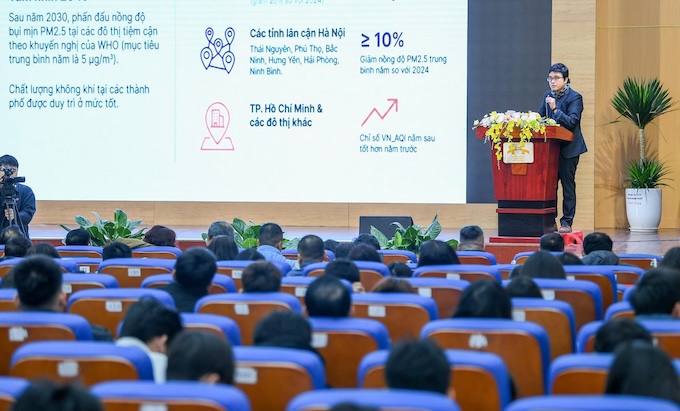
Regarding solutions, the plan of the Ministry of Agriculture and Environment sets out 5 key action groups: Improving institutions and policies. Controlling industrial waste sources, traffic management. Strengthening the application of science and technology. Mobilizing resources and cooperation. Strengthening the application of science and technology. In which, the group of solutions on transportation and construction is particularly focused on.
We will move towards data technology, accurate measurement. When there are data reflecting the reality, we will have solutions to "hit the jackpot, hit the jackpot" at major polluting hotspots today," Mr. Tuan said.
Meanwhile, Ms. Le Thanh Thuy - Deputy Head of the Environmental Management Department, Hanoi Department of Agriculture and Environment emphasized the measures expected to be applied in low-emission areas in Hanoi. In which, public transport, environmentally friendly vehicles, pedestrian space, bicycles, and clean energy stations will be developed. Zero-emission vehicles, green vehicles, and vehicles using clean energy will be prioritized for circulation. In addition, AI cameras, air quality monitoring systems, vehicle management software, and hotlines will also be deployed.
At the same time, setting strict limits such as banning trucks over 3,500kg, limiting cars and motorbikes that do not meet emission standards, and banning motorbikes doing business on transport applications.
Previously, the Prime Minister approved Decision No. 2530/QD-TTg dated November 19, 2025 on the National Action Plan on pollution remediation and air quality management for the period 2026-2030, with a vision to 2045.
Decision No. 43/2025/QD-TTg dated November 28, 2025 stipulates the roadmap for applying national technical regulations on emissions from road vehicles participating in road traffic, setting out a specific roadmap on the issue of inspecting emissions from circulating cars, including stricter control in two cities, Hanoi and Ho Chi Minh City.
In particular, on November 26, 2025, the Hanoi City People's Council issued Resolution No. 57 on implementing low emission zones in the city with a specific roadmap and synchronous solutions to limit emissions from traffic activities, promote green traffic, and public transport.
The above policies create an important legal corridor for the implementation of air pollution control solutions in a more synchronous, drastic and substantive manner, and also pose many challenges in implementation.
It's a bit of a bit of a bit of a bit of a bit of a bit.
It's a bit of a bit of a bit of a bit of a bit of a bit.
It's a bit of a bit of a bit of a bit of a bit of a bit.


