
Solution to the electricity load problem
In Vision 2030, VinUni sets a goal that the school's research programs will participate in solving 100 practical science and technology challenges. Among them, one of the prominent challenges of Vietnam today is the need for solutions for the power grid as the number of battery-powered vehicles is increasing rapidly.
Electric vehicles help reduce emissions and improve air quality and public health. But if the charging infrastructure is completely dependent on the power grid, the pressure during peak hours will increase. Meanwhile, expanding the power grid is only to meet short-term "peak demands", requiring very large investment costs and easily leading to waste of resources.
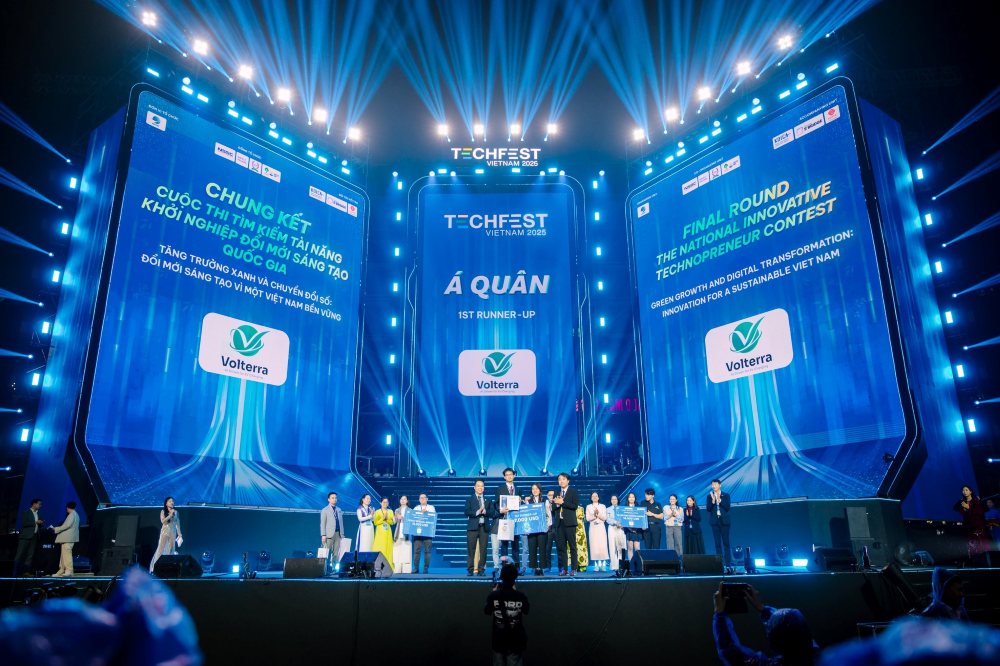
From this paradox, the research group led by Professor Laurent El Ghaoui - Vice Rector in charge of Research and Innovation, Scientific Director of VinUni Environmental Intelligence Center, and colleagues raised the core question: how to build a charging solution that is not too dependent on the power grid, while ensuring economy and scalability in the actual conditions of our country?
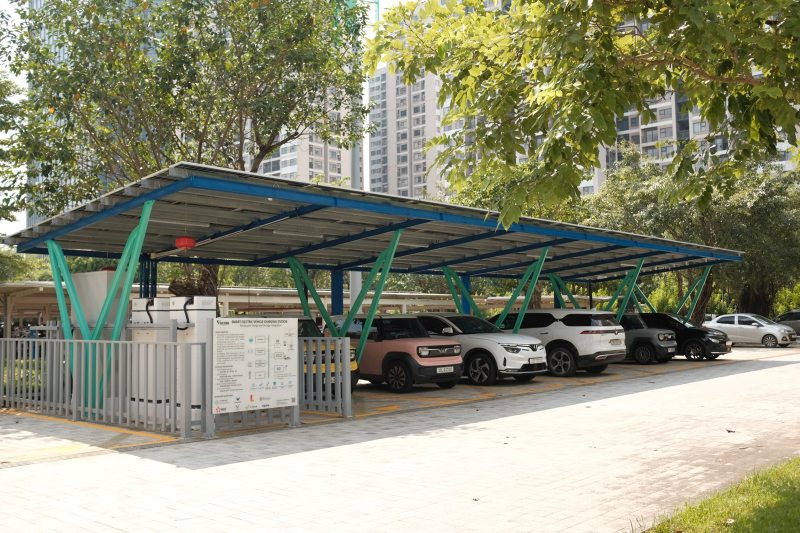
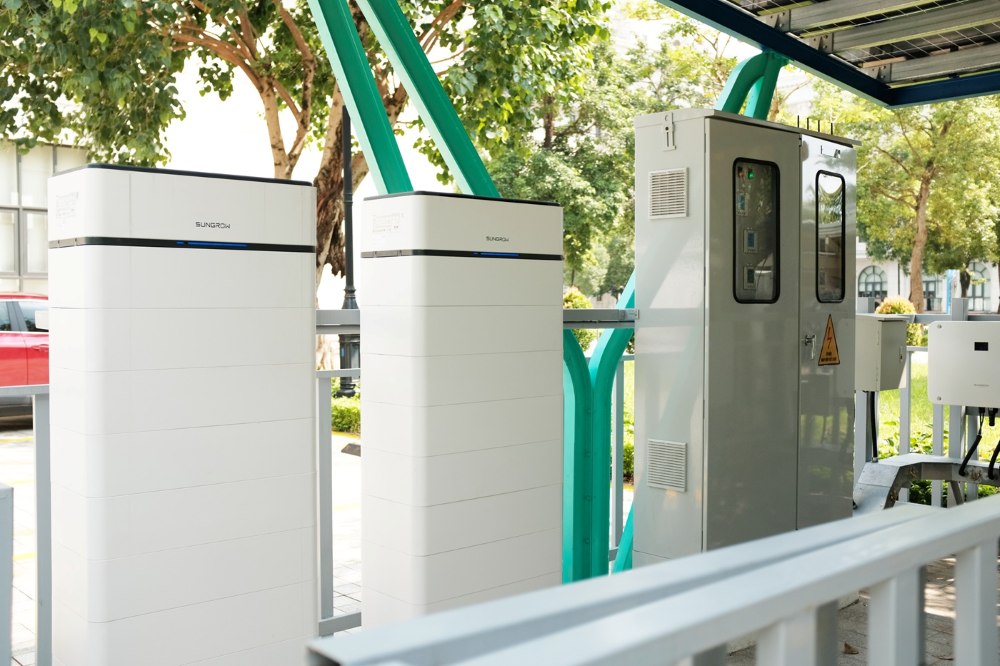
To solve this problem, the research team integrated a battery system to collect and store energy (BESS) into charging stations. The entire system operates on a platform integrating artificial intelligence and digital simulation (AI and Digital Twin), helping to simulate scenarios, forecast and optimize charging station operation in real time. On that platform, multi-layer optimization algorithms, dynamic load management and game theory are applied to simultaneously solve two layers of problems: energy optimization and user behavior.
More importantly, according to Dr. Do Danh Cuong - Head of the research group, Volterra has the ability to coordinate clean station operations on a network-wide scale. When a station is approaching a load threshold, the system will automatically allocate demand to other stations with surplus capacity, or encourage users to charge at a more suitable time frame through price and service scenarios.
Simulation scenarios in Vietnam show that Volterra's solution can help reduce operating costs by up to 40%, increase investment efficiency by 3 times, and significantly reduce greenhouse gas emissions when combined with renewable energy.
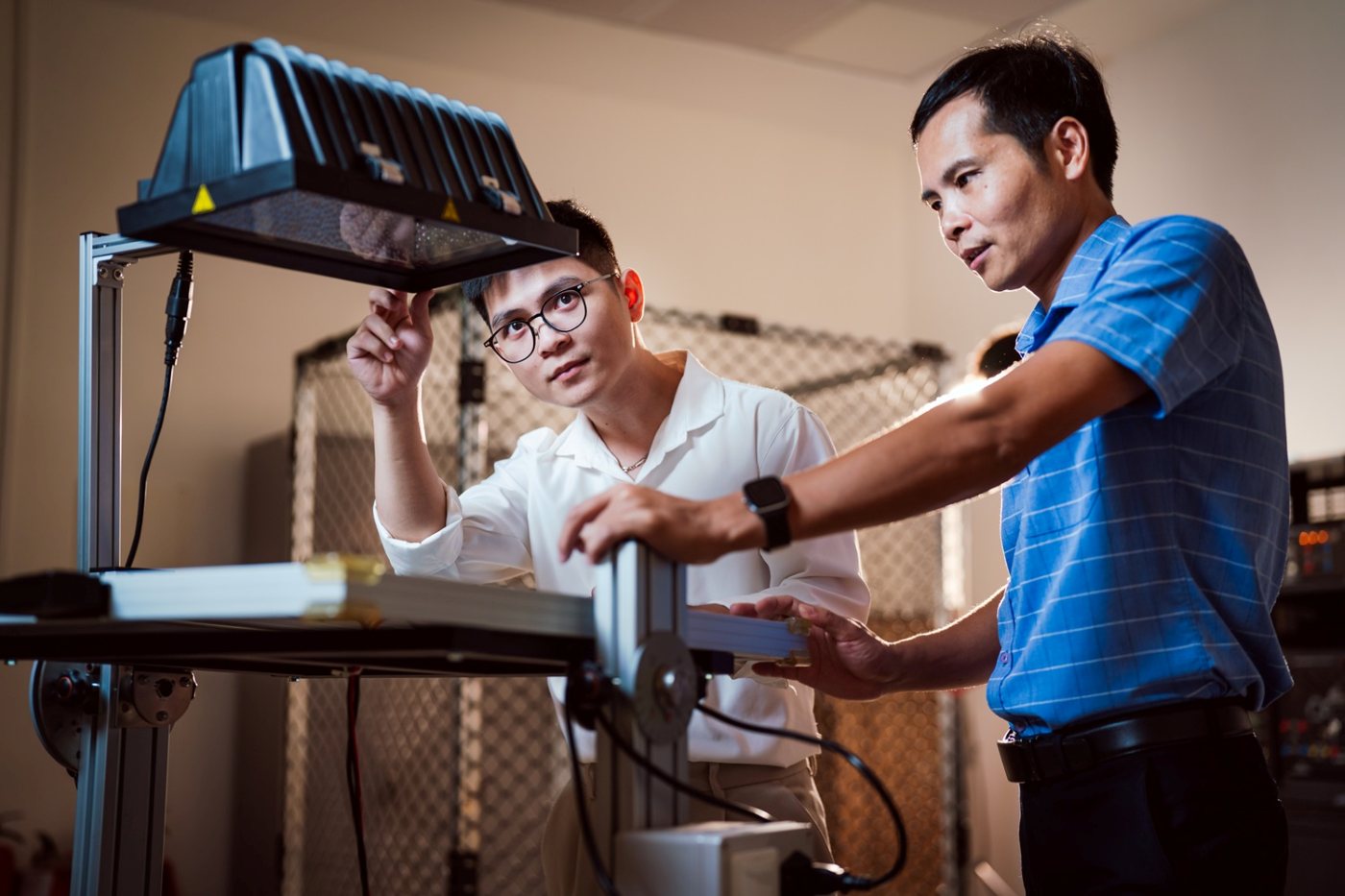
Only 6 months to commercialize a technology product
When the biggest "bottleneck" has been unlocked by science, business stories also begin to form. VinUni's Startup Center (ELAB) has brought startup enthusiasts to participate in the research and market survey process to supplement Volterra's scientific products with multi-dimensional perspectives from reality. At the same time, the research team also becomes a development department within the startup company, creating a complete "spin-off" project.
In the innovation ecosystem, "spin-off" is a business model formed from academic research results, developed to transfer knowledge and technology from universities to the market and society.
Thanks to that, Volterra formed 2 circular loops, parallel and mutually nurturing. The first loop is research development. The second loop is business operation. Each step forward in a loop creates motivation for the other loop, forming a continuous cycle from the laboratory to reality and from reality back to the research table.
That structure creates Volterra's identity as a true "spin-off" project: where science is not outside the market, and business is not separated from academic depth.
Sharing the same view, Professor Laurent - a scientist in the top 2% most cited in the world, said that for him, the most important meaning of science is to create a positive impact. “Therefore, start with studies that can be commercialized to create trust in the community. I also believe that commercialization, innovation, entrepreneurship, all of these things are very important and should be applied right from the early stages of research projects,” he said.
To date, after half a year, from the core technology platform, Volterra has successfully developed three product lines: fixed charging stations, flexible charging stations and automatic charging robots. Each product line has its own advantages, reflecting the diverse and practical approach of a "spin-off" project.
Only 6 months to commercialize a technology product is not a long time. Volterra's ability to quickly step into the market largely comes from innovations in VinUni's policy of approaching and exploiting scientific initiatives - from expanding commercial exploitation rights for research results to a mechanism to accompany businesses in the product development process.
A product with scientific depth, possessing core technology researched and developed at a leading university will have much more competitive potential and create a lasting social impact," Mr. To Van Lang (CEO of Volterra) expressed.
Currently, Volterra has entered operations as a real business. Like any other startup, businesses will have to go through moments of "walking on ropes" in the face of market fluctuations. But that "uncertainty" is the clearest proof of the spirit of a "spin-off" when academic research dares to leave the "ivory tower" to step out to contribute to the social community, and scientific knowledge dares to choose a vibrant market to sharpen the quintessential ideas. /.


