
It's not the old profession, but the old way of doing things
In many offices, there is a quiet gap: for the same report, this person takes a few days, and the person sitting at the next table finishes it in one session. The difference usually does not lie in expertise or years of experience, but in who has changed their working style and who has not.
It is worth mentioning that most people have heard about AI, even installed and occasionally used it. But using it to look up a few sentences, the workload is almost unchanged. That is the gap that the book "AI Assistant: 21 Days of Real Combat", published by Teedoo, aims for: not to introduce technology, but to guide how to reorganize work around an AI assistant.
It should be made clear to avoid misunderstanding: this is not an online money-making book. The target audience is office workers, technicians, managers who want to reduce the time for repetition to save energy for the brainpower part. According to the publisher, this is currently Teedoo's best-selling book, with about 10,000 copies in the first month and is being supplemented. This is data provided by Teedoo.
21-day route, less than an hour each day
Unlike a disjointed set of tips, the book is set up as a limited schedule: 21 days, one lesson per day with one immediate task, about 35–45 minutes. The whole thing follows the measuring - delivery - packaging - automation circuit.
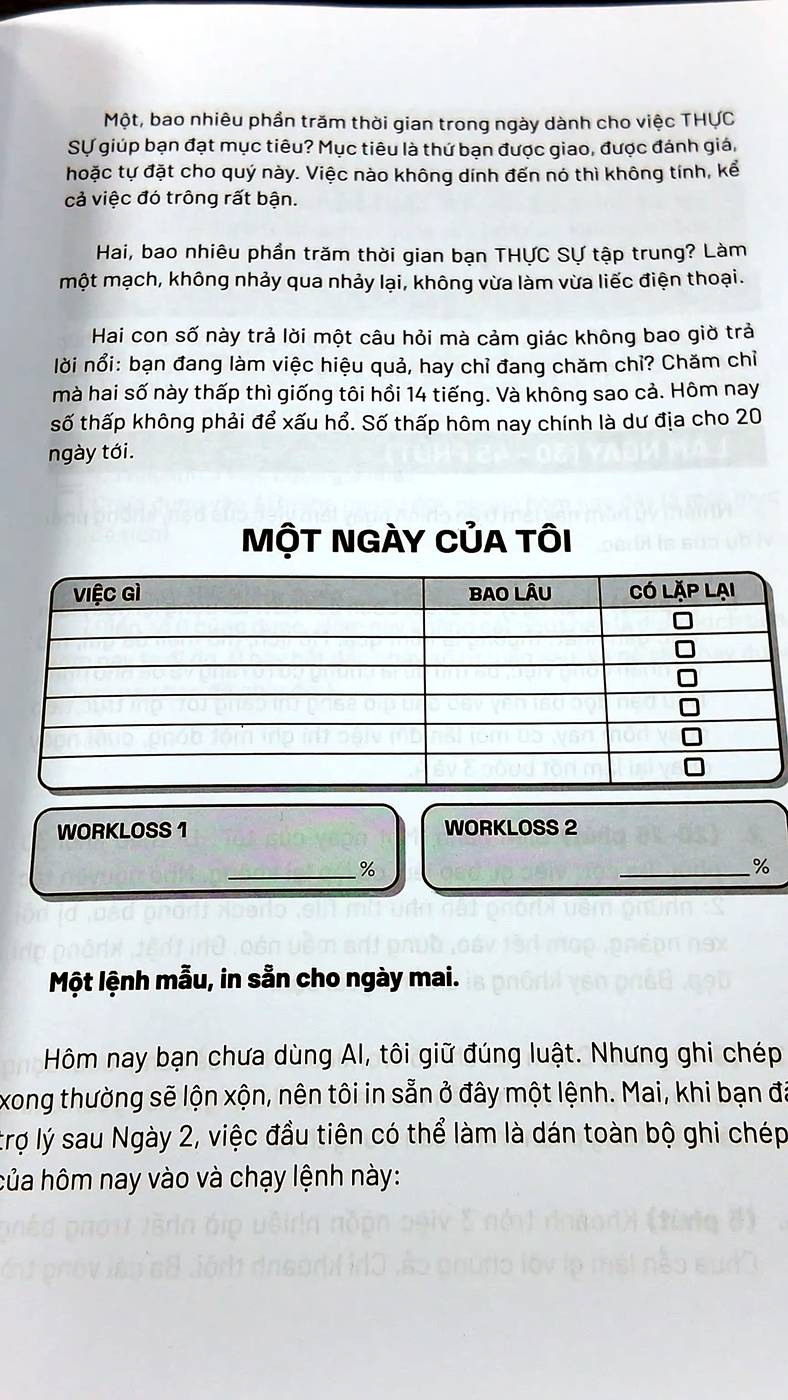
The first week is for measuring and learning how to give orders: recording where a real working day goes, then learning how to write a complete command, classifying which tasks should be assigned to AI, which should be kept to yourself. The second week applies to seven familiar types of office work, one type each day: email, preparing documents and reports, preparing meetings, processing spreadsheets, building slides, general research and brainstorming to find ideas. The last week talks about packaging the process that has run well for reuse, creating a "memory" of work for assistants, and assigning a multi-step project. The book closes with a chapter on maintenance discipline, errors that make newcomers give up, and measuring the number of Day 1.
Some personal thinking tools
To make it easier for readers to make decisions, the book divides work into two areas: the area where repetitive tasks should be assigned, with stopping points, doing better is no longer rewarded; and the area where tasks that need judgment, taste and personal responsibility must be kept by themselves, where AI only supports and does not replace decision-makers. Attached is a set of concise criteria according to four groups of tasks assigned immediately (writing drafts, finding and collecting information, analyzing data, repetitive tasks) and three questions to sort each task. This presentation helps readers compare with their work instead of learning general theory.
Printed books come with digital resources
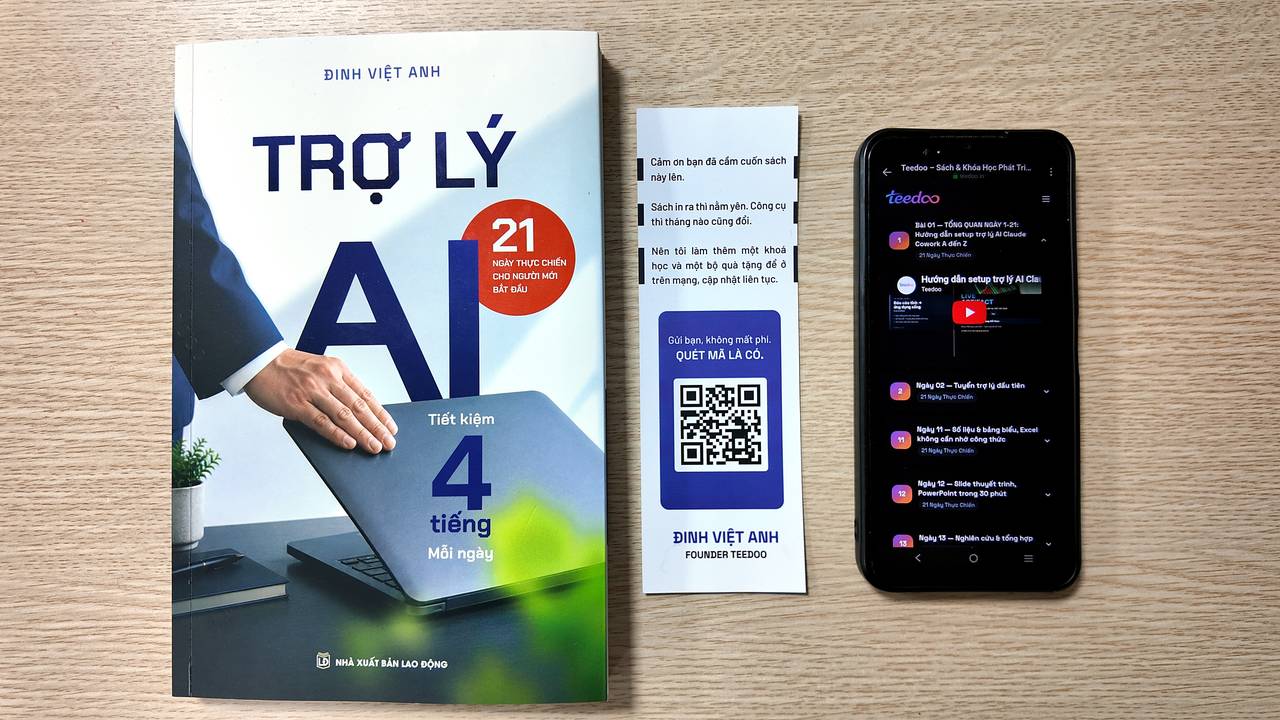
The book is designed in the direction that the printing part focuses on thinking and processes, and detailed operations are transferred to digital resources via QR code: step-by-step video tutorials, a library of more than 100 sample commands by industry group, and a Q&A community on Zalo. According to the implementation team, the interface of AI tools changes continuously, so videos are easier to update than printed books; for people with little exposure to technology, watching operations on the screen is also easier to follow than reading text.
Without making a promise about the results, the consistent point throughout is that the book avoids commitments. The author reminds me that I save a few hours each day after applying it, but frankly says that it is my own number, and each person's result depends on the type of work and level of practice - so there is a self-measurement step on Day 1 and Day 21 for readers to self-verify. The book also notes that in the early days, the savings number may be very small because readers are studying. The general spirit leans towards giving readers a method and letting them measure the effectiveness themselves, rather than drawing out a predetermined result.


