
SJC gold bar price
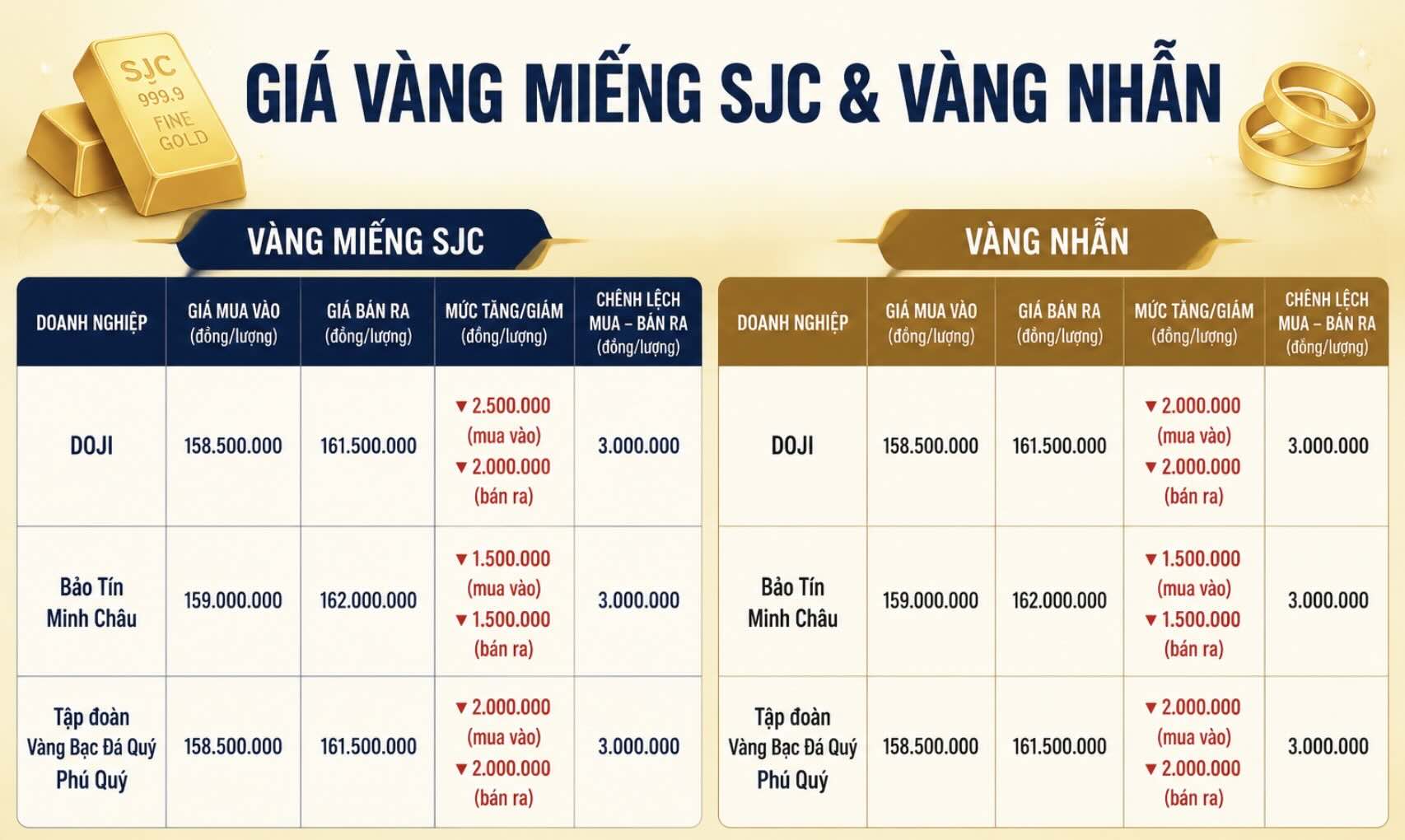
As of 6:00 AM, SJC gold bar prices were listed by DOJI at 158.5-161.5 million VND/tael (buying - selling), down 2.5 million VND/tael on the buying side and down 2 million VND/tael on the selling side. The difference between buying and selling prices is at 3 million VND/tael.
SJC gold bar price was listed by Bao Tin Minh Chau at the threshold of 159-162 million VND/tael (buying - selling), down 1.5 million VND/tael in both buying and selling directions. The difference between buying and selling prices is at the threshold of 3 million VND/tael.
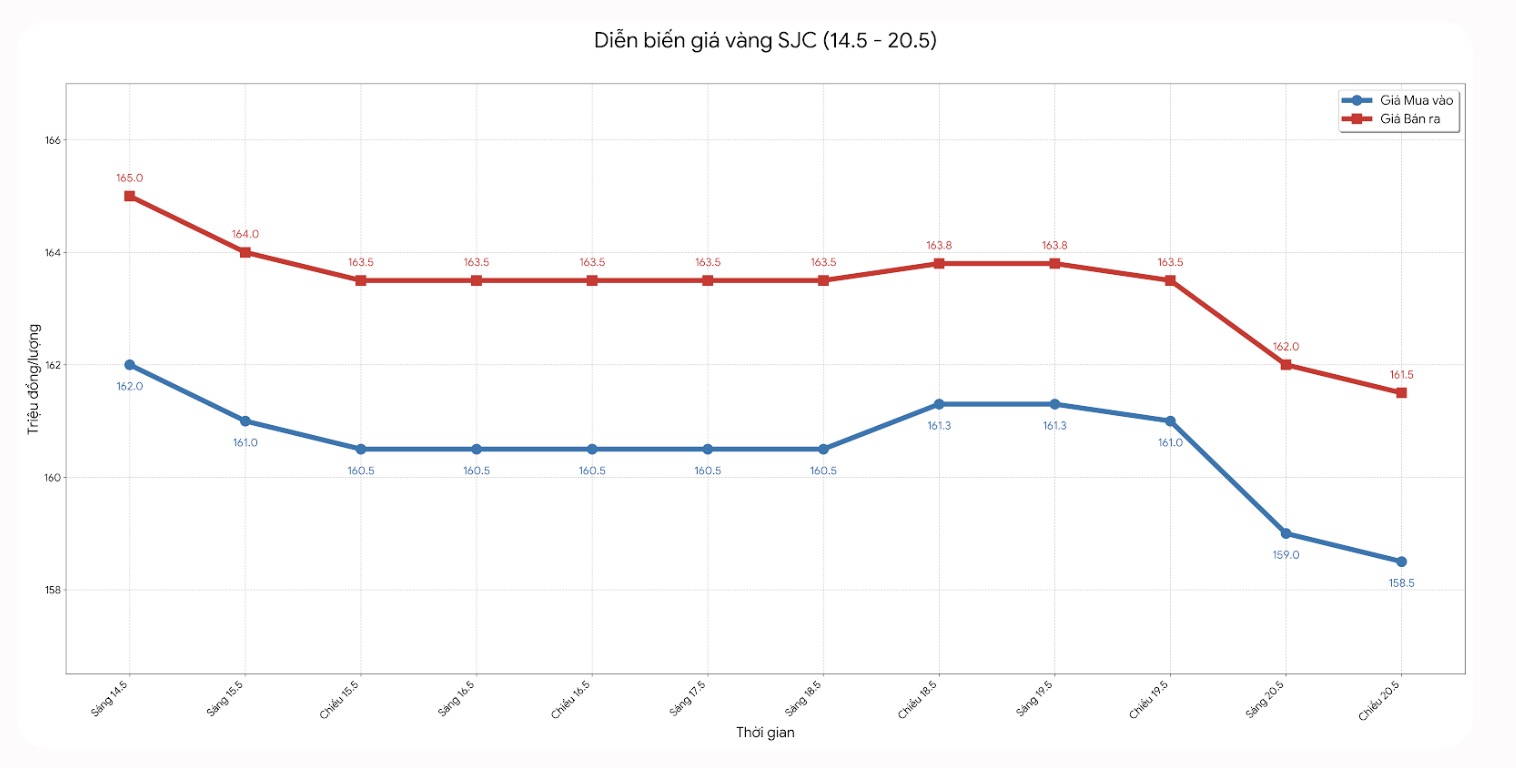
Phu Quy Jewelry Group listed SJC gold bar prices at 158.5-161.5 million VND/tael (buying - selling), down 2 million VND/tael in both buying and selling directions. The difference between buying and selling prices is at 3 million VND/tael.
9999 gold ring price
As of 6:00 AM, DOJI listed gold ring prices at the threshold of 158.5-161.5 million VND/tael (buying - selling), down 2 million VND/tael in both buying and selling directions. The difference between buying and selling prices is at the threshold of 3 million VND/tael.
Bao Tin Minh Chau listed the price of gold rings at 159-162 million VND/tael (buying - selling), down 1.5 million VND/tael in both buying and selling directions. The difference between buying and selling prices is at 3 million VND/tael.
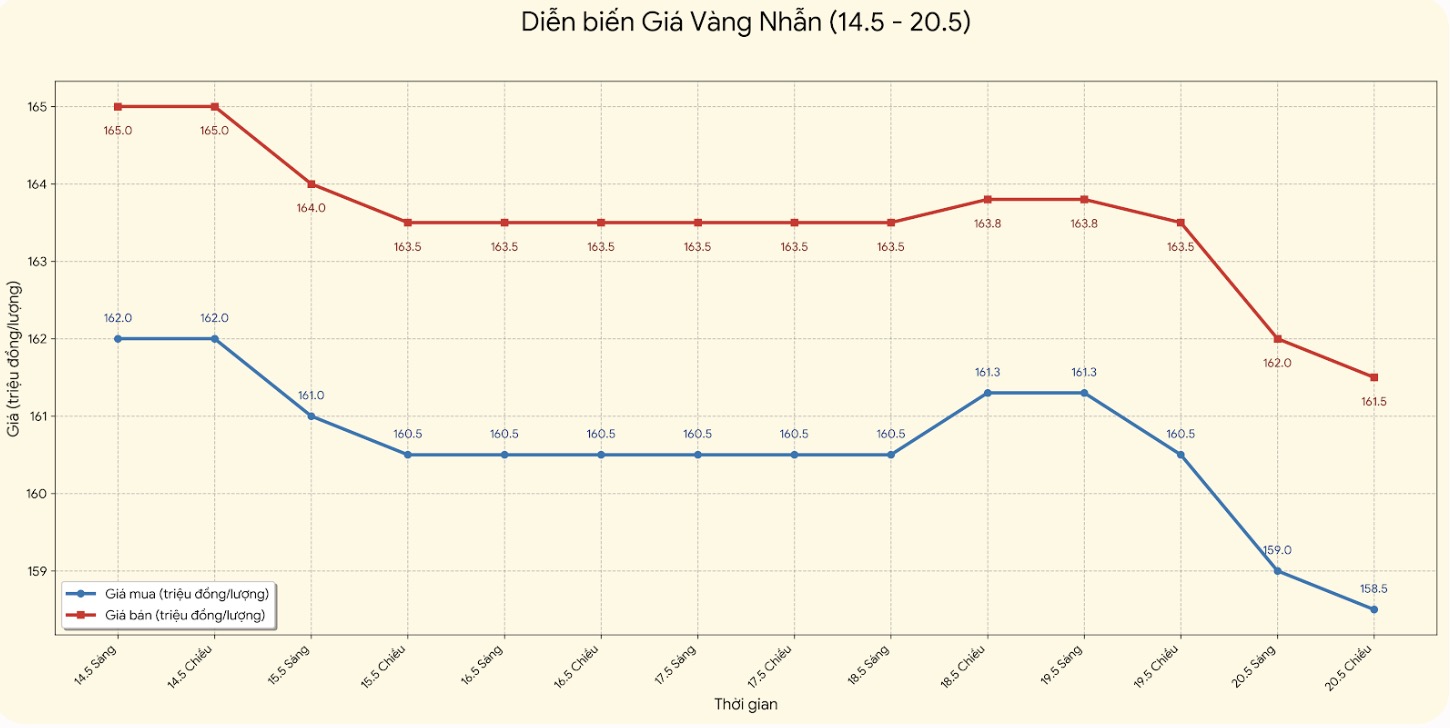
Phu Quy Gold and Gems Group listed the price of gold rings at 158.5-161.5 million VND/tael (buying - selling), down 2 million VND/tael in both buying and selling directions. The difference between buying and selling prices is at 3 million VND/tael.
The buying - selling price difference of gold is at a very high level, around 3 million VND/tael, posing a risk of losses for investors.
World gold price
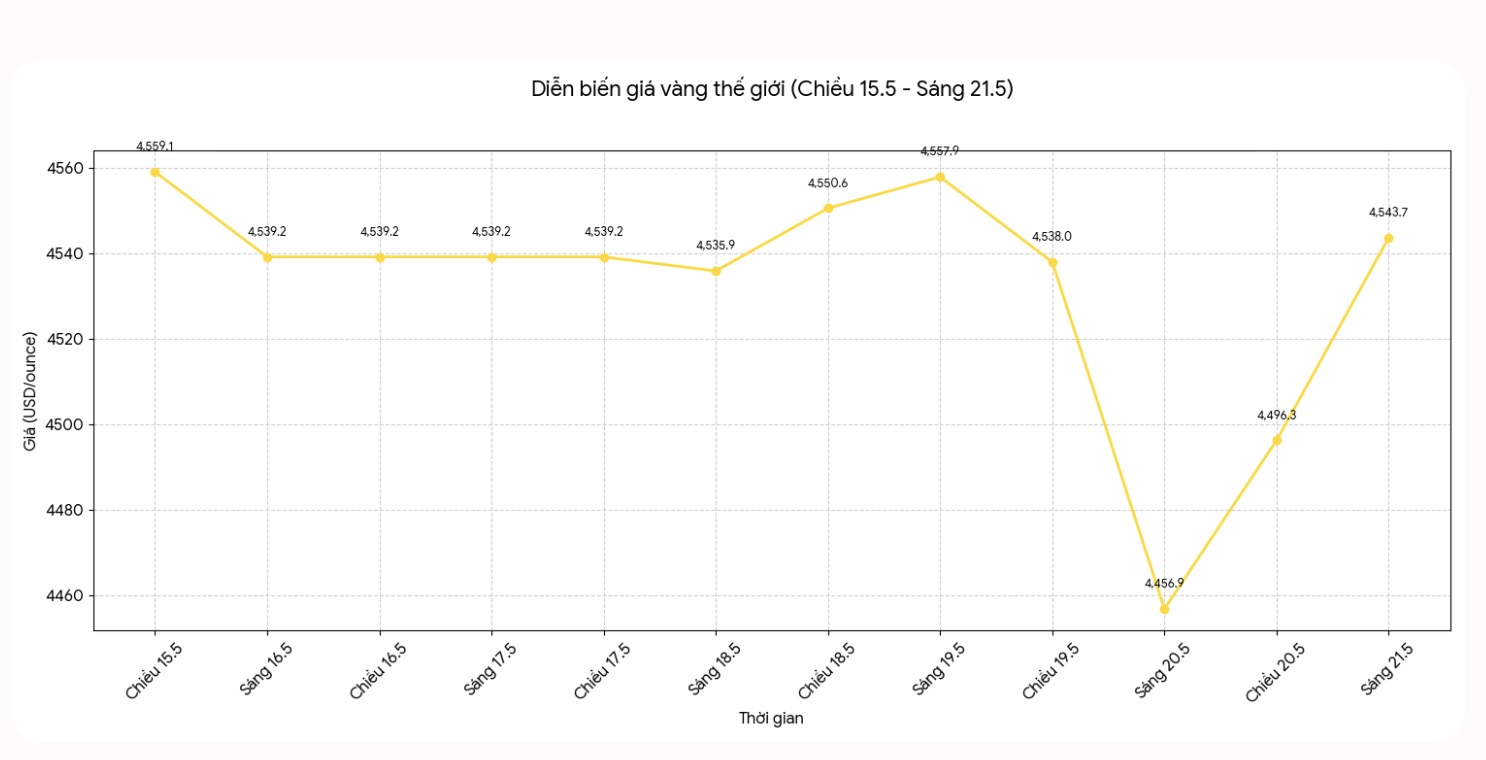
At 5:07 AM, world gold prices were listed around the threshold of 4,543.7 USD/ounce, up 46.4 USD.
Gold price forecast
World gold prices recovered strongly after the previous session's plunge, amid cooling oil prices and weakening US bond yields as signals of positive progress in negotiations between the US and Iran.
Precious metals rose again after the market recorded oil transportation through the Strait of Hormuz gradually recovering. Two Iraqi crude oil tankers heading to China and a Kuwaiti oil tanker passed through this area, carrying a total of about 6 million barrels of oil. This is the largest oil export from the Gulf since US-Israel and Iran tensions escalated in February.
The above information caused Brent oil prices to fall sharply by more than 5%, thereby easing inflation concerns and pulling US Treasury bond yields down. The weakening USD also contributed to supporting gold and silver prices.
Minutes of the US Federal Reserve (Fed) meeting at the end of April show that the conflict in the Middle East continues to be a major factor affecting the financial market. Rising energy prices in recent times have boosted short-term inflation expectations, while pushing US bond yields up sharply. The Fed also noted that the options market reflects about 30% of the agency's ability to raise interest rates in the first quarter of 2027.
However, the fact that US 10-year term bond yields fell below the 4.6% threshold is helping gold regain its attractiveness in the short term. Experts believe that the outlook for the precious metal currently largely depends on the trend of yields and monetary policy of the Fed.
Mr. Kiran Kowshik - global foreign exchange strategist at Lombard Odier - said that the recent adjustment has not changed the medium-term upward outlook for gold. According to him, gold prices are under pressure as energy prices escalate, causing markets to worry that the Fed will maintain high interest rates for longer. However, if Middle East tensions cool down and oil prices continue to fall, gold may soon recover strongly again.
This expert still maintains his forecast that gold prices could reach 5,400 USD/ounce in the next 12 months, thanks to the continued high demand for gold from central banks and individual investors. He believes that the trend of diversifying foreign exchange reserves, along with concerns about public debt and inflation, continues to be a long-term driving force supporting precious metals.
Technically, analysts believe that gold needs to overcome the resistance zone of 4,552-4,572 USD/ounce to expand the increase to the 4,600 USD/ounce mark. Conversely, if it loses the support zone of 4,537 USD/ounce, gold prices may return to test the 4,500 USD/ounce area.
Gold price data is compared to the previous day.
See more news related to gold prices HERE...


