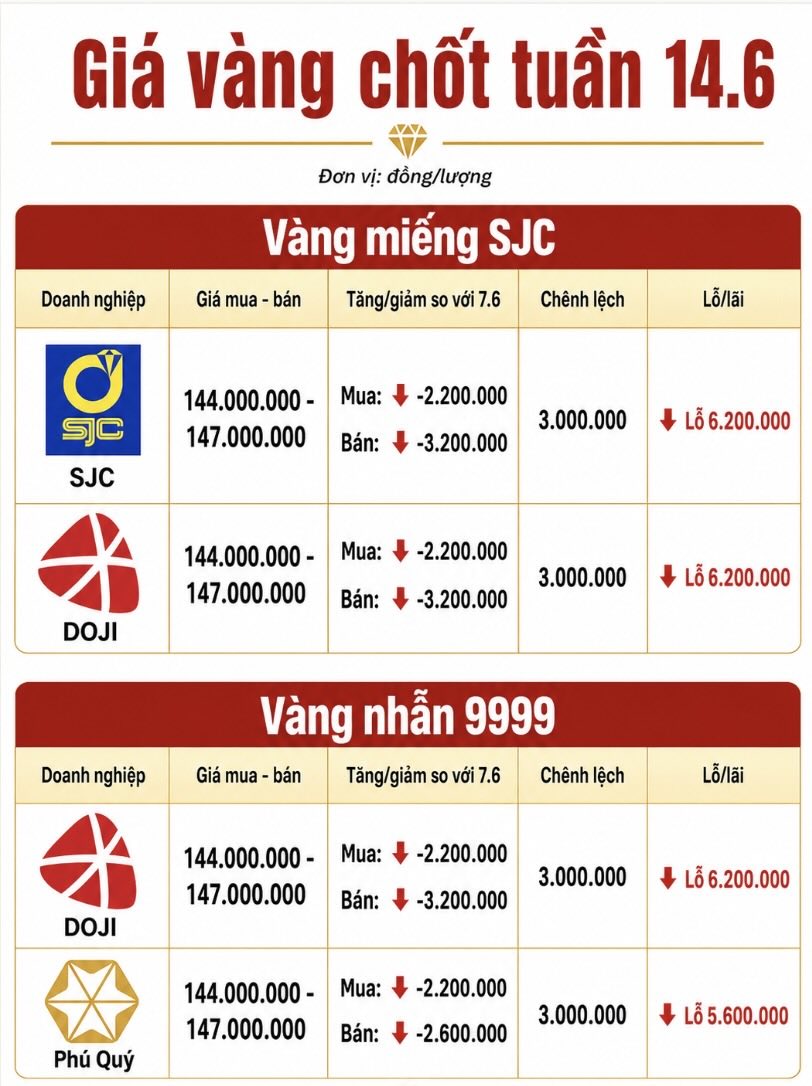
Another week has passed not very positively for gold investors, as the price of this precious metal has fallen into the downward price zone. However, behind the short-term price decline, the macroeconomic context may be changing in the direction of turning current pressure into a long-term supporting factor.
The focus of current uncertainty is inflation.
Usually, increased inflation will support gold prices, because investors turn to precious metals to protect purchasing power. However, this time inflation is putting pressure on gold prices. The reason is that the market is adjusting expectations in the direction that interest rates may remain at a higher level for longer, while the US Federal Reserve (Fed) is not in a hurry to ease monetary policy.
This development has pulled gold prices back to the important support zone around 4,000 USD/ounce. Although this level is temporarily maintained, buying power in the market is still quite cautious. Positive job data and persistent inflation continue to strengthen expectations that the Fed will maintain tight monetary policy, thereby increasing the opportunity cost of holding gold - an asset that does not yield interest.
However, if only looking at nominal interest rates, investors may ignore a more important factor: real yield.

When considering the inflation factor, the picture will change. If inflation continues to rise faster than interest rates, real yields will decrease. This reduces the attractiveness of US government bonds and often creates a better support base for gold prices. Even in an environment of rising interest rates, rapid inflation can still pull real yields down to the negative zone - a context that has repeatedly supported precious metals.
This factor is becoming increasingly noteworthy. The Fed may continue to raise interest rates this year, but the agency is unlikely to quickly completely control inflation.
The US economy is facing an increasing budget deficit, large public debt and persistent inflationary pressure. Policymakers are therefore in a difficult position. If interest rates are raised too sharply, the economy, which already bears a large debt, is at risk of being restrained. But if inflation is prolonged, confidence in legal tender assets may decline.
Gold usually progresses more positively when this policy problem becomes unavoidable.
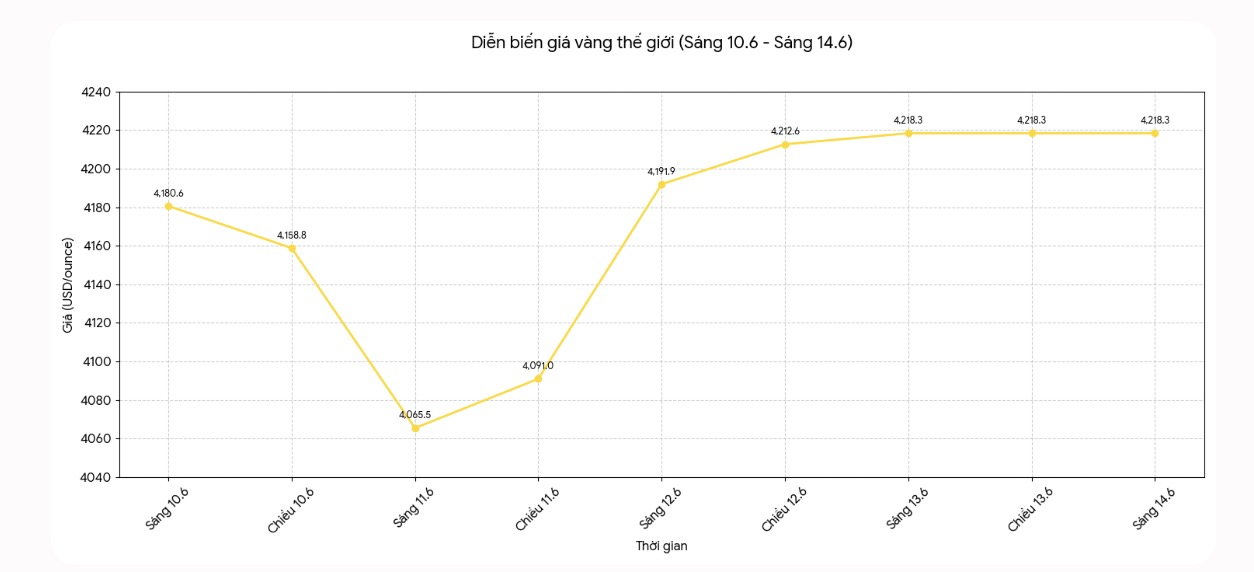
That does not mean gold prices will recover immediately. The current upward momentum is still weak, while the fact that the market has not been able to firmly regain the above 4,000 USD/ounce zone shows that investors are still waiting for more clear signals about inflation, monetary policy orientation and growth prospects.
However, if the current environment lasts, the balance may gradually change.
At this time, inflation is putting pressure on gold due to increasing expectations of high interest rates. But if inflation continues to exceed the rate of interest rate increase, the real yield will eventually decrease. Then, the story for gold prices may reverse.
Update on domestic gold prices