
In an interview with Kitco News, Mr. Jeff Clark - publisher of The Gold Advisor - said that the current decline in gold prices has many similarities with the correction in the famous upward price market in the 1970s, which lasted with one of the strongest breakthroughs in the history of precious metals.
I have charted a comparison between the current gold price rise market and the period from 1976 to the peak of 1980," Clark said. "Although unbelievable, the correlation between these two price rise cycles is up to 95%.
According to Mr. Clark, this comparison shows that the current correction may be a normal and healthy development in a much larger upward trend.
At the same stage in the upward price market of the 1970s, gold prices plummeted" - he said - "Gold prices then plummeted and then immediately recovered. And what is happening now? Gold is also plummeting. Developments almost coincide with each beat.
Mr. Clark noted that if this correlation continues to be maintained, gold prices will have to increase nearly three times compared to the present to match the entire increase of the 1970s cycle.
Mr. Clark's long-term optimistic view was put forward in the context that the precious metal is facing many resistance forces. After a historic increase to a record level of 5,600 USD/ounce in January, gold prices have turned down and are currently falling to a negative zone since the beginning of the year. The prolonged sell-off accelerated from Friday, after the price broke the important long-term support zone, the 200-day moving average.
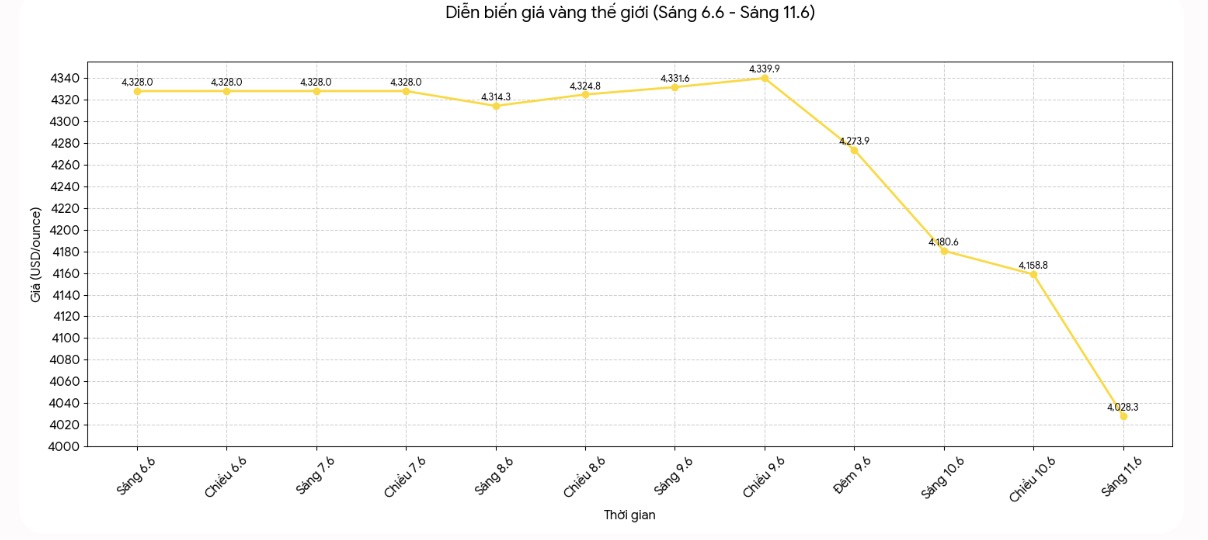
Veteran experts in the precious metals sector said that although gold prices have decreased by more than 21% compared to the January peak, this adjustment is still lower than the 30% decrease in the 2008 financial crisis and the 28% decrease in the 2020 pandemic shock.
However, according to Mr. Clark, the current weakening does not mean that the long-term upward trend has ended. He believes that history is still supporting the buying side.
If the upward price market ends right now, this will be the shortest upward cycle in modern history" - he said - "All other gold price upward cycles are longer than the current period. If it stops here, it will be the shortest cycle ever recorded.
Mr. Clark said that based on the historical average, the current cycle is still at least about two years away. Therefore, he sees this adjustment as an opportunity to buy in and said he is strongly increasing positions.
Personally, I am buying very strongly at this time," he said.

Despite persistent risks in the gold market, Mr. Clark believes that investors are focusing too much on inflation risks while ignoring the negative impact of high interest rates on an already fragile economy.
According to him, if inflation accelerates strongly, the Fed's ultimate response may be to support economic growth instead of continuing to tighten policy.
If inflation really becomes as serious as many mainstream analysts say, what is the Fed's number one tool to deal with a weak economy? That is to adjust interest rates," he said. "If the economy worsens as many experts predict, in my opinion, the Fed is more likely to cut interest rates rather than raise them.
Mr. Clark also questioned the Fed's ability to tighten monetary policy to what extent, in the context of the federal government's increasing interest expenses.
Is the Fed really capable of raising interest rates too much?" - he questioned. "With the current level of loan interest costs, raising interest rates will make it more financially difficult for them.
Although the market is focusing heavily on inflation and interest rate expectations, Mr. Clark believes that these are only short-term resistances. He still pays attention to long-term structural drivers that continue to support gold, including increased debt burden, prolonged budget deficits, the possibility of monetary easing and unpredictable geopolitical or financial shocks.
Among these factors, public debt is one of his biggest concerns.
Mr. Clark said that the current financial system and the fact that all currencies are legal tender forces him to continue holding gold. According to him, the increasing global government debt makes investors almost have no choice but to maintain contact with tangible assets.


