
Gold prices are on a sharp decline as a series of unfavorable factors appear, from interest rate expectations in the US, the strength of the USD to less positive technical signals in the precious metals market.
According to Reuters, gold prices at one point fell more than 1% in the trading session on June 10, retreating to the lowest level in about 11 weeks. Selling pressure appeared in the context of the USD rising, oil prices rebounding and the market worried that inflation could be more persistent. As the USD strengthens, gold becomes more expensive for investors holding other currencies, thereby weakening buying demand.
Another important reason comes from the monetary policy expectations of the US Federal Reserve (Fed). After a series of positive US economic data, especially the jobs report, investors sharply reduced expectations that the Fed would soon cut interest rates.
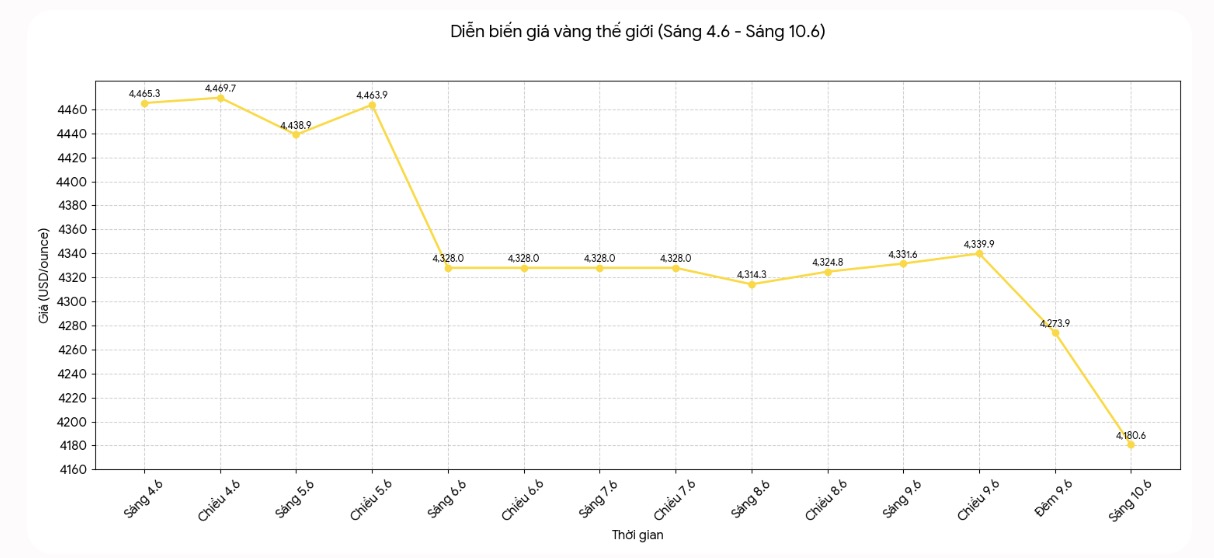
Even, a part of the market is starting to consider the scenario of interest rates remaining at a higher level for longer, or the Fed may have to tighten further if inflation rises again.
Gold is an unprofitable asset. Therefore, as US bond yields rise and interest rates are forecast to remain high, the opportunity cost of holding gold also increases. This is the reason why the precious metal is gradually losing its attractiveness in the short term, although safe-haven demand has not completely disappeared.
The gold market is under pressure as expectations of interest rate hikes and negative technical signals overwhelm safe-haven demand. According to Kitco, gold prices have fallen sharply after breaking the important support zone, including the 200-day moving average - a milestone often followed by many medium and long-term investors to assess trends.
Expert Ole Hansen - Head of Commodity Strategy at Saxo - believes that the fall of gold prices below the 200-day moving average is not only technically significant.
According to him, this is a threshold used by many investors as a trend indicator; if the price remains below this zone, some portfolios may have to adjust, and new cash flow into gold may slow down.
Meanwhile, expert Fawad Razaqzada - market analyst at FOREX. com - warned that technical pressure on gold has increased after a sharp decline last weekend. He believes that if inflationary pressure is hotter than forecast, gold prices are at risk of testing a large support zone around $4,000/ounce.
According to this expert, the loss of gold to the 200-day moving average makes the technical structure worse and does not rule out the possibility that the price will be under further pressure if sellers continue to control the market.
Geopolitical tensions no longer strongly support gold as in previous periods. Usually, instability in the Middle East can trigger safe-haven demand for gold.
However, in the current context, this development has pushed oil prices up, raising concerns about inflation and strengthening the Fed's ability to keep interest rates high. Therefore, the geopolitical factor is somewhat "distorted", not enough to help gold regain its upward momentum.
In addition, the fact that gold prices had increased sharply in the previous period also caused profit-taking activities to appear when the market lacked new momentum. Some large financial institutions began to lower short-term gold price targets.
Citigroup said that the bank's commodity analysis team lowered the 3-month gold price target from $4,300/ounce to $4,000/ounce, citing improved macroeconomic conditions and less supportive demand.
In general, the decline in gold prices recently does not stem from a single cause, but is a combination of many factors: strong USD, increased bond yields, expectations of the Fed reducing interest rates being pushed back, inflation risk from oil prices and worsening technical signals. In the short term, the gold market may still fluctuate strongly in the face of US inflation data and new messages from the Fed.
For investors, the current developments show that bottom-fishing risks are still high, especially when gold prices have not formed a clear balanced zone. Although the long-term outlook for gold is still supported by high public debt, geopolitical instability and central bank reserve demand, the short-term trend is still leaning towards caution.


