
Bitcoin price: Maintain the increase
As of 5:51 p.m. today (December 22), Bitcoin - the world's largest cryptocurrency - increased by 1.1%, reaching 89,725.47 USD.
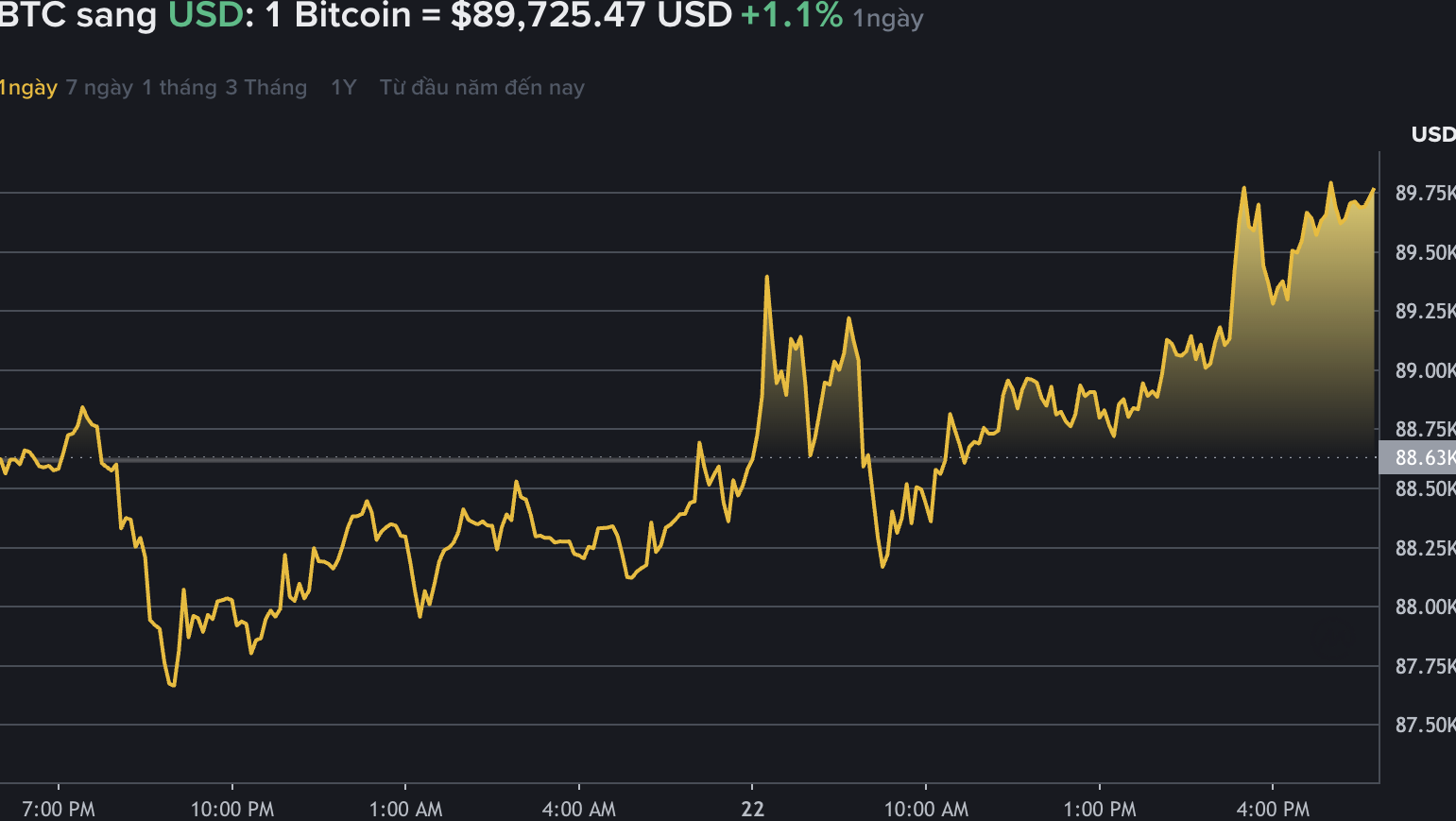
This new price contributes to bringing market capitalization to 1,791 billion USD. Meanwhile, trading volume in the 24 hours was only at 26.57 billion USD.
Assessment and forecast
As 2025 gradually comes to an end, investors' attention is increasingly turned to these historical models. Whether traditional economic cycles or a halving-based movement model will dominate the market in 2026 is still an open question.
Bitcoin's 4-year cycle is a historical model associated with the halving event - taking place about every four years and reducing the block reward for miners by half.
Typically, this cycle goes from accumulation to an uptrend, then reaches an exciting peak next year after halving and finally enters the downward price market. Therefore, if this model continues to repeat itself, 2026 could mark the beginning of a new down cycle for Bitcoin.
However, more and more analysts believe that this model may no longer be suitable in the current market context. Some opinions say that Bitcoin price movements are more affected by the shift in global liquidity, instead of halving events.
The four-year cycle is gone, said Hunter Horsley, CEO of Bitwise. The market has changed. More mature".
So if the 4-year cycle is truly "no longer valid", what could give a clue about the next phase of Bitcoin? Some analysts have cited two broader cycle models: the Benner cycle and the 18-year real estate cycle.
These two long-standing economic models both point to the peak of the market in 2026, directly challenging Bitcoin's 4-year halving cycle.
If these two historical cycles continue, the market could enter a bull run next year. This will bring necessary relief to investors, especially in the context of a weak performance of the cryptocurrency market in the fourth quarter, failing to achieve expectations of price increase.
However, if Bitcoin's 4-year cycle is still valid, the possibility of the market continuing to decline still exists.
In Vietnam, Bitcoin and other cryptocurrencies have not been recognized as a legal payment method and are not protected by law. Investors need to be cautious, avoiding risks from strong price fluctuations and fraud related to cryptocurrency.


