
Gold remains attractive amidst instability
The latest report by Heraeus (a technology corporation based in Germany, founded in 1851) said that in 2026, gold prices will be affected simultaneously by basic demand and short-term speculative cash flow. Notably, immediately after the US began its military campaign in Iran in early March, gold prices and stock markets simultaneously fell.
According to analysts, gold continues to weaken despite escalating geopolitical tensions, unable to surpass the peak of over 5,400 USD/ounce set at the beginning of the month. After falling below the 50-day moving average on March 18, gold prices fell sharply and only recovered when it touched the 200-day moving average at the end of March.
Heraeus said that in the long term, the core attractiveness of gold remains unchanged thanks to its non-reliance on issuing partners if holding assets, while preserving purchasing power against inflation and currency devaluation.
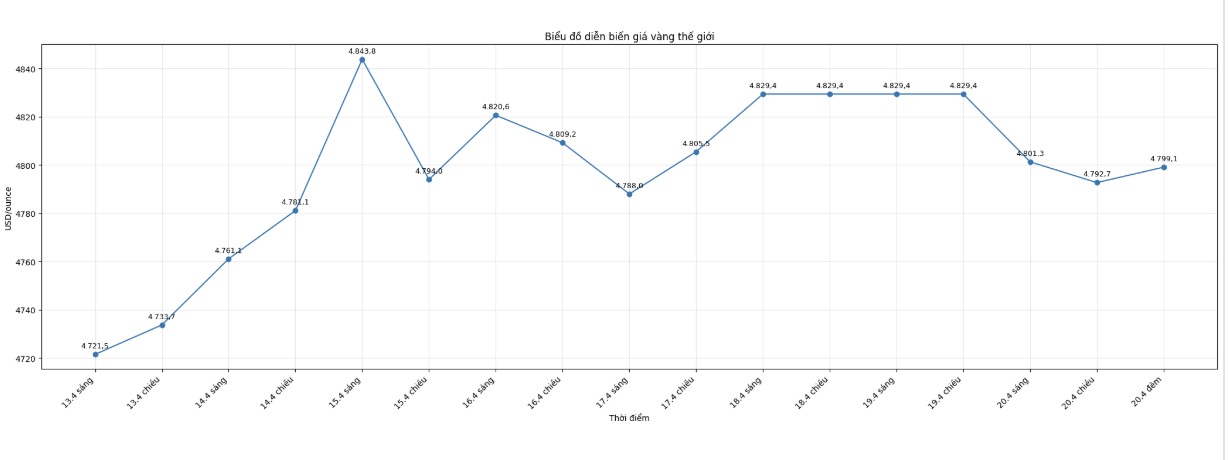
However, in the period 2025 - early 2026, the rapid increase in gold has attracted a large number of speculators to participate in the market, making short-term price fluctuations stronger. This is the reason why gold prices sometimes fluctuate contrary to normal expectations during instability periods.
Fed likely to continue to ease
Heraeus believes that the US Federal Reserve (Fed) is unlikely to raise interest rates even though inflation in the US is rising.
In the 12 months up to March, the US consumer price index (CPI) increased to 3.3%, 0.9 percentage points higher than the previous month. The main reason comes from strong energy prices, especially gasoline and oil.
However, core inflation - excluding food and energy - only increased slightly to 2.6%. According to Heraeus, the Fed is likely to focus on a more stable core index and maintain a soft stance to avoid harming the economy.
High prices boost gold exploration
The global gold exploration budget has increased by 11%, to 6.15 billion USD thanks to record gold prices. Large corporations account for 57% of the total budget, mainly focusing on extending the lifespan of existing mines, searching for ore in neighboring areas and increasing mining capacity.
However, spending on new mine exploration (greenfield) has decreased due to long development time, high risks and increased capital costs in a high interest rate environment. Heraeus warned that this could lead to a risk of future supply shortages as many mines become obsolete and ore content decreases.
Silver also benefits from price increases
Not only gold, the silver exploration budget has also increased sharply. In 2025, silver surpassed nickel to become the fourth most explored metal in the world, only after gold, copper and lithium.
The number of silver projects increased by 26%, while the number of projects with economically efficient ore content increased by 37%. Silver demand in India also increased sharply as the country imported 7,334.96 tons of silver in the fiscal year ending March 2026, an increase of 42% compared to the previous year. Total import value increased by nearly 150%, to 12.05 billion USD.
Global silver mining supply in 2025 reached 846.6 million ounces, up 3% compared to 2024. Recycled supply also increased by 2%, to 197.6 million ounces thanks to high prices stimulating sales from silver jewelry and household appliances.


