
According to precious metal analysts at Heraeus, gold and silver prices are stuck in the wave zone established from the early stages of the US-Iran conflict. Meanwhile, high price levels and new import tariffs are affecting some important areas of the Asian market.
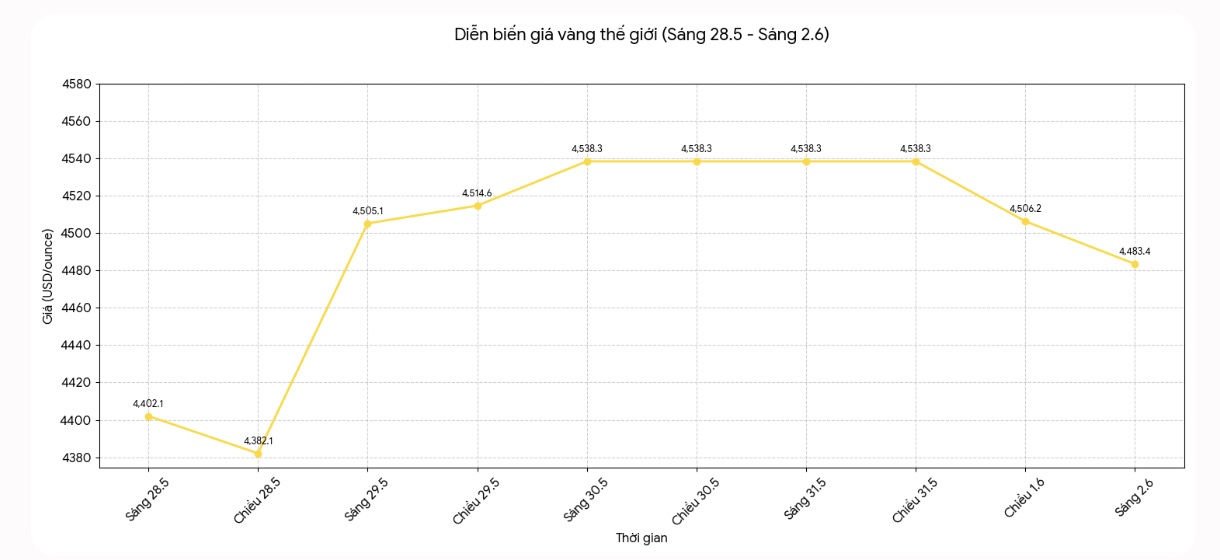
In the latest report, analysts said that gold prices continue to be dominated by constantly changing developments in negotiations between Iran and the US.
Gold prices initially fell this week after signals that negotiations between Iran and the US were progressing towards ending the conflict and reopening the Strait of Hormuz.
Although the picture is still unclear, when the two sides make contradictory statements, it seems they have moved much closer to a solution than a few weeks ago.
Then, on May 28, more specific details about an agreement appeared, helping gold prices stabilize again. The potential agreement likely includes the US ending the blockade of the strait, and Iran allowing all commercial ships to pass safely.
It is likely that more controversial parts of the agreement, such as the Iranian nuclear program issue, will be postponed and negotiations will continue for about 60 days after the agreement is signed," the analysis team wrote.
Since the US-Iran war began, precious metals have tended to sell off when tensions escalate, due to concerns about inflation causing interest rates to rise; then recover when tensions cool down," analysts wrote. "However, this time, the precious metals initially fell again after the clearest signal ever showing that the conflict may be about to end.
There are two potential reasons for this development. First, the market has become less sensitive to geopolitical news, due to many conflicting and unreliable information appearing. Second, and more worryingly, the market believes that damage has occurred, short-term inflation is almost inevitable and interest rate hikes will certainly continue.
The weekend recovery starting from May 28 shows that the first possibility seems more reasonable. However, if the agreement is not signed quickly, the focus will shift to the US Federal Reserve (Fed) - an agency that has so far maintained a neutral stance in the face of interest rate speculation" - the analysis team added.
The futures contract market currently shows a probability of about 50% that the Fed will raise interest rates by the end of the year.
Analysts at Heraeus believe that as PCE inflation readings increase, the Fed is under increasing pressure to move to a tougher stance.
The analysis team also noted that Malaysia has followed in India's footsteps in imposing import taxes on gold bars, with a new tax rate of 10% on gold bars. “This tax rate only applies to LBMA standard gold bars with 9999 purity.
Last week, India announced an increase in import taxes on a series of gold products to protect its domestic currency and strengthen the balance of payments," the analysis group said.
Moving to the silver market, Heraeus analysts said that this metal has also been sideways in the range since the US-Iran war began.
Silver prices have fluctuated in the range of 70-90 USD/ounce since the sell-offs at the end of January and early February, except for two short periods when prices temporarily surpass or fall below this range.
The first phase took place right before the Middle East conflict began, when silver prices seemed to have a strong recovery, reaching 93.79 USD/ounce on February 27, before being blocked by the start of the war. The second phase was in mid-March, before the first signs of cooling appeared, silver prices fell to 67.92 USD/ounce; after escalating de-escalation negotiations, prices recovered from this bottom" - the analysis team wrote.
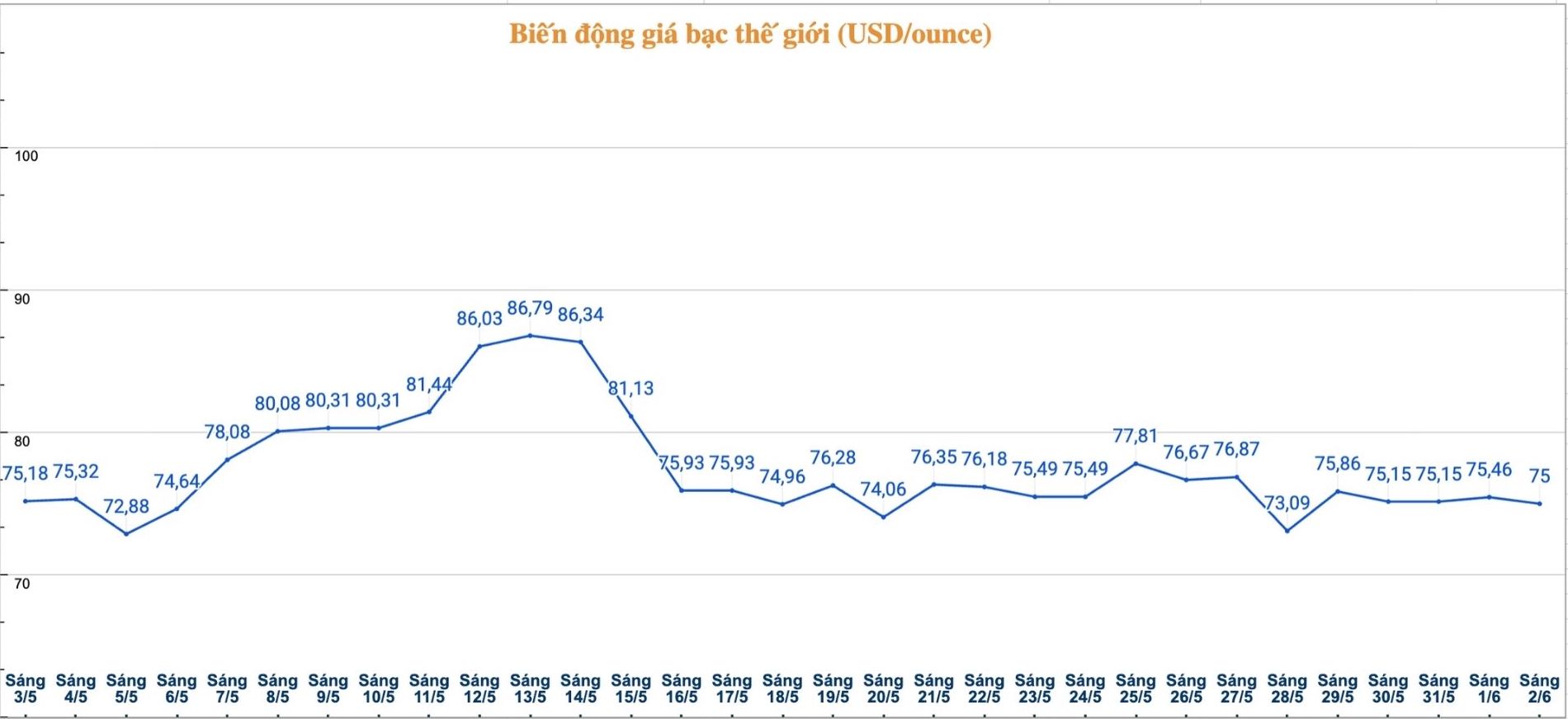
With the price currently near the bottom of the fluctuation zone, it is likely that the escalating conflict will seriously challenge the 70 USD/ounce mark, even clearly breaking it. Conversely, a peace agreement could help silver prices recover to the mid-barrier of the amplitude," the analysis group warned.
Analysts also noted that smartphone demand in Europe is improving, despite weak consumer sentiment. The smartphone market is a small but growing segment in silver demand, with about 0.3 grams of silver per device, used for electrical outlets and welding.


