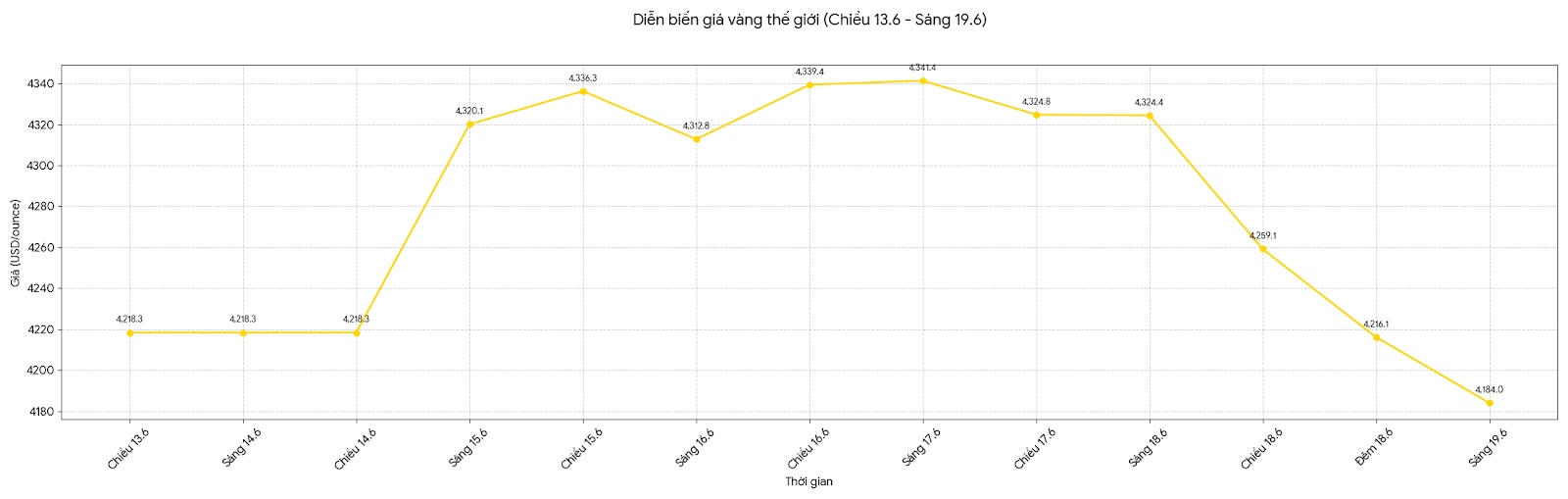
After maintaining the important support level of 4,000 USD/ounce and rebounding strongly at the beginning of the week, the gold market once again reversed when prices tended to close a shortened trading week near the closing level of the previous week.
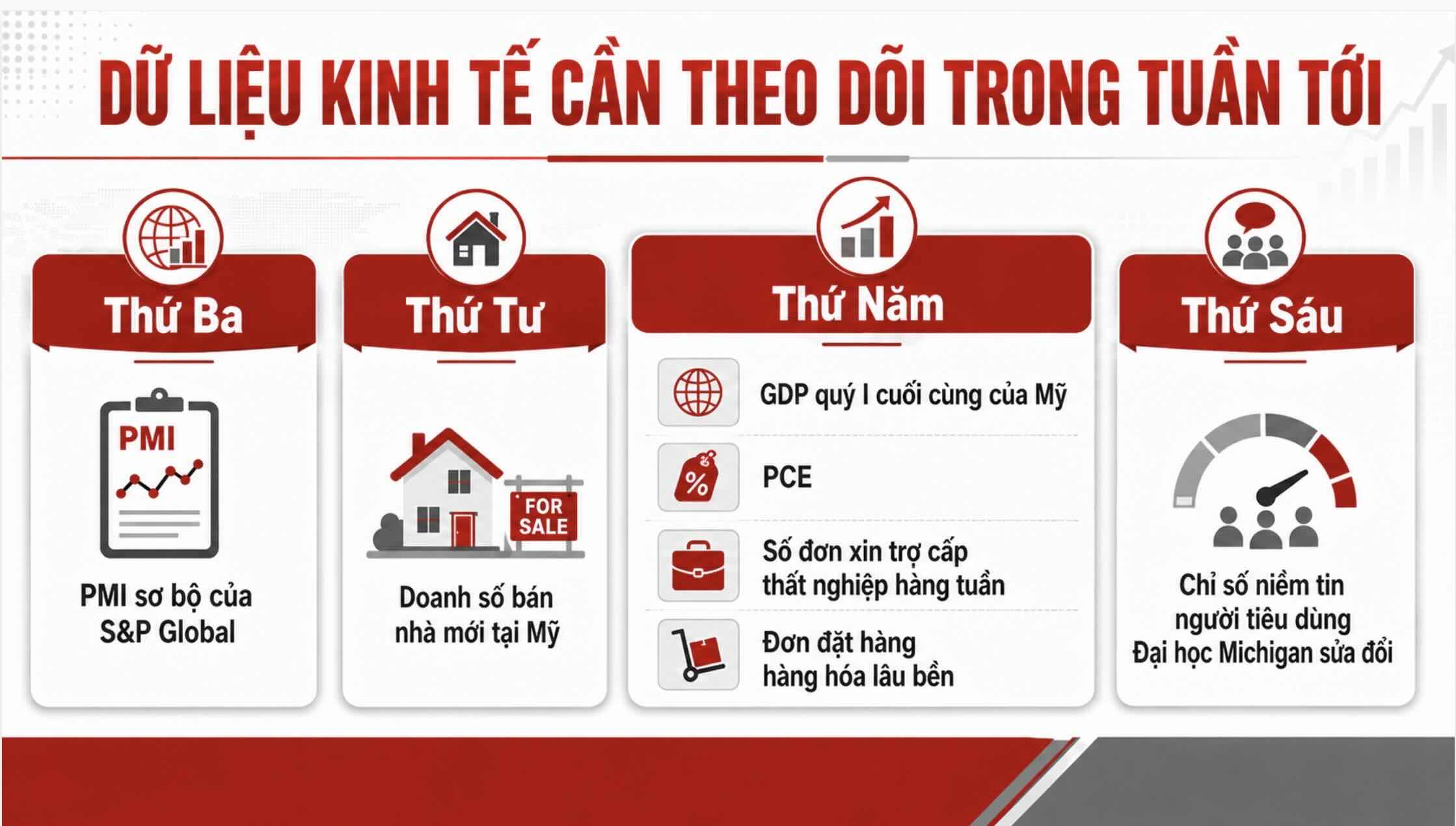
The US market will close on Friday for the Juneteenth holiday.
For some investors, this holiday came more than in time, after the gold market suffered strong pressure at the end of Wednesday's session. The reason is that updated economic forecasts from the US Federal Reserve (Fed) show the possibility that interest rates may be raised again before the end of the year.
The outlook for the US central bank has changed sharply compared to March, when the commission was still considering the possibility of interest rate cuts.
At the same time, new Fed Chairman Kevin Warsh reaffirmed the agency's tough stance, emphasizing the focus on price stability. "The way to manage monetary policy properly is to fulfill the task that Congress assigns to us, which is to ensure price stability," he said.
Mr. Warsh's statement, along with the new expectations of the Fed, put pressure back on gold prices, causing the market to almost completely erase the increase from the beginning of the week. The nearest spot gold price traded at 4,230.70 USD/ounce, only up a few USD compared to the closing price last week.
Mr. Ole Hansen - Head of Commodity Strategy at Saxo Bank - said that after the sell-off, the gold market is currently in a halfway position.
Psychology is unlikely to improve significantly until price movements become more positive. In this aspect, the 200-day moving average is still the key area. Gold is currently trading about 200 USD lower than this threshold, making investors who follow the trend still cautious in returning to buying positions" - he said.
Mr. Hansen believes that at least gold prices need to continue to maintain a support zone above 4,000 USD/ounce.
Successfully protecting this price range will maintain the view that the recent sell-off is just a relatively shallow correction, despite causing a lot of pressure, in a strong upward trend starting from the bottom of 2022 around 1,615 USD/ounce and reaching a record high in January at 5,595 USD/ounce" - he said.
Analysts believe that the Fed's tough stance has overwhelmed changes in geopolitical instability, as the administration of US President Donald Trump prepares to sign a new peace agreement with Iran, ending a months-long war.
Although resolving the conflict will help reopen the Strait of Hormuz, thereby ending energy supply disruptions, some analysts believe that more time is needed to assess the extent of damage to energy infrastructure and the global economy.
Oil prices may remain high as countries have to rebuild strategic reserves. This environment continues to increase concerns about inflation and forces the Fed as well as other central banks to maintain a tough stance in the near future.

Mr. Simon-Peter Massabni - Head of Business Development at XS. com - believes that gold is stuck between a tough Fed and cooling geopolitical tensions, thereby creating short-term volatility.
Gold is entering a phase characterized by higher volatility, which is a clear trend. On the one hand, the market is under pressure from a stronger USD, Fed's tough policies, and rising US Treasury bond yields. On the other hand, persistent inflation, global economic instability, and the possibility of geopolitical tensions re-emerging still provide support," he said.
In the medium term, I continue to see any weakening of gold prices as a strategic buying opportunity, rather than the beginning of a prolonged downward trend.
Although the price has just decreased, I don't think the long-term uptrend of gold has ended. Financial markets often overreact to short-term developments, while fundamental structural factors determine the long-term trend.
Inflation is still higher than the targets of central banks, central banks around the world continue to increase gold reserves and US public debt is still expanding at an unprecedented rate," he added.