
Gold prices fall as expectations of Fed interest rate hikes increase
As of 8:10 am on September 16 (Vietnam time), spot gold prices on the international market decreased by 0.32%, to 4,279.5 USD/ounce. In the same trend, world silver prices decreased slightly by 0.02%, to 63.54 USD/ounce.
Other precious metals also recorded negative developments. Platinum prices fell 0.28%, to $1,771/ounce, while palladium fell 0.08%, to $1,284/ounce.
Gold's decline continued after a trading session in the US when the precious metal was under pressure from many macroeconomic factors. In the previous session, Comex gold futures closed the session at 4,291.6 USD/ounce, down 0.43%, while silver fell 0.4% to 63.236 USD/ounce.
The market is currently focused on the monetary policy decision of the US Federal Reserve (Fed). Data on the derivatives market shows that investors are betting heavily on the possibility of the Fed raising interest rates by another 0.25 percentage points.
Interest rate hikes are assessed to have largely been reflected in asset prices. However, the focus of attention lies in the Fed's policy orientation message after the meeting, especially the possibility that this agency will continue to maintain its monetary tightening stance in the coming time.
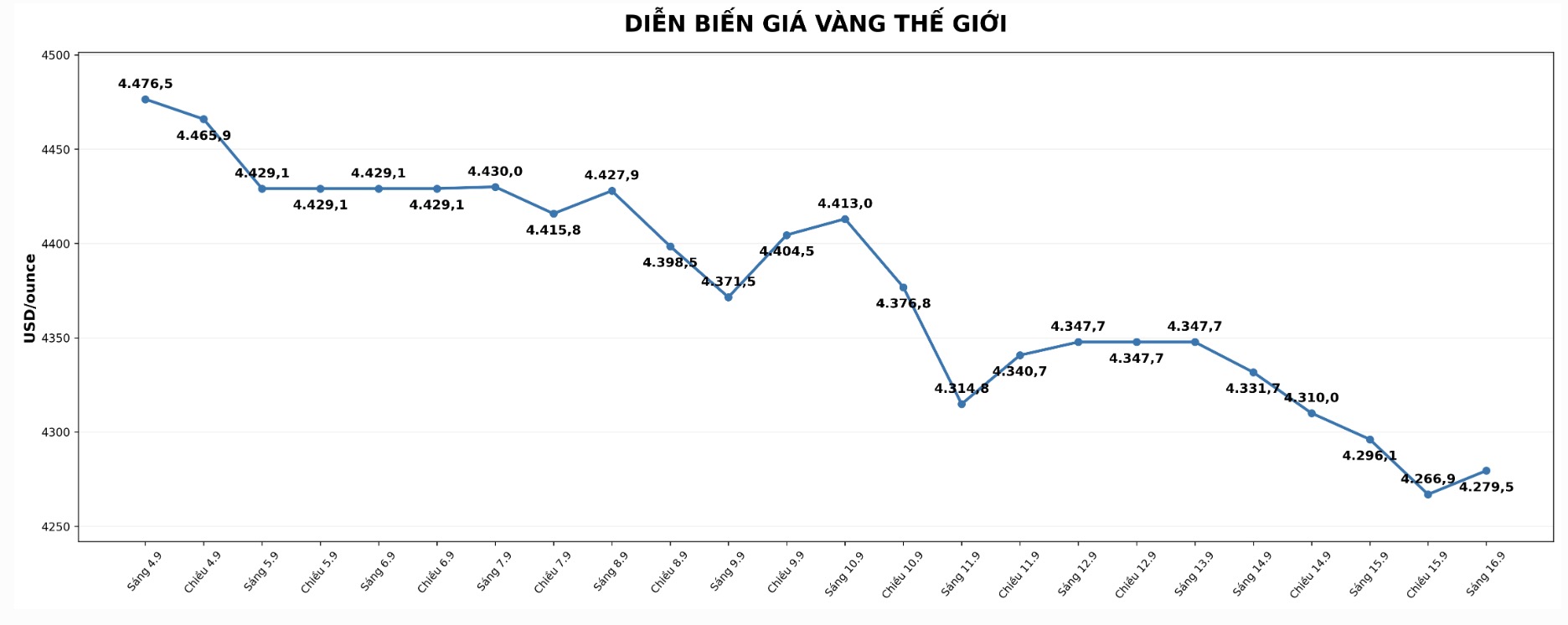
If the Fed signals that this interest rate hike marks the beginning of a new tightening cycle, gold may continue to be under pressure due to rising real yields. Conversely, if the Fed believes that this move is only aimed at responding to the risk of inflation from energy prices, the gold market may find a balance.
US and USD bond yields put pressure on precious metals
One of the biggest pressures on gold prices today is the yield of 10-year US government bonds. This yield at one point exceeded 5% before remaining around 5%, making non-performing assets like gold less attractive.
In addition, the continued strength of the USD also reduced gold's purchasing power for investors holding other currencies.
The gold market is being affected in opposite directions. On the one hand, geopolitical tensions in the Middle East and the risk of energy supply disruptions still create support for safe-haven asset demand. On the other hand, rising oil prices further increase concerns about inflation, boosting expectations that the Fed will maintain higher interest rates.
Brent oil prices in the most recent session closed at 108.75 USD/barrel, while WTI oil at times surpassed 106 USD/barrel. The fact that energy prices are maintained at a high level is causing the market to worry that inflationary pressure may return.
Gold faces important support zone
Technically, spot gold prices have now retreated to their lowest level in about 6 weeks and are trading below the resistance zone of 4, 316 - 4,355 USD/ounce.
Technical experts believe that if buying pressure returns, gold needs to surpass the 4,316 USD/ounce mark to head towards higher areas such as 4,355 USD/ounce and 4,402 USD/ounce.
In the opposite direction, if selling pressure continues to increase, noteworthy support zones are at 4, 283 USD/ounce, 4, 252 USD/ounce and 4, 223 USD/ounce.
For silver, this metal is having difficulty overcoming the resistance zone of 63.76 USD/ounce. If it does not maintain the support zone of 62.34 USD/ounce, the price of silver may continue to fall to lower levels.
The developments of gold in the coming sessions may depend heavily on the message from the Fed, along with fluctuations in the USD, US bond yields and the energy market.
Update on domestic gold prices
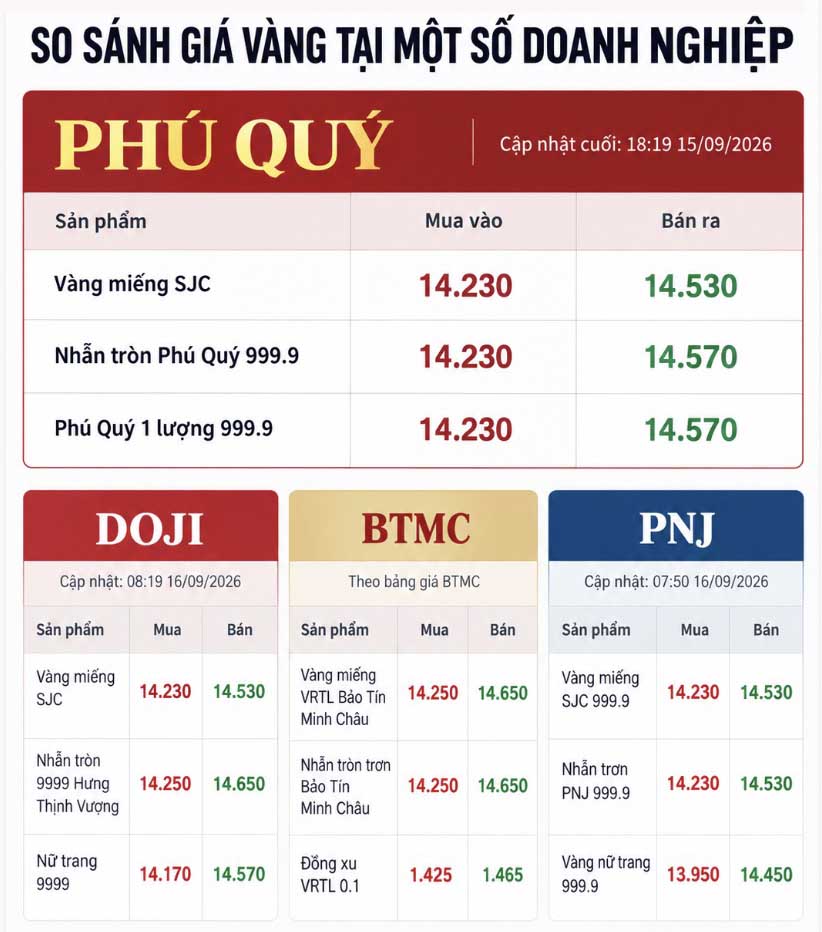
The article only updates the developments of the gold market and factors affecting the price of precious metals, not investment recommendations.


