
World gold prices continue to face strong selling pressure as investors worry that rising inflation will force the US Federal Reserve (Fed) to maintain tight monetary policy. The strengthening USD, rising US bond yields and expectations of continued interest rates are making the precious metal lose its appeal.
As of 3:15 PM on September 15 (Vietnam time), spot gold price decreased by 0.79%, to 4,266.9 USD/ounce. In the same trend, world silver price decreased by 0.85%, to 62.63 USD/ounce. Platinum price decreased by 1.02%, to 1,741 USD/ounce, while palladium decreased by 0.63%, to 1,258 USD/ounce.
Notably, the decline occurred in the context that the market still faces many geopolitical instabilities. However, instead of promoting cash flow to gold as a safe haven asset, these factors are increasing concerns about inflation and interest rates.
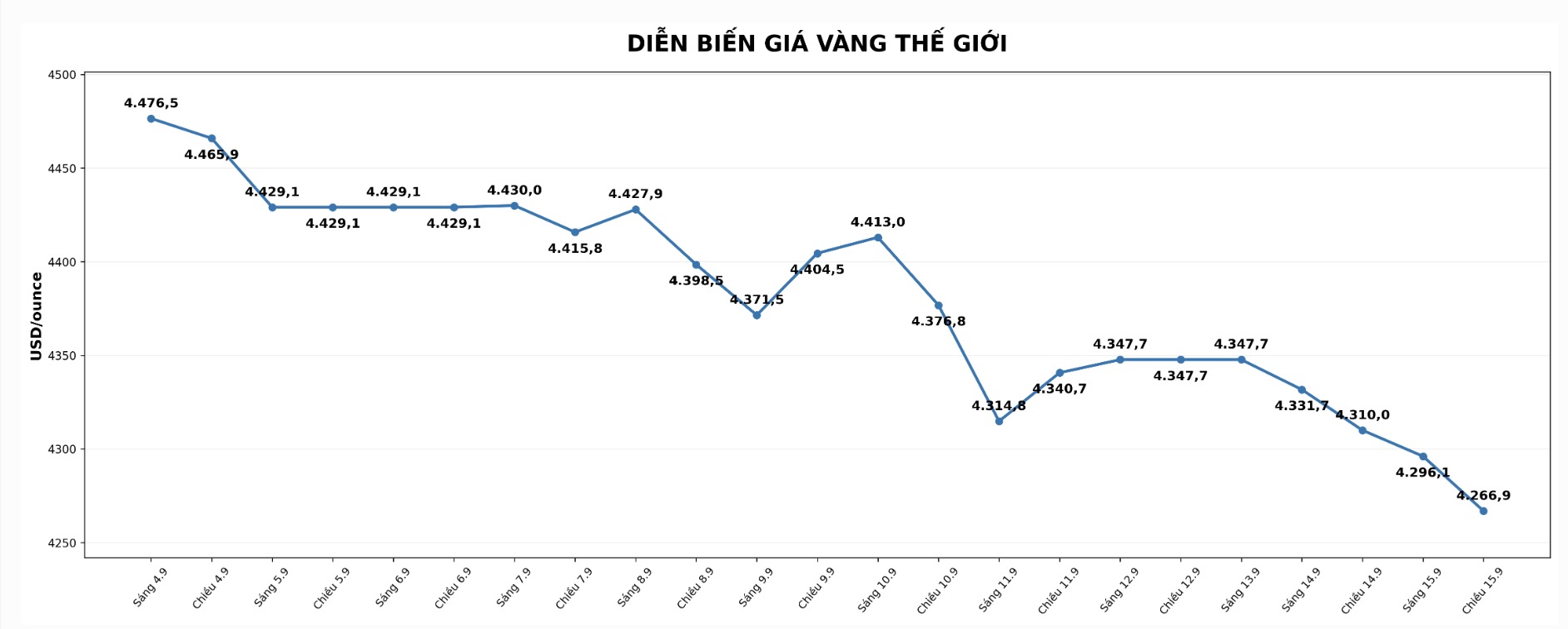
Rising oil prices make expectations of Fed interest rate hikes stronger
One of the important reasons for gold being sold off is the rebound in oil prices.
Tensions in the Middle East continue to raise concerns about the risk of energy supply disruptions. Rising oil prices make the market worried that inflationary pressure in the US could extend further, making it difficult for the Fed's inflation control target.
Usually, high inflation can support gold prices because the precious metal is considered a defensive tool. However, in the current context, investors are focusing on the second impact of inflation: The possibility that the Fed will have to continue raising interest rates.
High interest rates increase the opportunity cost of holding gold, because gold does not generate yields like bonds or other financial assets.
The market is currently betting heavily on the possibility of the Fed raising interest rates by another 0.25 percentage points, bringing the operating interest rate to the 3.75% - 4% range in the upcoming policy meeting.
US bond yields rise, gold under double pressure
Another factor putting strong pressure on gold is the developments in the US bond market.
The yield on 10-year US Treasury bonds has risen to its highest level since 2007, reflecting expectations that interest rates could remain high for a longer time.
When bond yields increase, investors have more safe profitable options besides gold. This causes part of the cash flow to withdraw from precious metals to shift to yield-generating assets.
In addition, rising yields also often support the USD. Because gold is valued in USD, the strengthening greenback makes gold more expensive for buyers using other currencies, thereby putting pressure on demand.
Geopolitical instability cannot push gold up
A noteworthy point in this decrease is that gold went down despite geopolitical tensions still existing.
New attacks in the Middle East and the risk of oil supply disruptions are still developing complicatedly. However, the market is currently reacting more strongly to the story of interest rates instead of shelter factors.
In other words, investors are concerned that current geopolitical risks could cause energy prices to rise, thereby leading to inflation and forcing central banks to maintain a tough monetary policy.
Market awaits new signals from Fed
In the short term, the focus of the gold market will be the message from the Fed after the policy meeting.
If the Fed signals that interest rate hikes are only short-term corrections and the pace of tightening will slow down, gold may find support.
Conversely, if the Fed shows willingness to maintain or continue to raise interest rates to control inflation, selling pressure on gold may continue.
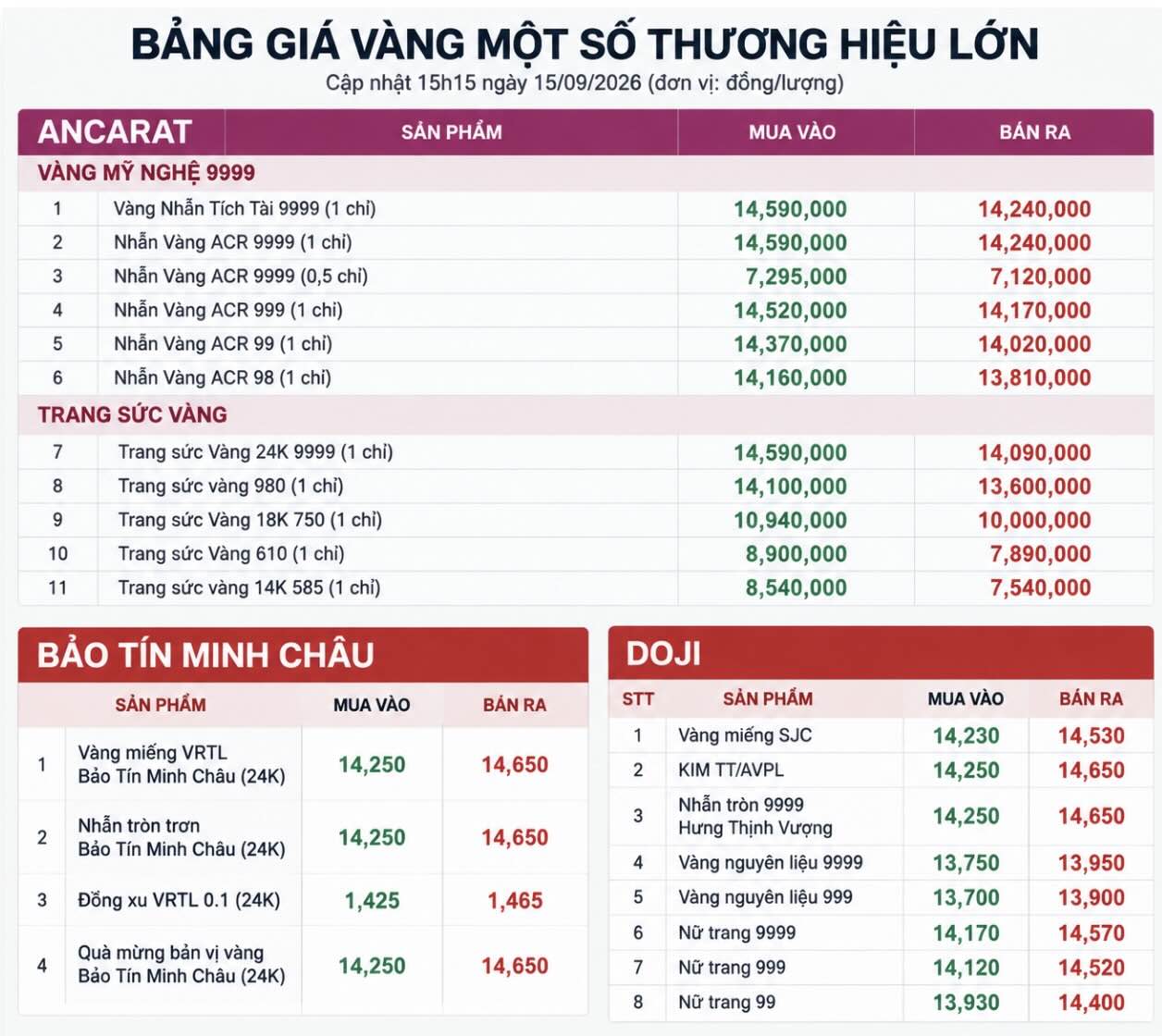
Update on domestic gold prices
The article only updates the developments of the gold market and factors affecting the price of precious metals, not investment recommendations.


