
World gold prices continued to face pressure in the trading session on September 15 when investors re-evaluated the US interest rate outlook ahead of the Fed policy meeting. Pressure from rising bond yields and rising energy prices caused cash flow to leave precious metals, although safe-haven demand is still present due to geopolitical instability in the Middle East.
Recorded at 8:10 am on September 15 (Vietnam time), spot world gold price was at 4,296.1 USD/ounce, down 0.12% compared to the previous session and officially left the price range of 4,300 USD/ounce. Meanwhile, world silver price increased slightly by 0.09%, to 63.13 USD/ounce. Platinum price decreased by 0.45%, to 1,751 USD/ounce, and palladium increased by 0.32%, to 1,270 USD/ounce.
Gold prices are under pressure from expectations of interest rate hikes
The downward trend of gold prices appeared in the context of the market increasing expectations that the Fed may continue to raise interest rates in the upcoming policy meeting. Newly released inflation data shows that price pressure in the US has not cooled down as expected.
The consumer price index (CPI) in August increased by 0.4% compared to the previous month, while annual inflation remained at 3.4%. The core CPI, excluding energy and food groups, fluctuated sharply, up 0.3%, higher than market forecasts.
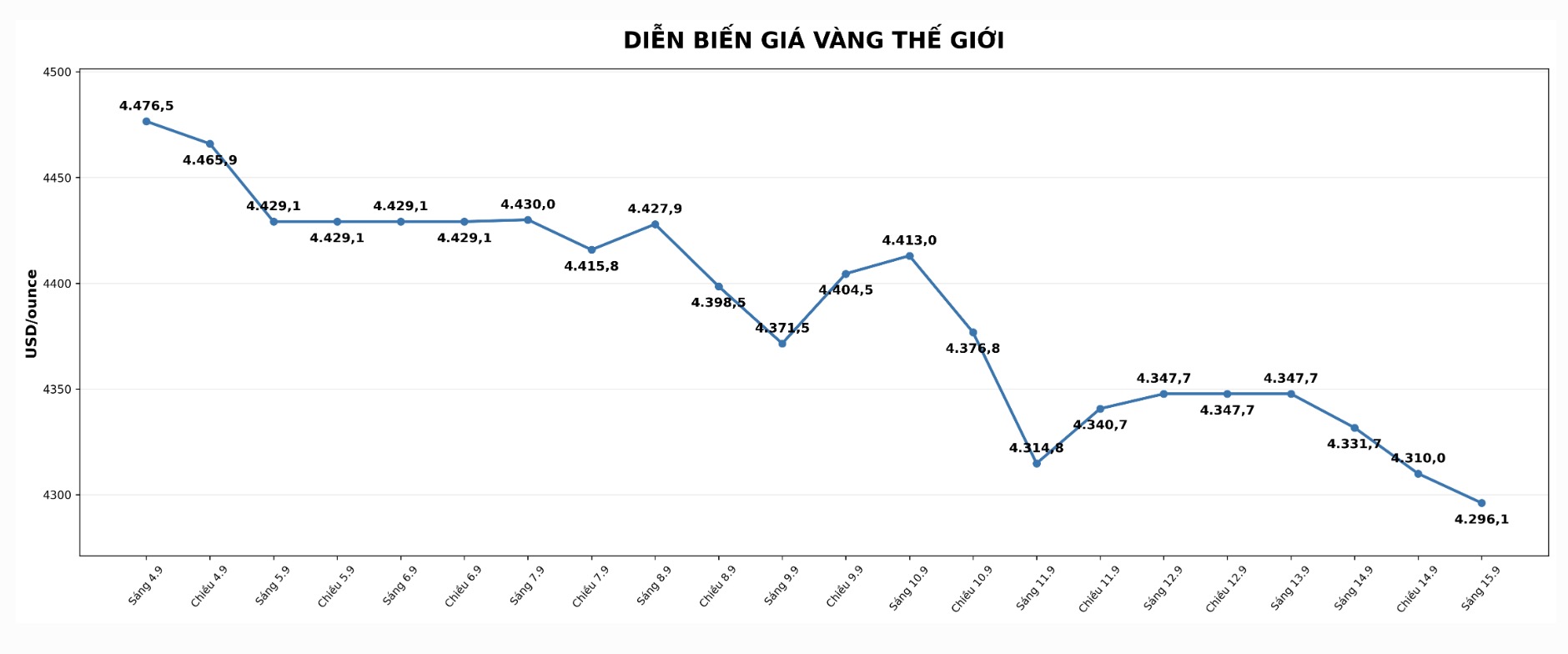
These data, along with the upward momentum of oil prices, make investors assess the possibility that the Fed must maintain a tougher monetary policy to control inflation. The market is currently leaning more towards the scenario that the Fed may raise interest rates by another 0.25 percentage points.
US government bond yields therefore continue to remain high, putting pressure on gold – an asset that does not generate regular cash flow. As bond yields rise, the opportunity cost of holding gold also increases, causing the attractiveness of precious metals to decline in the short term.
Rising oil prices create a stalemate for gold
Besides the interest rate factor, the gold market is also affected by the tense developments in the Middle East. Attacks targeting energy infrastructure and concerns related to oil transportation through important shipping routes continue to increase geopolitical risks.
Brent oil prices at times exceeded 108 USD/barrel, while WTI oil maintained above 100 USD/barrel. The upward momentum of energy both supported gold thanks to risk hedging demand, and put pressure by increasing inflation concerns and strengthening the possibility of the Fed continuing to tighten policy.
Market experts believe that gold is being pulled between two opposing forces. One side is the need to shelter from geopolitical instability and energy security concerns. The other side is pressure from the USD, US bond yields and prolonged high interest rate prospects.
Technically, the short-term trend of gold has weakened after the price continuously lost important support zones. The area around the 50-day moving average, currently at about 4,266 USD/ounce, is considered an area to be monitored. If the price breaks through this zone, selling pressure may increase.
In the coming sessions, the market will focus on the Fed's policy decisions and especially the message about the interest rate roadmap in the coming time. Any signal that the US central bank continues to prioritize anti-inflation may put more pressure on gold prices.
The article only updates the developments of the gold market and factors affecting the price of precious metals, not investment recommendations.


