
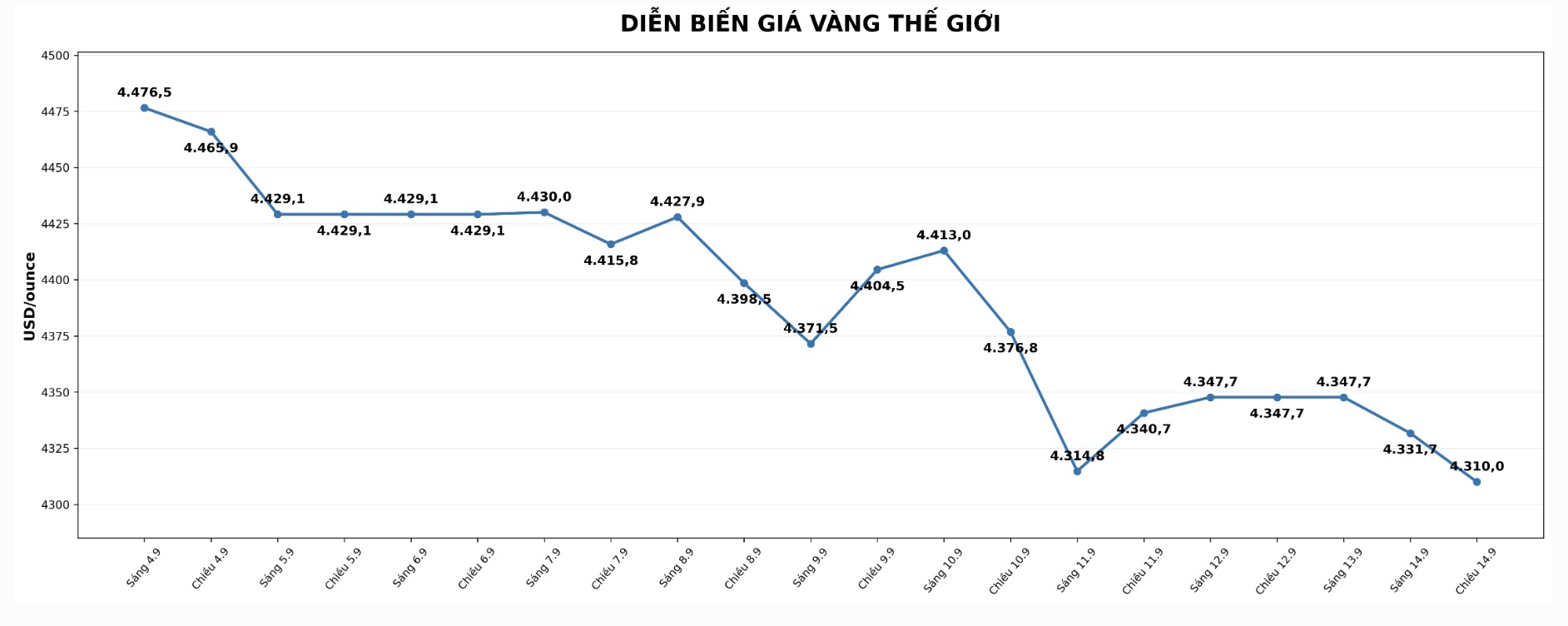
World gold prices fell in the trading session on September 14 as rising oil prices increased concerns about inflation, while strengthening the ability of central banks to continue to maintain tight monetary policy.
At 15:00 on September 14 (Vietnam time), world gold prices decreased by 0.87%, to 4,310 USD/ounce. In the same trend, silver prices decreased by 1.85%, to 63.18 USD/ounce; platinum decreased by 1%, to 1,773 USD/ounce; palladium decreased by 0.78%, to 1,270 USD/ounce.
The downward trend of gold takes place in the context of the market focusing on the upcoming monetary policy meeting of the US Federal Reserve (Fed). New inflation signals in the US are increasing expectations that this agency may continue to raise interest rates to control price pressure.
Rising oil prices put pressure on precious metals
One of the factors strongly impacting the gold market in the first session of the week was the upward momentum of oil prices. Oil prices rose more than 2% after new attacks in the Middle East region raised concerns about global energy supply.
Tense developments in the Persian Gulf region, along with the disruption of an important Saudi Arabia oil pipeline, have raised market concerns about the risk of supply being affected. Meanwhile, diplomatic efforts to reduce regional tensions have not yielded clear results.
Usually, gold is considered an inflation hedging asset when prices rise. However, in the current context, rising oil prices create a two-way impact. On the one hand, high inflation may support the demand for gold holdings. On the other hand, if inflation forces central banks to maintain or increase interest rates, the opportunity cost of holding gold will increase.
Gold is an asset that does not generate fixed cash flow, so it is often under pressure when interest rates rise. Higher bond yields may cause investors to shift to profitable assets instead of precious metals.
Market awaits signal from Fed
Downward pressure on gold increased after the latest economic data showed consumer inflation in the US rebounded in August. Some indexes reflecting fundamental price increases also recorded the strongest increase in months, reducing expectations of the Fed's ability to soon ease monetary policy.
According to developments in the financial market, the possibility of the Fed raising interest rates in the policy meeting this week has been significantly adjusted upwards after new inflation data was released.
Not only the US, the market is also paying attention to the move of the Bank of Japan (BOJ). Signals showing that inflation is maintained at a high level and economic activity is still stable are increasing the possibility that major central banks will continue to take cautious steps with interest rate policies.
Despite short-term pressure, gold still receives investor interest thanks to its role as a safe-haven asset in the context of prolonged geopolitical instability. Fluctuations in the Middle East, monetary policy risks and global economic prospects are still factors that can create support for the precious metal.
Investors are currently focusing on monitoring new signals from the Fed to assess the next direction of interest rates. This is considered an important factor determining the trend of gold prices in the coming trading sessions.
The article only updates the developments of the gold market and factors affecting the price of precious metals, not investment recommendations.


