
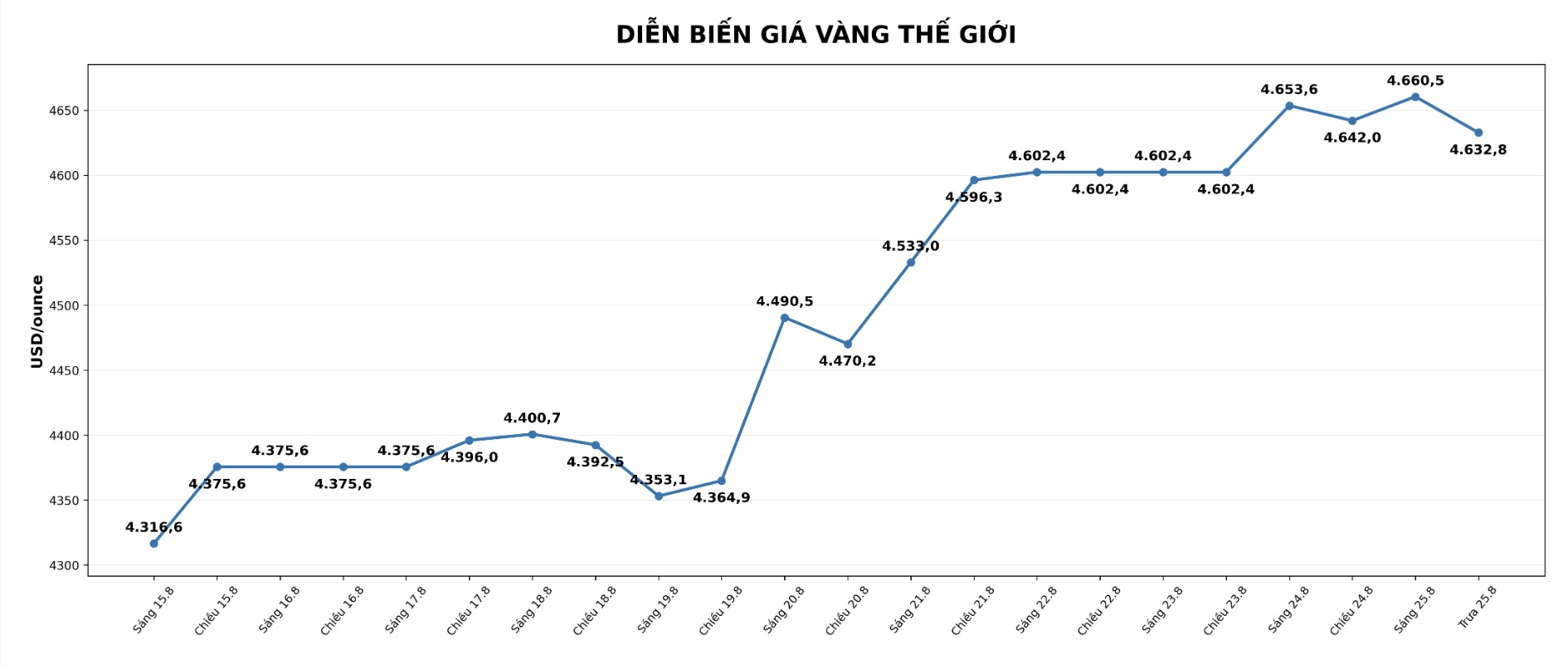
After a strong increase last week, world gold prices showed signs of adjustment in the trading session on August 25. Investors are currently focused on the important US inflation report and the first speech of US Federal Reserve (Fed) Chairman Kevin Warsh at the Jackson Hole conference this week.
According to market data, spot gold prices fell 0.2% to 4,640.39 USD/ounce in the first trading session of the day. Meanwhile, US gold futures prices remained around 4,696 USD/ounce.
The adjustment move took place after the precious metal reached its highest level in more than 3 months before. Although gold prices are under short-term profit-taking pressure, buying power is still maintained as many supporting factors for the upward trend are still present.
One of the factors driving up gold prices recently is concerns related to the strength of the USD and the possibility of increasing inflationary pressure. Information about the US Treasury Department expanding the scale of liquidity support activities through buying back long-term government bonds has increased market interest in safe-haven assets.
In the context of the USD being under a lot of pressure, gold continues to be seen as a channel to protect assets from risks related to inflation and financial instability. However, the upward outlook for the precious metal still depends heavily on interest rate developments in the coming time.
The market is currently particularly interested in the US Personal Consumption Expenditures (PCE) index report - an inflation measure closely monitored by the Fed in the process of monetary policy making. This data released this week may affect expectations about the timing and pace of the Fed's interest rate adjustment.
In addition, Fed Chairman Kevin Warsh's speech at the Jackson Hole conference also received great attention. Investors are looking for more signals about monetary policy management views, especially in the context of US bond yields recently rising again.
In terms of prospects, some market opinions suggest that gold price decreases may attract new buying power as investors still expect the precious metal to head towards higher price zones. However, risks still exist if real interest rates rebound or the USD recovers strongly.
High interest rates are often detrimental to gold because precious metals do not generate periodic cash flow like other profitable assets. Therefore, Fed policy developments will continue to be an important factor determining gold price trends in the coming time.
In addition to economic factors, geopolitical situations continue to affect market sentiment. Tensions related to new US economic sanctions against Iran are increasing investor caution, thereby supporting demand for safe assets.
In the precious metal group, spot silver prices fell 1.3% to $68.01/ounce. Platinum prices fell 1.2% to $1,853.85/ounce, while palladium fell nearly 1% to $1,345.26/ounce.
Although still maintaining high prices, the gold market is entering a sensitive phase as investors are waiting for new economic data to assess the next direction of US monetary policy. Fluctuations in inflation, bond yields and the USD will continue to be factors dominating gold price movements in the short term.
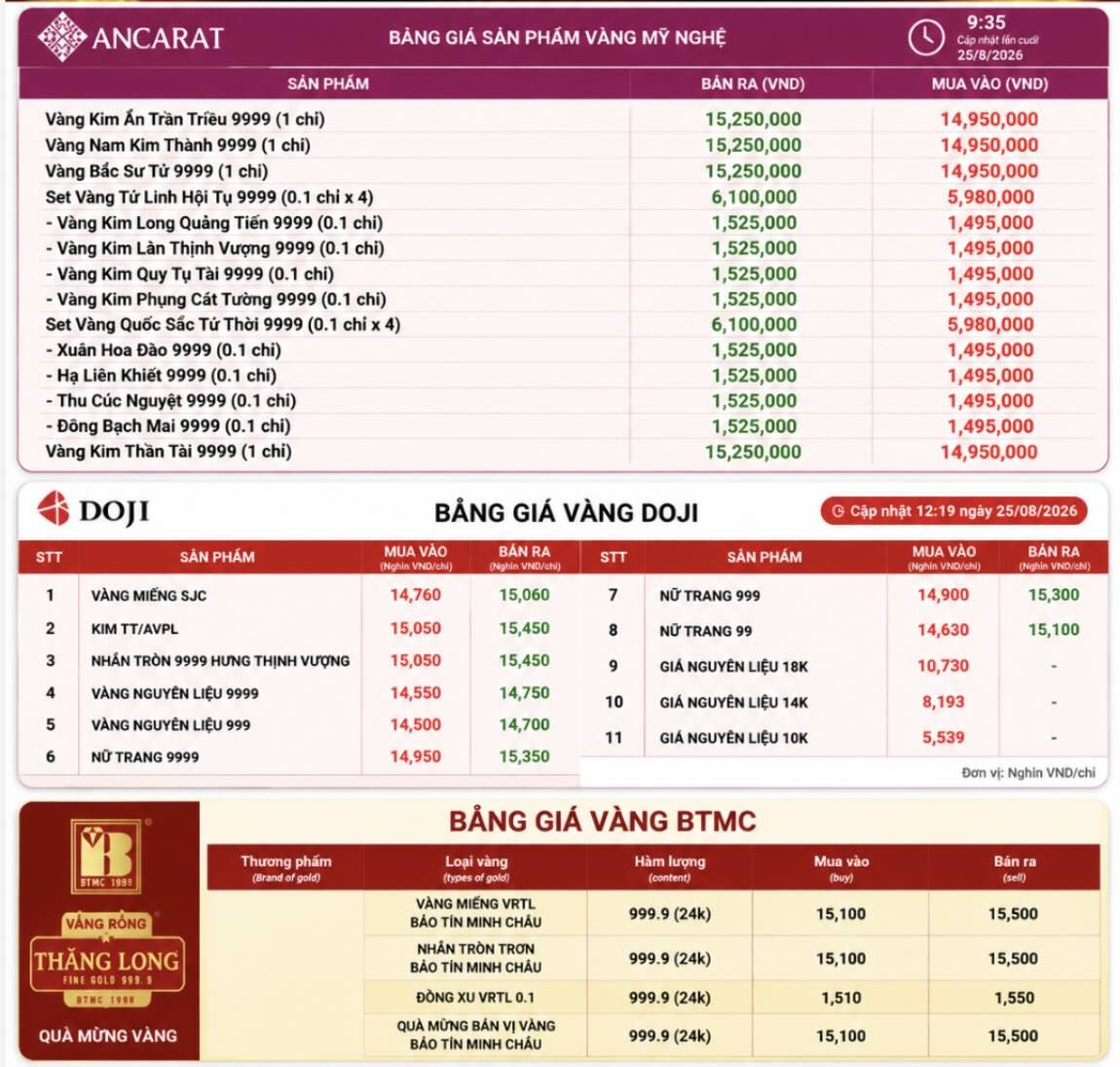
Update on domestic gold prices at noon on August 25th.
The article updates the developments of the gold market, not an investment recommendation. Investors need to assess relevant factors and consider before making a decision.


