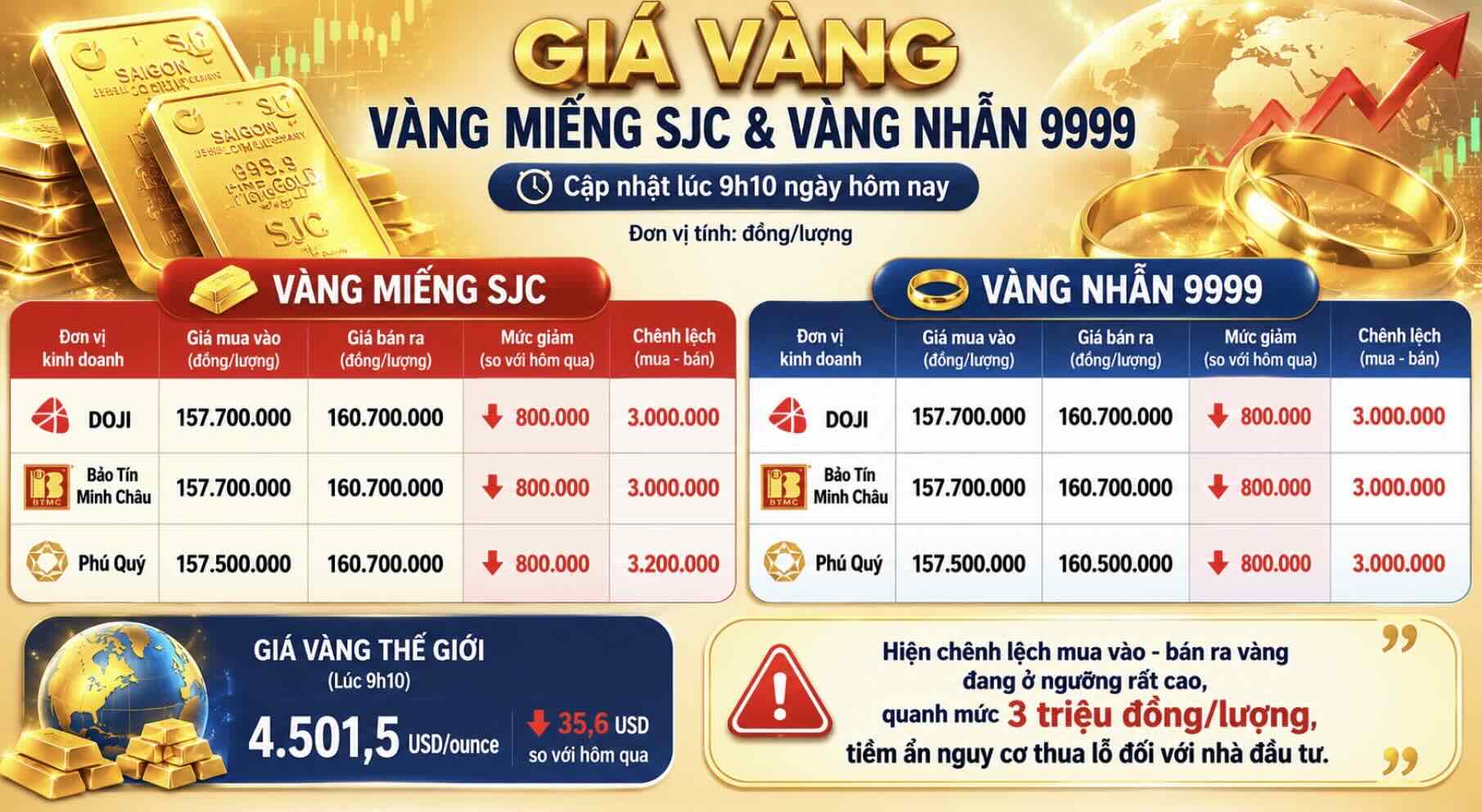
Precious metal analysts at Heraeus (German-based technology and material group, operating in many fields such as precious metals, industrial materials, medical technology, electronics and energy) said that precious metals continue to be affected by rising inflation and changes in interest rate expectations, while demand for gold and silver is being reshaped by India's new import tax mechanism.
In the latest updated report, analysts said that the US consumer price index (CPI) and producer price index (PPI) continued to increase last month, while the Personal Consumption Expenditure (PCE) index is also forecast to increase even higher than the 2% inflation target of the US Federal Reserve (Fed).
Along with the conflict in the Middle East and the subsequent price increase, the market has shifted from the expectation that the Fed will cut interest rates 1-2 times in 2026 to the forecast that interest rates may increase once" - the report stated. "Meanwhile, the views and policy orientations of the US Federal Reserve (Fed) remain unchanged. After Kevin Warsh was confirmed to take over the position of Fed Chairman at the meeting on June 17, his policy options are still quite limited.
Analysts also consider the impact of the recent decision of the Indian Government to increase import taxes on gold and silver from 6% to 15%, applied from May 13.
India imports large quantities of oil, gold and silver. When commodity prices increase, the rupee may be under pressure," the report said. "In history, India has often sought to support its domestic currency by increasing import taxes to reduce import demand and improve the balance of payments.
After this announcement, many gold bar investors in India have sold on the market" - experts said. "Profit-taking activities caused gold prices to reduce discounts by about 200 USD/ounce compared to the official domestic price on May 14. Previously, Indian banks had just resumed imports of gold and silver after agreeing to pay the Integrated Goods and Services Tax (IGST) at 3%.
This occurred after a month of import suspension. The disruption of goods sources combined with the increased tax rate from May 13 may cause India's gold and silver imports in the second quarter of 2026 to decrease significantly.
India imported 0.66 million ounces of gold in April, down 47% compared to the average of 1.25 million ounces per month in the last 5 years," the report added.
In the opposite direction, analysts believe that central banks' gold buying activity will accelerate in the near future. Goldman Sachs has raised its forecast for central bank gold purchases to 60 tons/month in 2026.
This adjustment comes after the bank updated its calculation method to address gaps in official trade data," the report said. "Previously, Goldman Sachs raised its forecast from 29 tons/month to 50 tons/month in March. The main driving force continues to come from the need to diversify assets amid prolonged geopolitical instability.
For silver, Heraeus experts said that this metal is also being affected by India's new tax policy as the country sharply increases import taxes to support its domestic currency.
The Indian government has included 999 pure silver bars and other semi-finished silver forms in the restricted import group" - the report said. "These two groups account for about 90% of India's total silver imports. The country's Foreign Trade Administration has moved silver from the'free import' group to the'restricted import' group.
The goal is to close the loophole when some traders declare precious metals in the form of jewelry to avoid higher import taxes applied to raw gold and silver.
Analysts warn: "Declining silver demand in India could put downward pressure on global silver prices. In 2025, India's silver imports reached 210 million ounces, equivalent to about 18% of total global silver demand.