
SJC gold bar price
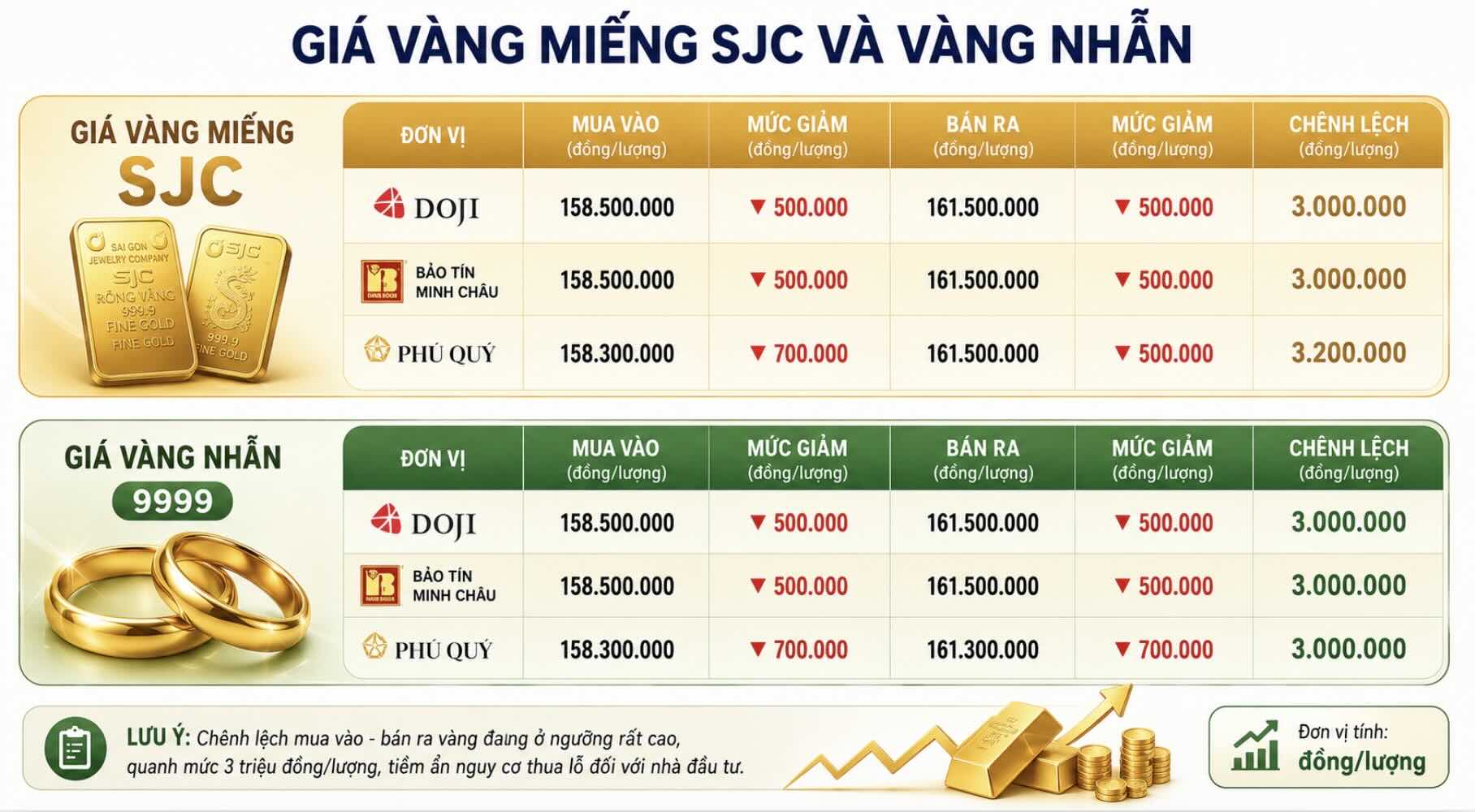
As of 6:00 AM on May 27, SJC gold bar prices were listed by DOJI at the threshold of 158.5-161.5 million VND/tael (buying - selling), down 500,000 VND/tael in both buying and selling directions. The difference between buying and selling prices is at the threshold of 3 million VND/tael.
SJC gold bar price was listed by Bao Tin Minh Chau at the threshold of 158.5-161.5 million VND/tael (buying - selling), down 500,000 VND/tael in both buying and selling directions. The difference between buying and selling prices is at the threshold of 3 million VND/tael.
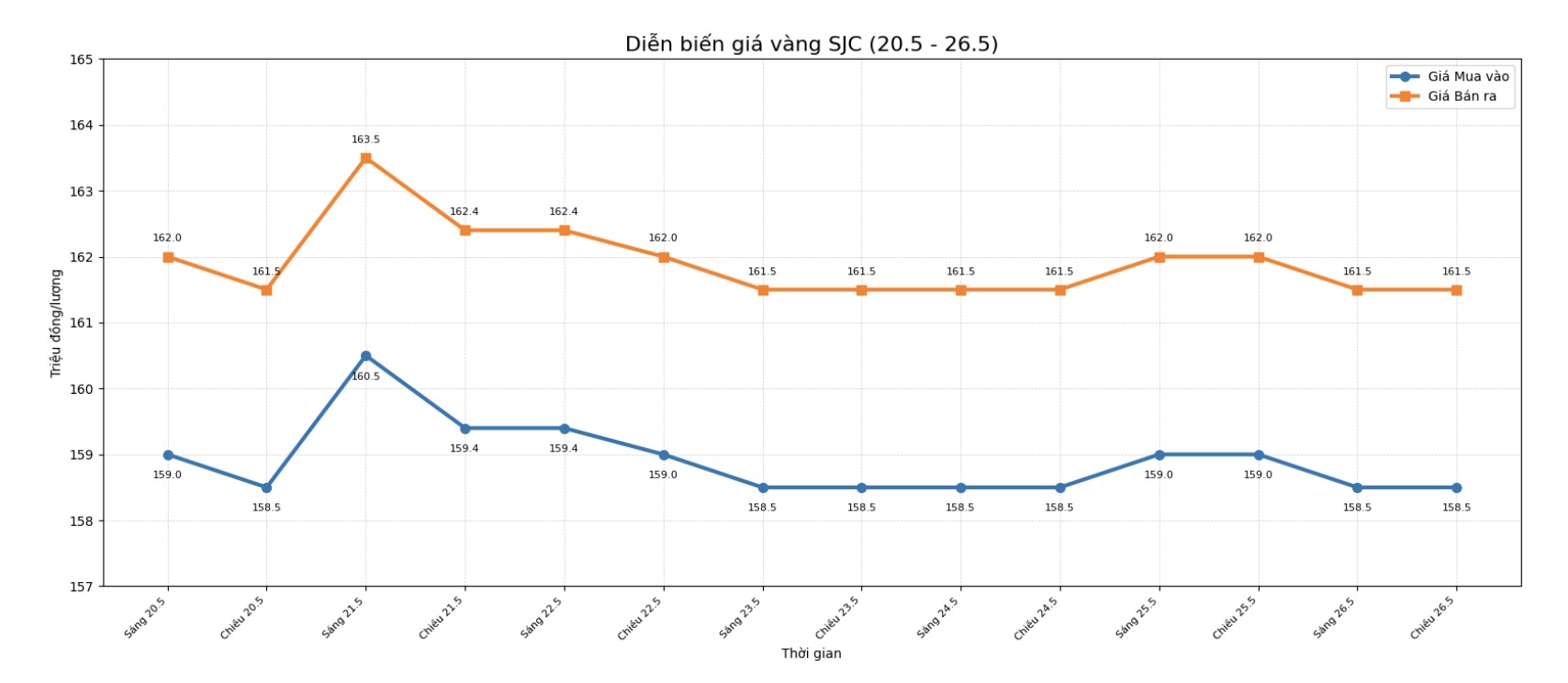
Phu Quy Jewelry Group listed SJC gold bar prices at the threshold of 156.3-161.5 million VND/tael (buying - selling), down 700,000 VND/tael on the buying side and down 500,000 VND/tael on the selling side. The difference between buying and selling prices is at the threshold of 3.2 million VND/tael.
9999 gold ring price
As of 6:00 AM on May 27, DOJI listed the price of gold rings at 158.5-161.5 million VND/tael (buying - selling), down 500,000 VND/tael in both buying and selling directions. The difference between buying and selling prices is at 3 million VND/tael.
Bao Tin Minh Chau listed the price of gold rings at the threshold of 158.5-161.5 million VND/tael (buying - selling), down 500,000 VND/tael in both buying and selling directions. The difference between buying and selling prices is at the threshold of 3 million VND/tael.
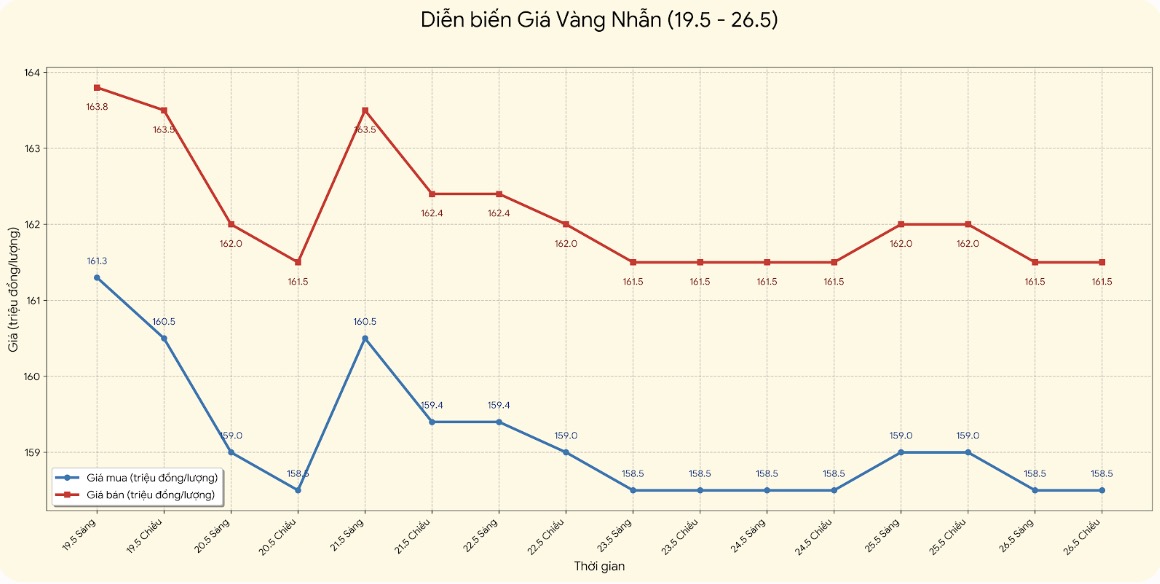
Phu Quy Jewelry Group listed the price of gold rings at the threshold of 158.3-161.3 million VND/tael (buying - selling), down 700,000 VND/tael in both buying and selling directions. The difference between buying and selling prices is at the threshold of 3 million VND/tael.
The buying - selling price difference of gold is at a very high level, around 3 million VND/tael, posing a risk of losses for investors.
World gold price
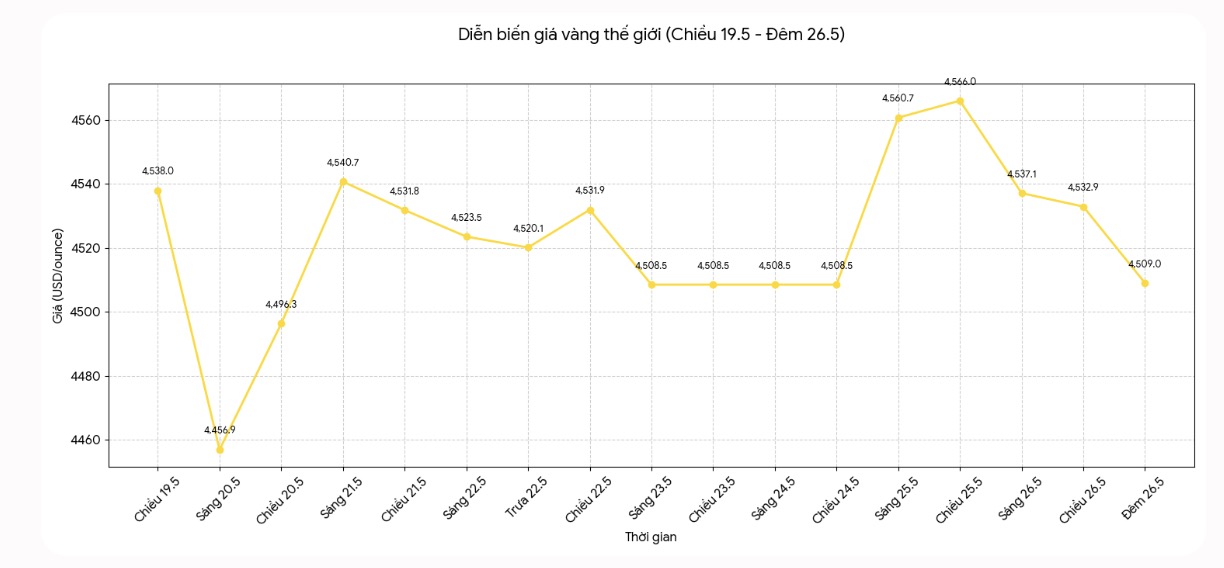
At 11:40 PM on May 26, world gold prices were listed around 4,509 USD/ounce, down 53.4 USD.
Gold price forecast
World gold prices were under downward pressure in the trading session on May 27 as the USD maintained its strength, while oil price fluctuations and geopolitical tensions in the Middle East made market sentiment more cautious.
The decline took place in the context of investors shifting their attention to a series of important US economic data, including the house price index, consumer confidence, manufacturing data and especially the PCE inflation report released this weekend.
Although the yield on 10-year US Treasury bonds has cooled down to around the 4.5% threshold, the USD is still hovering at a high level, creating significant pressure on the precious metal group. The rising greenback makes gold less attractive to investors holding other currencies.
In addition, the gold market is also affected by the weakening of US consumer confidence in the context of inflationary pressure and increasing risk of recession.
According to the Conference Board, the May consumer confidence index fell to 93.1 points from 93.8 points last month. The report shows that concerns related to energy prices, war and inflation continue to increase as the conflict in the Middle East shows no signs of cooling down. However, gold prices have not yet attracted new growth momentum despite maintaining above the support level of 4,500 USD/ounce.
Mr. Jeffrey Roach - Chief Economist of LPL Financial - said that US consumers are tending to tighten spending in the short term, but the labor market is still relatively stable and may create a foundation for economic recovery by the end of the year if the geopolitical situation eases.
Developments in the Middle East continue to strongly impact the commodity market. After plummeting due to expectations of the US and Iran reaching a peace agreement, oil prices rebounded when information emerged that military tensions had returned to southern Iran. This development has caused security concerns in the Strait of Hormuz to heat up again.
Analysts believe that the impact of geopolitical tensions on gold is currently quite opposite. On the one hand, instability in the Middle East promotes safe-haven demand. However, a sharp increase in oil prices may also increase inflationary pressure, thereby causing the US Federal Reserve (Fed) to maintain a longer high interest rate policy, which is detrimental to gold.
Technically, experts believe that gold buyers are aiming to bring prices above the resistance zone of 4, 523-4, 546 USD/ounce.
If successful, gold prices may advance to the levels of 4,573 USD/ounce and 4,581 USD/ounce. Conversely, if losing the support level of 4,503 USD/ounce, the precious metal is at risk of falling further to the 4,490 USD/ounce, even 4,453 USD/ounce zone.
Gold price data is compared to the previous day.
See more news related to gold prices HERE...


