
World gold prices, although experiencing a period of strong correction after tensions in the Middle East, the medium-term outlook is still positively assessed. Lombard Odier experts believe that the upward momentum of the precious metal will soon return when geopolitical pressure cools down.
In a newly released analysis report, Mr. Kiran Kowshik said that gold prices could reach the 5,400 USD/ounce mark in the next 12 months, equivalent to the first half of 2027.
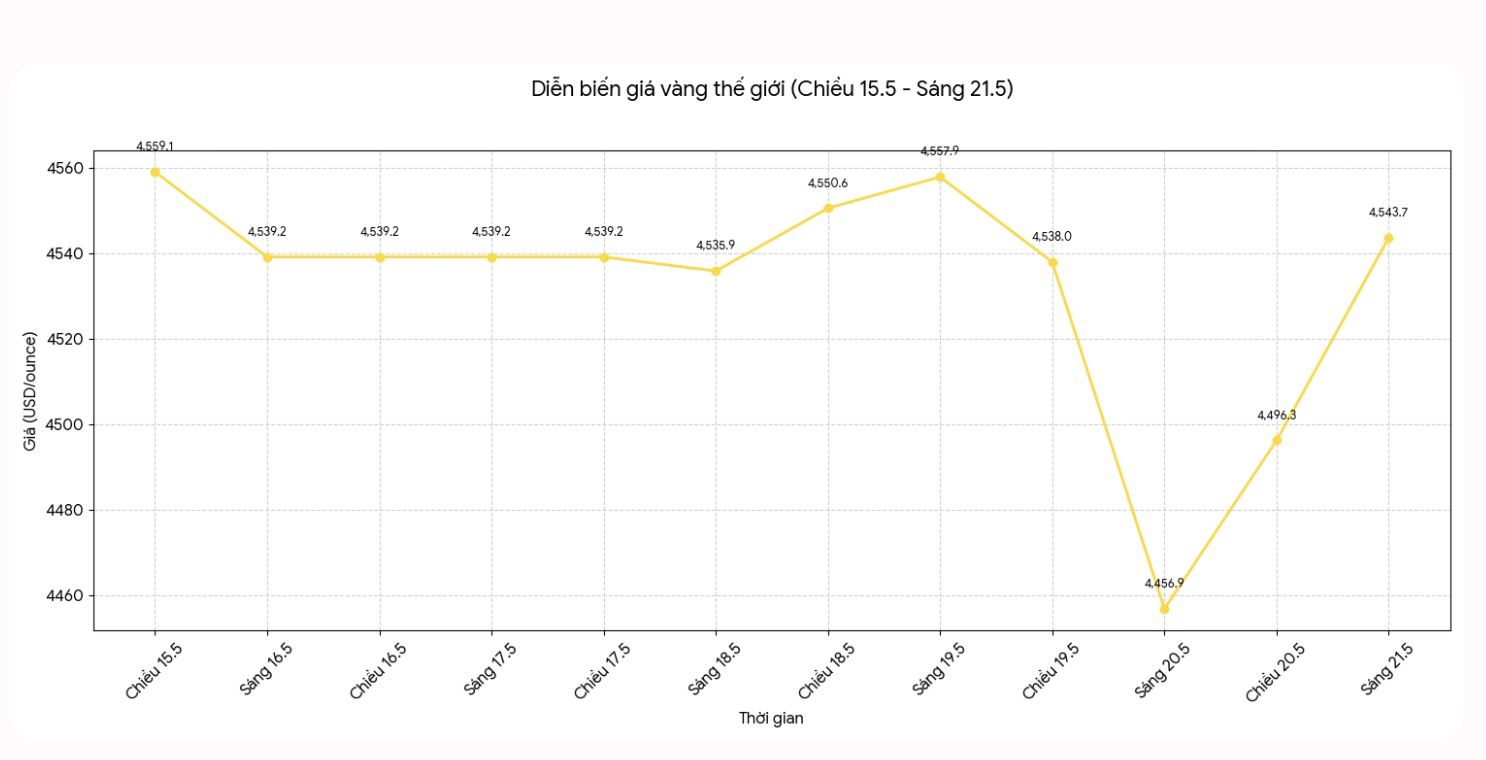
According to Lombard Odier, gold prices once reached a historic peak of 5,595 USD/ounce in January 2026 before falling deeply to about 4,009 USD/ounce in mid-March due to the impact of the Middle East conflict. However, a decrease of more than 10% since the outbreak of war does not mean that the long-term upward trend has ended.
Mr. Kiran Kowshik said that gold usually benefits when real yields fall and the USD weakens. However, the energy shock from geopolitical tensions has caused the market to worry about high inflation, leading to expectations that interest rates will remain higher for a long time. This puts short-term pressure on the precious metal.
If the conflict in the Middle East cools down and energy prices fall as our base scenario, gold may recover thanks to investor sentiment stabilizing again," he said.
However, Lombard Odier emphasized that war developments are not the only factor determining gold price trends. This bank believes that the fundamental drivers of the market have not changed.
According to analysis, gold buying demand from central banks and individual investors remains strong. This is a factor that helps gold prices maintain long-term support even when under pressure from a stronger USD or increased bond yields.
Lombard Odier said that the trend of many countries decreasing dependence on the USD is driving demand for holding gold as a neutral and less risky of financial sanctions reserve asset.
Sanctions against Russia have prompted central banks in many countries to increase gold reserves to preserve asset value," said Kiran Kowshik.

In addition, individual investors also increased gold hoarding amid concerns about public debt, prolonged inflation and reduced confidence in fiscal policy in many major economies.
Data from the World Gold Council shows that total global gold demand in Q1/2026 reached about 790 tons, of which central banks net bought 244 tons, an increase of 3% compared to the same period last year.
Lombard Odier assessed that stable buying power from central banks will contribute to limiting the depth of gold price adjustments in the future.
The interest rate outlook of the US Federal Reserve (Fed) is also seen as a factor supporting the market. Lombard Odier predicts that the Fed is likely to keep interest rates unchanged for most of 2026, instead of continuing to tighten monetary policy.
According to experts, when real yields do not increase too strongly and capital flows into gold ETFs remain stable, gold prices will have the opportunity to resume the upward trend in the medium term.


