
According to Kitco, world gold prices (as of 2:15 PM on June 11 - Vietnam time) are listed around the threshold of 4,095.3 USD/ounce. The precious metal is under strong downward pressure, the market recorded the deepest plunge in many months.
Previously, spot gold prices at one point retreated to nearly 4,078 USD/ounce, down more than 4% in the session. Spot silver also weakened, down to around 63.6 USD/ounce. The decline took place in the context of the US May inflation report, increased Treasury bond yields and escalating US-Iran tensions simultaneously putting pressure on the precious metal group.
Newly released data shows that the US consumer price index increased by 0.5% in May and 4.2% compared to the same period last year. Core inflation increased by 0.2% per month and 2.9% per year. Notably, energy prices increased by 23.5% compared to the same period, of which gasoline prices increased by more than 40%, causing market concerns that oil price shocks could drag inflation up more sustainably.

Usually, geopolitical tensions can support gold prices thanks to safe-haven demand. However, this time, the market views the US-Iran conflict first as an inflation shock. Rising crude oil prices, high US bond yields and expectations of the Fed maintaining tight monetary policy are overshadowing gold's safe-haven role.
Some information shows that risks in the Hormuz Strait area continue to be the focus of attention. New developments related to Iranian oil transportation and the risk of retaliation in the Gulf region have caused Brent and WTI oil prices to rise sharply. As energy prices escalate, investors worry that the Fed may not cut interest rates as expected before, even the market is starting to consider the possibility of interest rates possibly increasing.
Independent metal trader Tai Wong said that the market is "very much in need of good news" after the strong US jobs report and tough statements related to Tehran. This sentiment shows that pressure on gold comes not only from technical factors, but also from changes in monetary policy expectations.
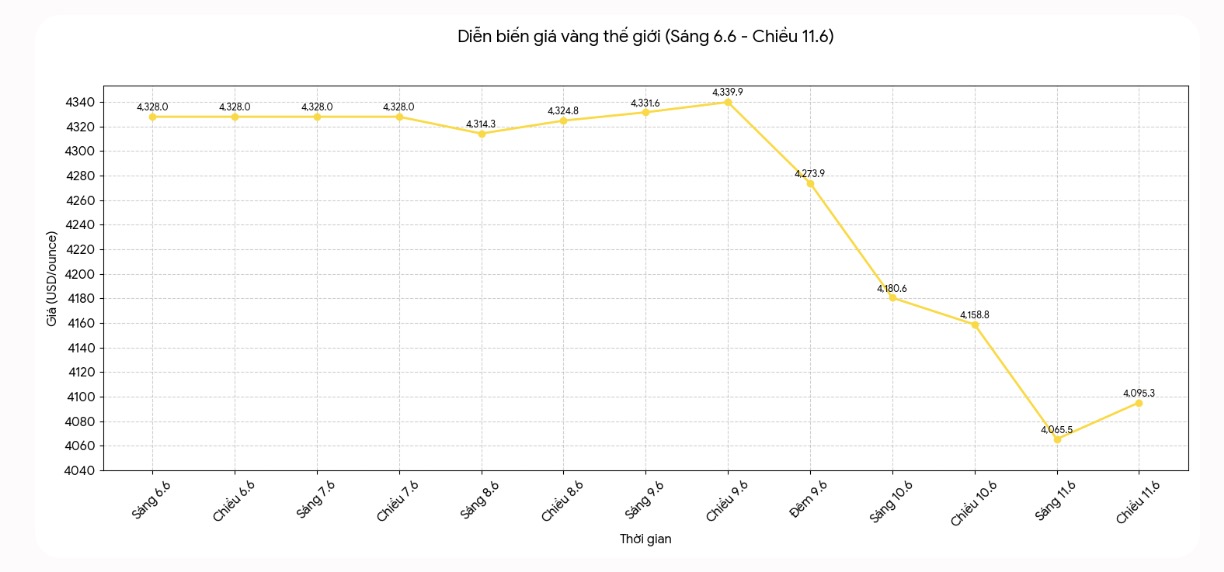
Technically, the drop in gold prices from the accumulation zone that lasted from the end of March makes short-term prospects less positive. According to Kitco, buyers need to bring prices back to the resistance zone of 4,180 - 4,200 USD/ounce to improve the trend. If it crosses this zone, gold prices may head towards 4,250 USD/ounce, and further to 4,350 USD/ounce.
Conversely, if selling pressure continues to increase, the 4,100 USD/ounce zone is a near support level. The fact that gold prices slid below this zone may open up the possibility of testing the psychological level of 4,000 USD/ounce, or even deeper, 3,883 USD/ounce.
However, some experts believe that the long-term trend of gold has not been completely broken. Paul Wong - market strategist at Sprott Asset Management - said that despite the recent correction phase, inflation, central bank gold buying activities and concerns about currency devaluation are still factors supporting gold prices.
In the short term, the precious metals market is likely to continue to be sensitive to inflation data, oil prices and signals from the Fed. If US bond yields continue to rise, gold may still be under pressure. Conversely, any signs of inflation cooling down or a softer Fed may help gold prices recover from important support zones.


