

According to Mr. Ole Hansen - Head of Commodity Strategy at Saxo Bank, although the long-term upward outlook for gold has not been broken, the market is currently under great pressure from inflation, bond yields and the USD.
In a newly released report, Mr. Hansen said that the fall of gold prices below the 200-day moving average is an important step back, not only technically significant. For many medium and long-term investors, the 200-day moving average is considered an important trend filter.
When the price remains below this threshold, system trading funds, momentum investors and risk management strategies may reduce positions, while making new buying cash flow more cautious.
Although the long-term upward outlook remains intact, the market is currently dominated by a very different group of factors" - Mr. Hansen said.
According to experts from Saxo Bank, since mid-April, gold has increasingly been seen as a "victim" of inflation concerns due to energy prices pushing up. Instead of focusing on long-term factors that helped gold prices set records this year, investors are now paying more attention to rising oil prices, higher inflation expectations, stronger bond yields and a stronger USD.
Mr. Hansen said that the new developments in US-Iran negotiations further strengthen this unfavorable trend. As long as conflict threatens energy supplies and maintains high inflation risk, investors may still focus on the ability to keep interest rates high longer, instead of the traditional role of gold as a diversification asset.
According to him, the energy shock caused by supply is creating an unfavorable environment for gold in the short term. Rising energy prices raise inflation expectations, support the USD and narrow the room for loose monetary policy. These are factors that make it difficult for gold to regain its upward momentum, despite the existing safe-haven demand.
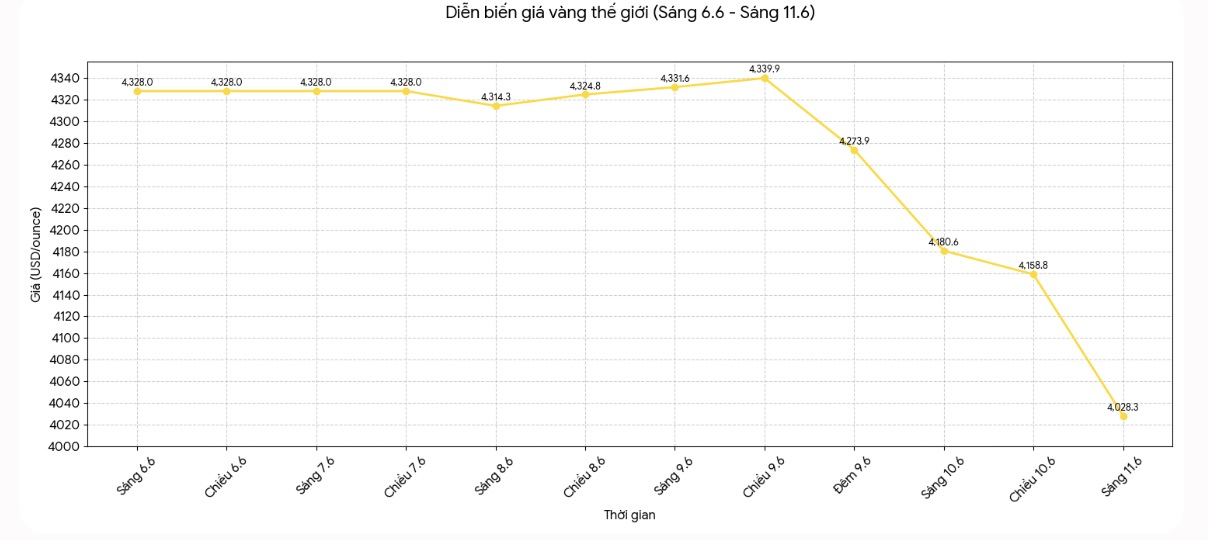
Previously, Mr. Hansen said that after breaking the 200-day moving average, the market will pay attention to the support zone of 4,100-4,075 USD/ounce. This is both the bottom correction in March, and the 38.2% retreat of the strong increase starting from 2022 and bringing gold prices to nearly 5,600 USD/ounce at the beginning of this year.
However, the fact that the actual gold price has retreated to around 4,028 USD/ounce shows that technical pressure is greater than forecast. This development may increase cautious sentiment, especially among investors trading in a short-term trend.
However, Mr. Hansen noted that, technically, the current decline can still be seen as a correction in a larger long-term uptrend.
This is especially true if the structural supporting factors of gold have not changed, including the trend of diversifying central bank reserves, increasing public debt burden, concerns about currency devaluation and increasingly fragmented geopolitical environment.
Regarding investment positions, expert Saxo Bank said that signs have emerged that most of the excessive optimism has been eliminated from the market. Holdings of gold ETF funds tracked by Bloomberg have decreased by 88 tons this year, down to 3,048 tons. However, this holding level is still 282 tons higher than the same period last year.
Meanwhile, speculative positions on COMEX gold contracts have stabilized again after falling to a 2-year low. Monetary regulators and trading groups reported currently holding net buying positions of about 171,000 contracts, up from a recent low of nearly 149,000 contracts, but still lower than the annual average of 194,000 contracts.
To regain momentum, gold prices need to regain the 4,500 USD/ounce mark, then test the 50-day moving average around 4,600 USD/ounce. Before this happens, traders may still focus on downside risks, while long-term investors are waiting for a strong enough catalyst to shift attention away from inflation concerns.
According to Mr. Hansen, a sustainable peace agreement and the normalization of the energy market may be important catalysts to help change market sentiment. When inflation concerns cool down, investors may return to focusing on long-term factors that have supported gold throughout the recent upward cycle.


