
Reasons for the sharp drop in gold prices
The gold market is under significant pressure as prices continuously test the support zone around 4,350 USD/ounce. At one point, spot gold was traded around 4,356.6 USD/ounce, down more than 2% during the day.
According to Ole Hansen, Head of Commodity Strategy at Saxo Bank, gold is facing difficulties as the market focuses on short-term inflation concerns, partly stemming from the upward momentum of commodity prices.
West Texas Intermediate (WTI) crude oil prices have returned to the 90 USD/barrel zone as tensions between the US and Iran escalate. In addition, prolonged conflict in Ukraine and unfavorable weather conditions in many regions around the world are pushing up the prices of some agricultural products, notably sugar, wheat and corn.
In August, the Bloomberg Commodity Agriculture Total Return index increased 12.4%, to its highest level in 14 years.
Mr. Hansen believes that a noteworthy paradox is emerging in the market: commodities that directly create inflationary pressure continue to increase in price, while gold and silver - assets commonly used to hedge against the consequences of inflation - have fallen sharply.
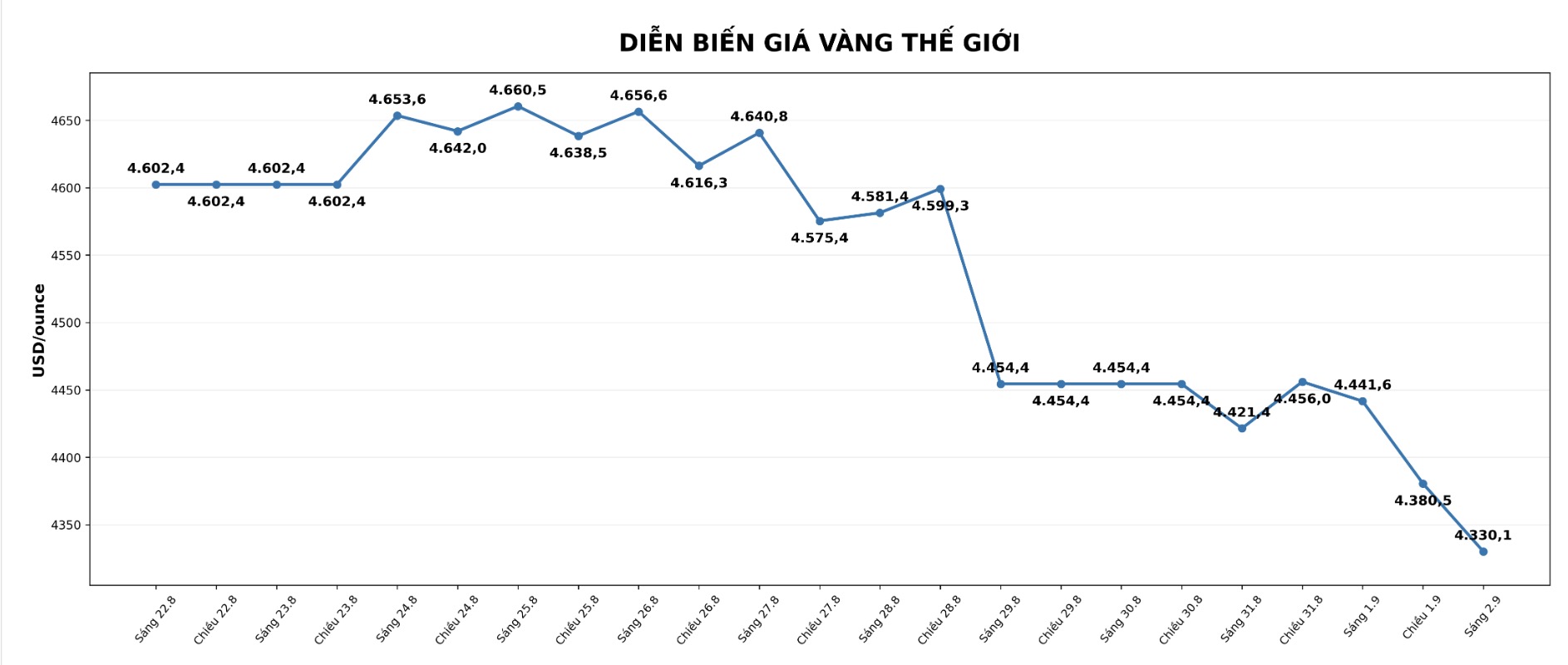
The sell-off in the precious metals market began last weekend, after US Federal Reserve (Fed) Chairman Kevin Warsh continued to emphasize his commitment to bring inflation back to the 2% target in his speech at the Fed's thematic conference in Jackson Hole, Wyoming.
According to Mr. Hansen, this message creates three immediate pressures on gold and silver, including short-term interest rate expectations to rise, real and nominal yields to rise, along with the strengthening of the USD.
Since last weekend, gold and silver prices have both decreased by more than 4%.
Long-term outlook not broken
Although acknowledging that the market's re-focus on inflation may continue to put pressure on gold in the short term, Mr. Hansen believes that the long-term upward trend of precious metals has not been reversed.
One of the important supporting factors is the increasing public debt and concerns about the sustainability of fiscal policy in many large economies.
According to him, real interest rate increases in the context of central banks fiercely fighting inflation are often unfavorable for gold. However, long-term yield increases due to concerns about the ability to maintain public debt, large-scale government bond issuance and the reliability of fiscal policy create a different story.
The continuous increase in debt repayment costs may put policymakers under pressure to limit the increase in long-term borrowing costs.
In that context, gold is being dominated by two opposing forces. One is high capital costs in the short term when interest rates and yields increase. The other is long-term concerns related to debt size, currency purchasing power and financial system reliability.
The demand for gold from central banks and the trend of diversifying foreign exchange reserves also continue to create structural support, less sensitive to short-term changes in US interest rates.
Mr. Hansen also noted that inflation originating from supply poses a difficult problem for central banks. Monetary policy can curb demand, but cannot directly create more crude oil, natural gas, oil refining capacity or agricultural output.
If commodity prices continue to rise and forcing interest rates to remain high for longer, pressure on governments with large debts may increase. This could revive concerns about fiscal policy and currency purchasing power - factors that once boosted investment demand in gold and precious metals.
The content of the article aims to update the developments of the gold market and factors affecting prices, not to recommend investment. Investors need to be cautious in the face of strong market fluctuations.


