
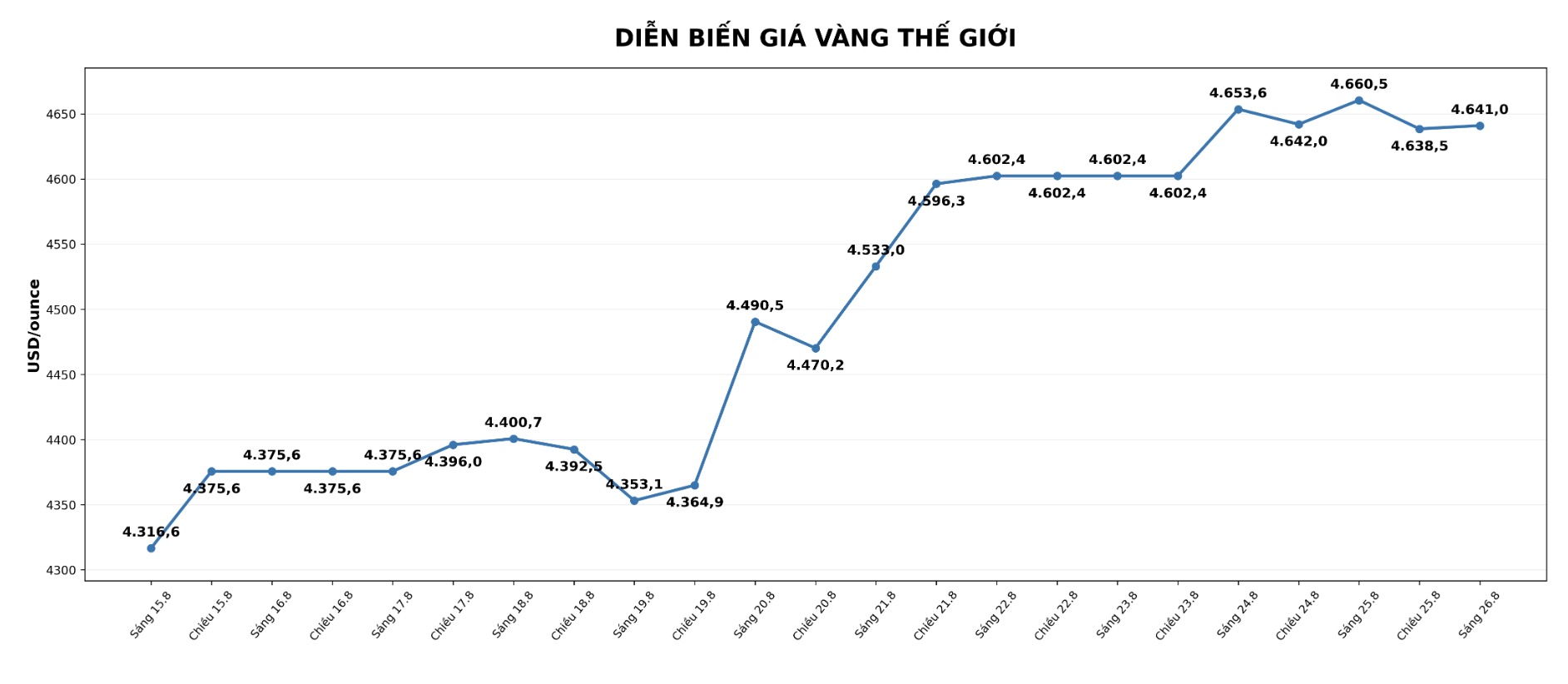
World gold prices are under slight selling pressure in the new trading session as investors take profit-taking after the precious metal rose close to the important resistance zone of 4,700 USD/ounce. However, the decline has not created great pressure as gold is still considered a defensive asset in the context of many US economic data showing signs of weakening.
According to newly released data, new home sales in the US in July decreased by 10.5% compared to the previous month, to 607,000 units according to the seasonally adjusted annual rate. This figure is lower than market forecasts and decreased by 6.3% compared to the same period last year.
The US housing market continues to face difficulties due to high mortgage interest rates and expensive house prices. The increase in home purchase costs has caused many consumers to delay their decision to spend money, putting pressure on one of the important sectors of the world's largest economy.
In addition, US consumer confidence also declined in August. The consumer confidence index fell to 89.4 points, the lowest level since the beginning of this year. The decline mainly comes from cautious sentiment about economic prospects in the coming time, especially issues related to income, employment and living expenses.
Although the assessment of the current situation is somewhat improved, consumers are still more worried about the future as commodity prices, energy and geopolitical instability continue to put pressure. This may affect spending trends, thereby affecting US economic growth rates.
In that context, gold still maintains its attractiveness thanks to its role as a safe haven asset. However, the precious metal market is still heavily influenced by the monetary policy of the US Federal Reserve (Fed).
Weaker economic data is increasing expectations that the Fed may adjust policy towards greater easing. However, inflation is still a factor that keeps the agency cautious. Investors are currently focusing on important inflation data to be released and new signals about interest rate orientation in the near future.
Another factor supporting the long-term outlook for gold is concerns related to the US financial situation. The plan to strengthen long-term bond repurchases to support market liquidity is being closely monitored, as investors are concerned about public debt pressure and the strength of the USD.
Geopolitical instability in the Middle East is still a factor helping gold maintain its risk hedging role. Although oil prices have not seen strong fluctuations due to tensions that have not caused serious supply disruptions, the market still maintains vigilance against new developments.
Technically, gold prices are facing a resistance zone around 4.654-4.689 USD/ounce. If it passes this zone, the precious metal may head towards the target of 4,780 USD/ounce and further to the peak zone near 4,891 USD/ounce.
In the opposite direction, the 4,500-4,509 USD/ounce zone is considered an important support area. If this zone is broken, adjustment pressure may increase in the short term.
Gold prices are currently in a period of accumulation after a sharp increase. Weakening US economic data is creating a supporting foundation, but the diễn biến of the USD, bond yields and policy signals from the Fed will continue to be decisive factors in the next direction of the precious metal.
The article updates the developments of the gold market and factors that may affect gold prices. The content is not an investment recommendation. Investors need to carefully consider risk factors and make decisions appropriate to personal financial goals.


