
SJC gold bar price
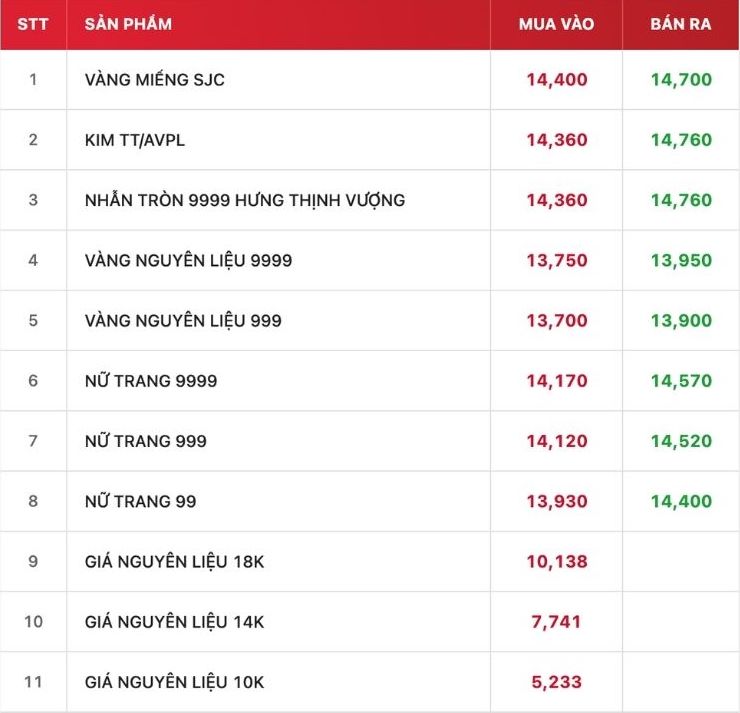
As of 9:00 AM, Saigon SJC Jewelry Company listed SJC gold bar prices at 144-147 million VND/tael (buying - selling), reversing to increase by 1.2 million VND/tael in both directions compared to the previous closing session. The buying - selling difference is at 3 million VND/tael.
Similarly, DOJI listed SJC gold prices at 144-147 million VND/tael (buying - selling), reversing to increase by 1.5 million VND/tael on the buying side and 500,000 VND/tael on the selling side compared to the closing session yesterday. The buying - selling difference is at 3 million VND/tael.
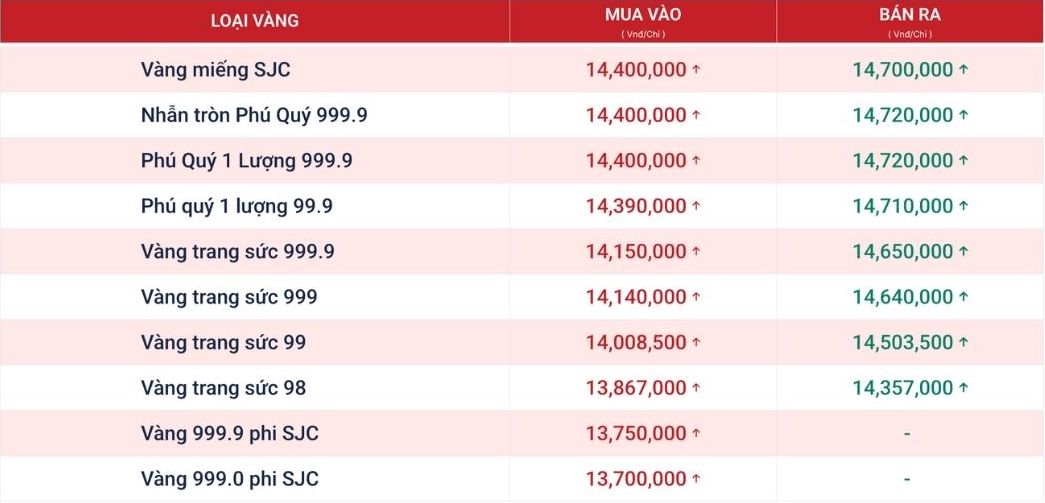
Phu Quy listed SJC gold bar prices at 144-147 million VND/tael (buying - selling), increasing by 1.2 million VND/tael on the buying side and 800,000 VND/tael on the selling side, respectively. The buying - selling difference is at 3 million VND/tael.
9999 gold ring price
At the same time, Saigon Jewelry Company SJC listed the price of gold rings at the threshold of 143.5 - 146.5 million VND/tael (buying - selling), simultaneously increasing by 1.2 million VND/tael in both directions compared to the closing session yesterday. The buying - selling difference is at 3 million VND/tael.
DOJI Group listed gold ring prices at the threshold of 143.6-146.5 million VND/tael (buying - selling), adjusting up by 1.1 million and 1 million VND/tael in each direction compared to the closing session yesterday. The buying - selling difference is at 2.9 million VND/tael.
Phu Quy Jewelry Group listed the price of gold rings at 144-147.2 million VND/tael (buying - selling), an increase of 1.2 million VND/tael on the buying side and 1 million VND/tael on the selling side. The buying - selling difference is at 3.2 million VND/tael.
World gold price
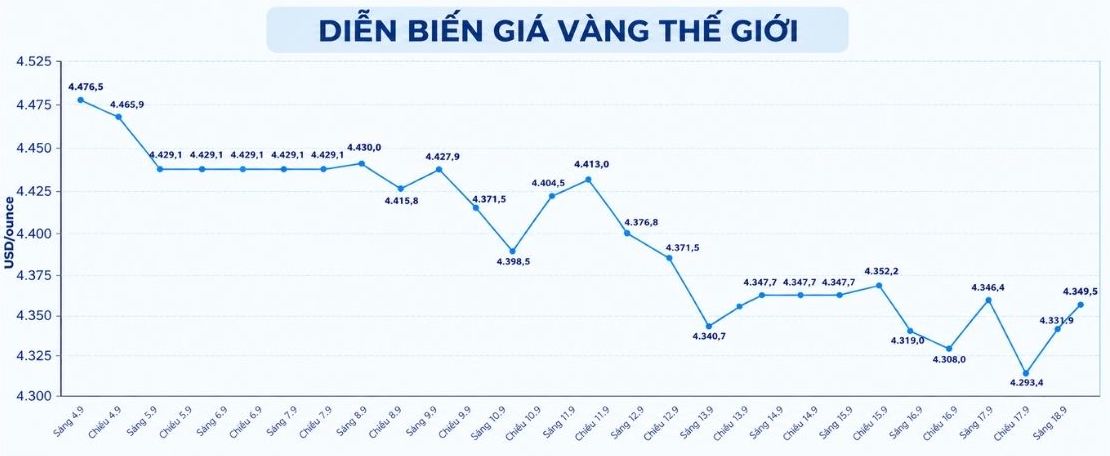
As of 9:15 am, world gold prices were listed at the threshold of 4,349.5 USD/ounce, up 8.8 USD/ounce.
Gold price forecast
The latest market developments are still influenced by the Fed's decision to raise interest rates on September 16. However, Thursday's trading showed a difference between a market-valued interest rate hike and a new policy tightening shock.
The Fed has raised the target interest rate band by another 25 basis points, to 3.75%-4.00%. Forecasts from Fed officials still show the possibility of at least another interest rate hike this year. This makes the medium-term interest rate environment continue to put pressure on gold.
However, falling oil prices and falling US Treasury bond yields changed market developments during the day. 10-year US Treasury bond yields fell to 4.93%, from 5.01% at the end of Wednesday's session, while the USD weakened after a sharp increase due to the impact of the Fed's decision.
Waiting house sales increased by 0.3%, a slight increase that does not change the general view that the housing market is still under pressure from mortgage interest rates of nearly 7%.
For gold, the signal in the session is positive but still conditional: the precious metal may increase in price when oil and bond yields fall, but the Fed's policy orientation still limits room for increase if inflationary pressure has not continued to cool down.
The precious metal recovered as the final interest rate channel created a breath of fresh air. Gold prices rose again above 4,300 USD/ounce and headed towards the resistance level of 4,354 USD/ounce according to the latest technical setup.
The current upward momentum has not created a complete technical reversal. Gold prices still need to be maintained above 4,354 USD/ounce to improve the short-term structure.
The Strait of Hormuz remains the main geopolitical channel affecting oil prices, inflation expectations and defense demand. However, the impact on the market on Thursday mainly came from cooling concerns about supply.
Oil prices fell for the second consecutive session as Saudi Arabia sought to transport more crude oil through Oman and investors assessed the possibility of faster recovery of the East-West pipeline capacity. WTI oil closed the session at 101.91 USD/barrel, while Brent oil closed at 104.82 USD/barrel.
The decline in oil prices helps reduce immediate inflationary pressure and supports the decline in US Treasury bond yields, thereby creating favorable conditions for gold and stocks. However, the conflict has not yet been resolved. Oil flows through the Strait of Hormuz are limited, risks to Saudi Arabia's infrastructure and disruptions in the Red Sea continue to create support for oil prices, while maintaining demand for gold.
Gold price data is compared to the previous day.
The information in the article only reflects market developments, not investment recommendations.
See more news related to gold prices HERE...


