
SJC gold bar price
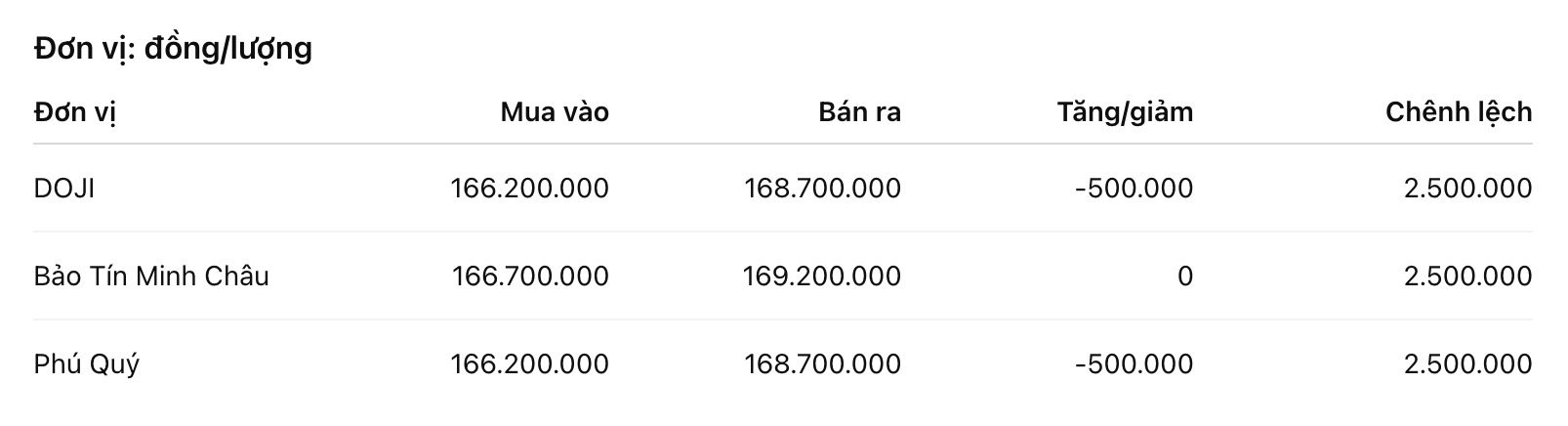
As of 9:30 am, SJC gold bar prices were listed by DOJI Group at the threshold of 166.2-168.7 million VND/tael (buying - selling), down 500,000 VND/tael in both buying and selling directions. The difference between buying and selling prices is at the threshold of 2.5 million VND/tael.
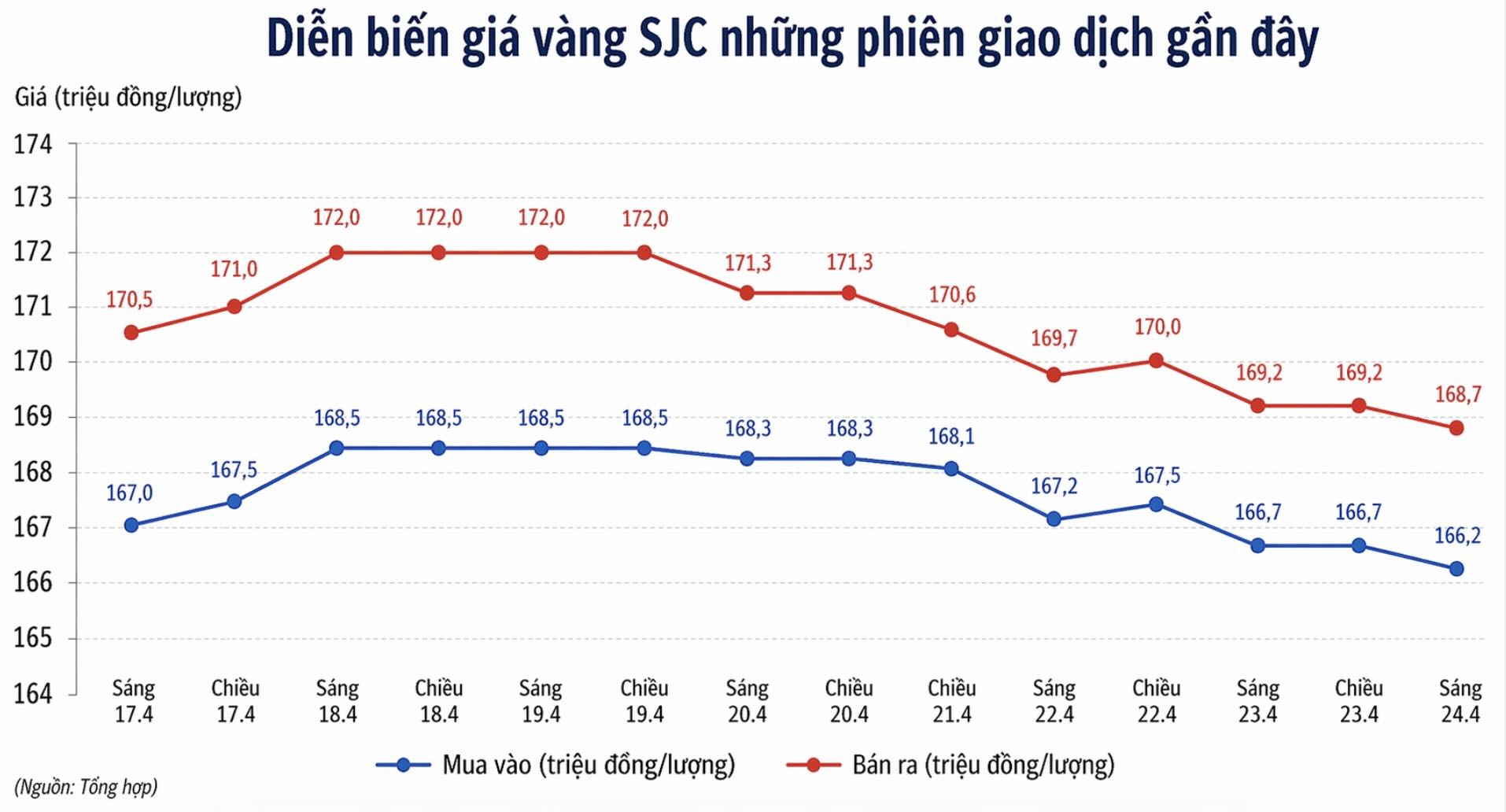
SJC gold bar price was listed by Bao Tin Minh Chau at the threshold of 166.7-169.2 million VND/tael (buying - selling), unchanged in both buying and selling directions. The difference between buying and selling prices is at the threshold of 2.5 million VND/tael.
Phu Quy Jewelry Group listed SJC gold bar prices at the threshold of 166.2-168.7 million VND/tael (buying - selling), down 500,000 VND/tael in both buying and selling directions. The difference between buying and selling prices is at the threshold of 2.5 million VND/tael.
9999 gold ring price
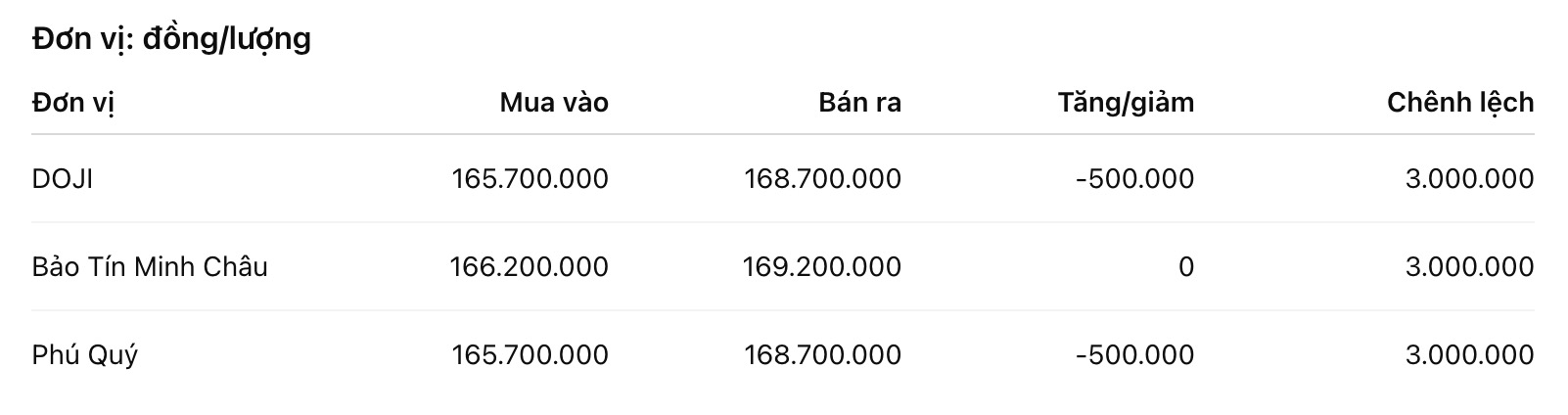
As of 9:30 am, DOJI Group listed the price of gold rings at the threshold of 165.7-168.7 million VND/tael (buying - selling), down 500,000 VND/tael in both buying and selling directions. The difference between buying and selling prices is at the threshold of 3 million VND/tael.
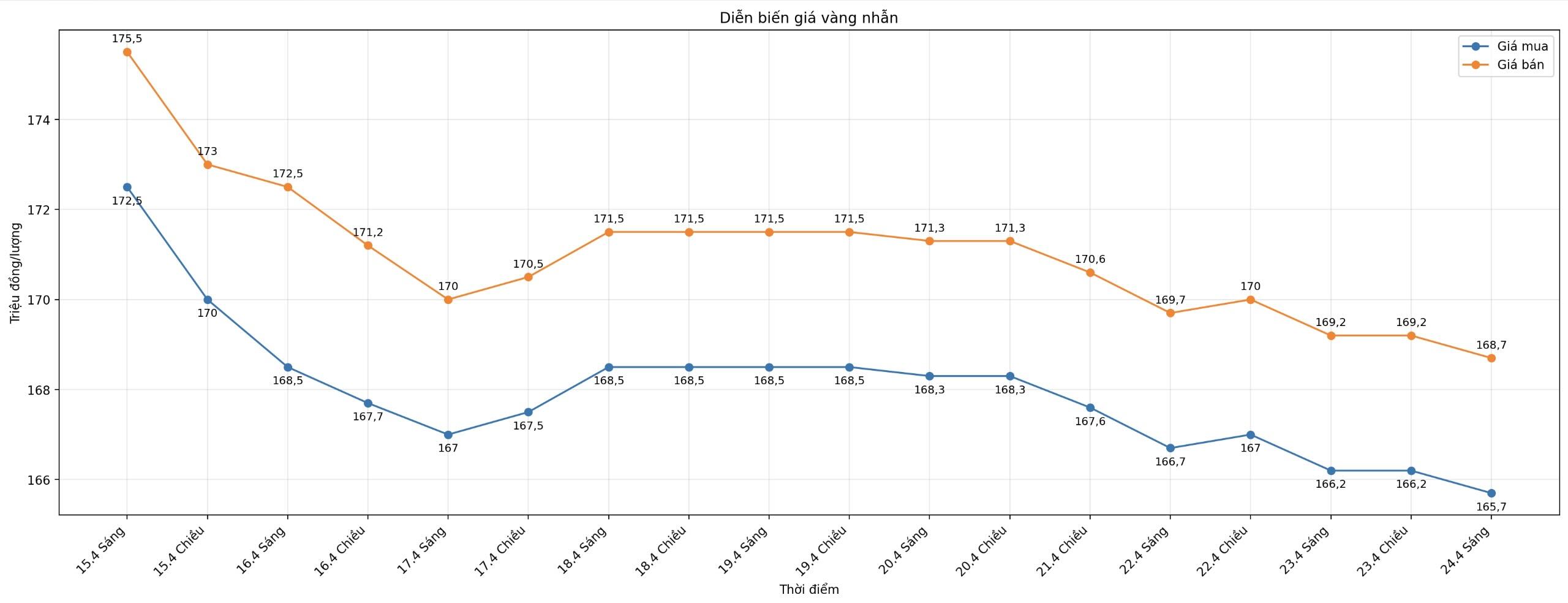
Bao Tin Minh Chau listed the price of gold rings at the threshold of 166.2-169.2 million VND/tael (buying - selling), unchanged in both buying and selling directions. The difference between buying and selling prices is at the threshold of 3 million VND/tael.
Phu Quy Jewelry Group listed the price of gold rings at the threshold of 165.7-168.7 million VND/tael (buying - selling), down 500,000 VND/tael in both buying and selling directions. The difference between buying and selling prices is at the threshold of 3 million VND/tael.
Currently, the buying - selling price difference of gold is at a very high level, around 2.5 to 3 million VND/tael, posing a risk of losses for investors.
World gold price
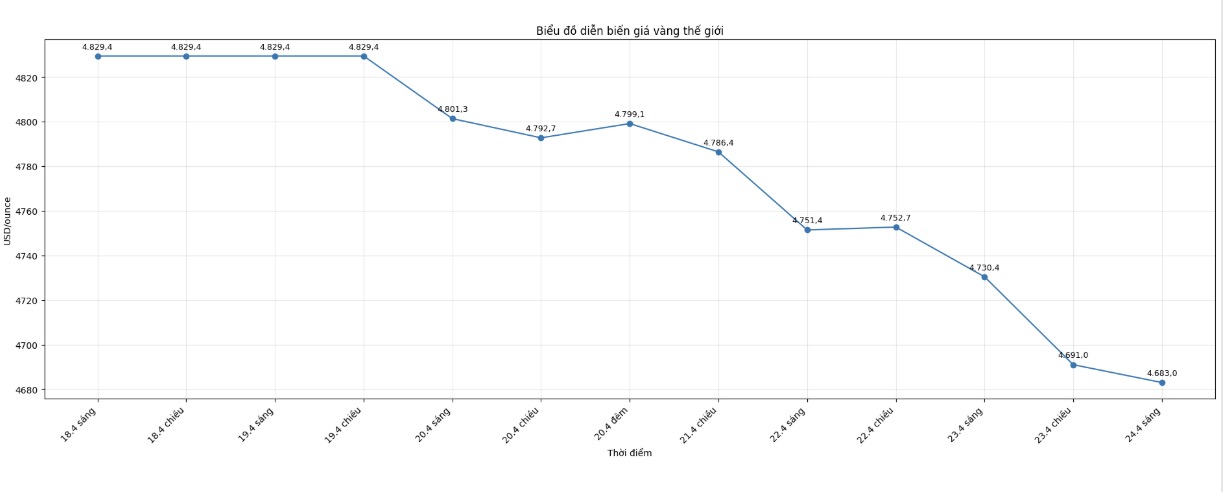
At 9:30 am, world gold prices were listed around the threshold of 4,683 USD/ounce, down 47.4 USD compared to the previous day.
Gold price forecast
World gold prices are under adjustment pressure after falling to their lowest level in more than a week. The main reason comes from concerns that tensions in the Middle East could push oil prices up, thereby increasing inflationary pressure and causing the US Federal Reserve (Fed) to maintain a higher interest rate level for longer.
According to Reuters, Brent oil prices have exceeded the threshold of 100 USD/barrel amid ongoing concerns about transportation security in the Strait of Hormuz regarding the Iranian conflict. Rising energy prices often lead to inflation expectations. This is detrimental to gold, as high interest rates increase the cost of holding non-profit assets such as precious metals.
Independent metal trading expert Tai Wong said that tensions between the US and Iran are causing markets to worry that the ceasefire agreement could collapse at any time. This development has pushed oil prices up sharply, while putting pressure on many types of assets, including gold.
According to him, the price range of nearly 4,900 USD/ounce last week has now become quite far as the upward momentum of the precious metal weakens.
From another perspective, Ms. Rhona O'Connell - Head of Market Analysis at StoneX - believes that the decrease in net buying positions for gold and silver in the past time may help the market become less "overheated", thereby still leaving some room for price increases.
However, she emphasized that professional trading organizations are not yet ready to make big bets in the context of geopolitical uncertainty.
Besides the Middle East factor, developments surrounding US monetary policy continue to be an important variable. The rise of the USD and the increase in US Treasury bond yields make gold less attractive to investors holding other currencies.
StoneX expert Razan Hilal also warned that gold is in a sensitive technical phase. The fact that the price cannot regain the 4,880 USD/ounce zone shows that the risk of falling pressure still exists, unless the market shows a clear breakthrough to confirm a new upward trend.
Gold price data is compared to the previous day.
The world gold and silver market operates through two main pricing mechanisms. The first is the spot market, where the buying and selling and immediate delivery prices are listed. The second is the futures market, where prices are set for future delivery.
Due to the impact of year-end position restructuring and market liquidity, the December gold futures contract is currently the most actively traded contract on the CME exchange.
See more news related to gold prices HERE...


