
World gold prices edged up in the last session of the week and continued to maintain above the 4,000 USD/ounce mark, after strong fluctuations in previous sessions. The market is still affected by energy price movements and monetary policy expectations in the US.
Gold prices at one point exceeded 4,060 USD/ounce, after decreasing by 0.7% at the beginning of the session and losing about 2% in the previous session.
At the end of the weekend trading session, spot gold prices are currently up 0.13% to 4,052.88 USD/ounce. August gold futures contracts increased 0.14% to 4,055.70 USD/ounce.
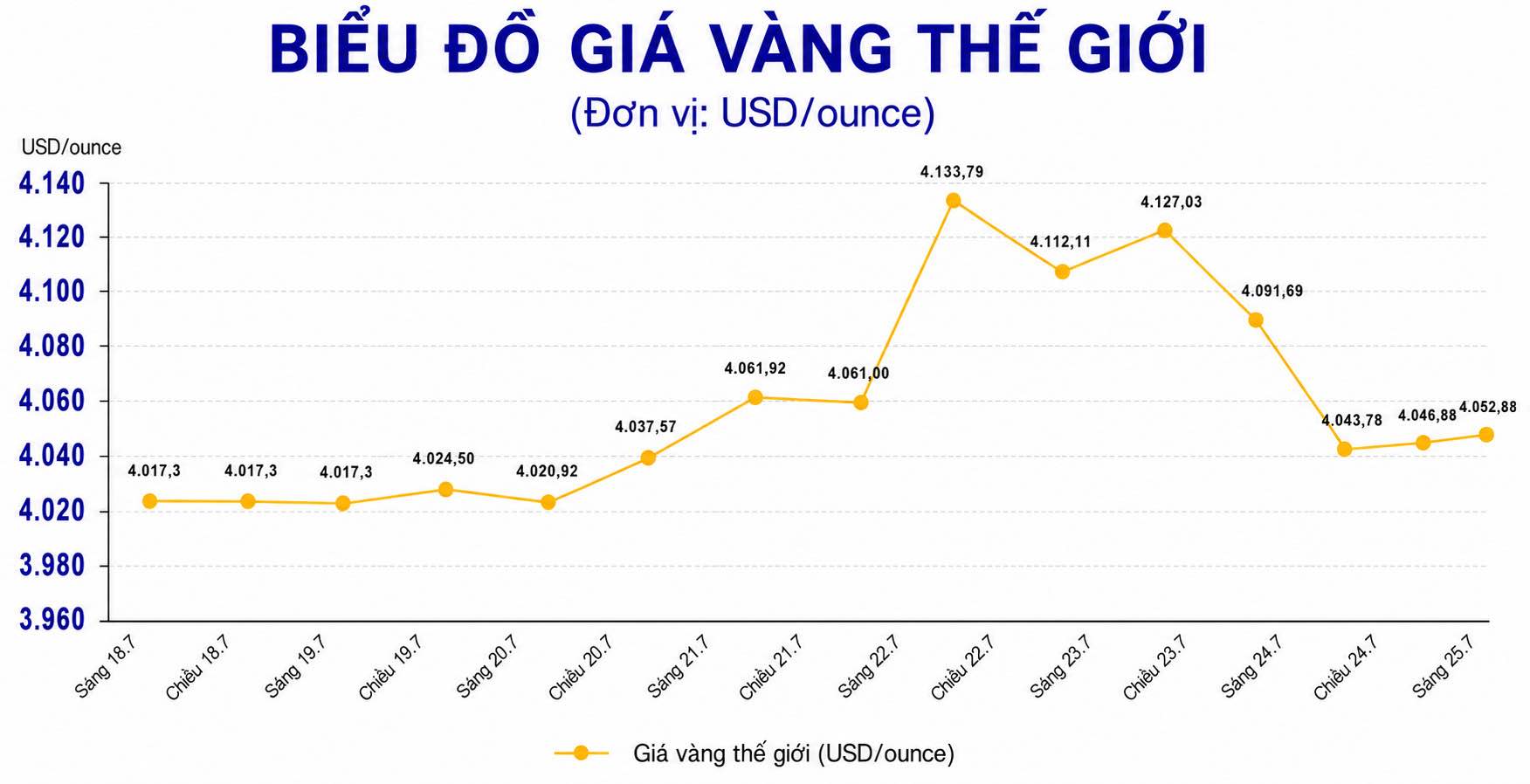
Notably, gold continues to stand firm above the 4,000 USD/ounce mark even though the market has recently been under significant pressure from energy prices and interest rate prospects.
On the energy market, oil prices fell on July 24 after reaching $100/barrel in the previous session. The recent increase in oil prices has increased inflationary pressure. Along with the relatively stable US labor market, this development increases the possibility of interest rates being raised.
High interest rates are disadvantageous for gold because precious metals do not bring yields.
According to developments in the swap market, traders are valuing about 30% of the possibility that the US Federal Reserve (Fed) will raise interest rates at next week's meeting. The market has also reflected expectations that the Fed will have at least one rate hike before the end of the year.
Gold prices have mainly fluctuated around 4,000 USD/ounce since the end of June. The precious metal is currently about 25% lower than when the US and Israel began attacks on Iran at the end of February. Previously, a multi-year upward cycle brought gold to a record level of nearly 5,600 USD/ounce in January.
In the precious metals market, silver prices increased 0.85% to 58.19 USD/ounce, after falling 3.6% in the previous session. Meanwhile, platinum prices decreased 0.68% to 1,593.04 USD/ounce, while palladium decreased 1.29% to 1,246 USD/ounce.


