
World gold prices slightly reversed in the first session of the week on July 27, as tensions between the US and Iran temporarily subsided in the last days of the week, helping to reduce concerns about energy supply and inflationary pressure.
Gold prices at one point increased by 1.1%, approaching the 4,100 USD/ounce mark, continuing the nearly 1% increase in the previous week.
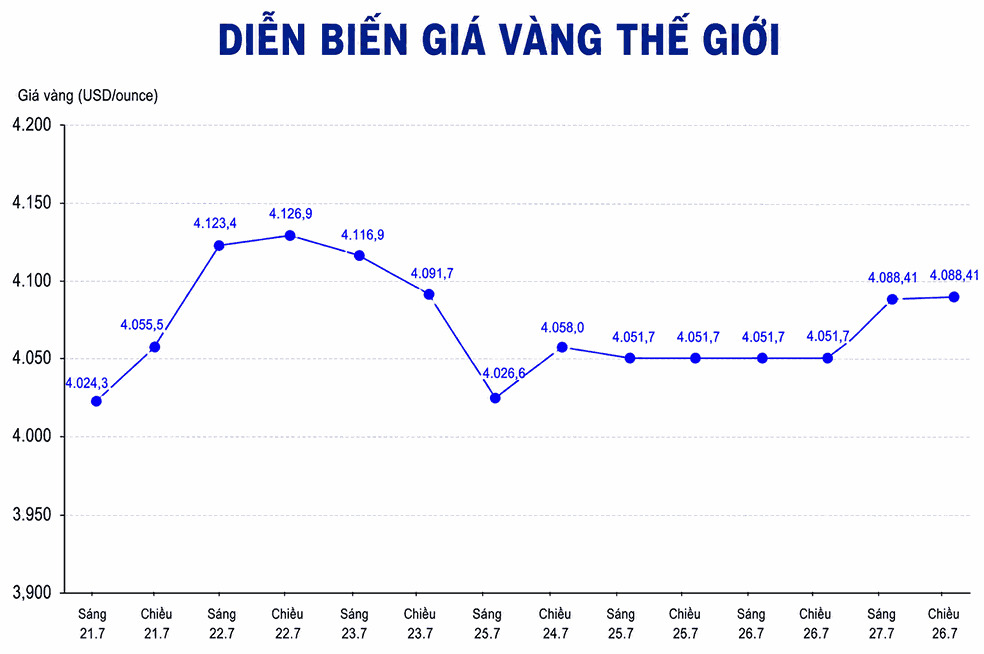
As of 11:26 am Vietnam time, spot gold price decreased by 0.11% to 4,088.41 USD/ounce. Meanwhile, August gold futures contracts increased by 0.47% to 4,089.90 USD/ounce.
The developments of the gold market went hand in hand with a sharp drop in oil prices. Brent oil at one point lost more than 7%, falling below 90 USD/barrel in the first minutes of the session before narrowing the decrease.
Cooling oil prices help reduce concerns about inflationary pressure - one of the factors that has put pressure on gold in recent weeks. Previously, the sharp increase in energy prices increased the possibility of the US Federal Reserve (Fed) raising interest rates, unfavorable for gold because the precious metal does not bring yields.
From the end of June to now, gold prices have mainly fluctuated around 4,000 USD/ounce. Buying power when prices decreased has repeatedly helped the precious metal maintain above this psychological threshold.
Despite recovery, gold is still 20% lower than when the US-Iran conflict escalated at the end of February. Previously, a multi-year upward cycle brought the precious metal price to a record level of nearly 5,600 USD/ounce in January.
The market this week is also focusing on the Fed's interest rate decision, in the context of energy price movements and June consumer inflation data creating mixed signals for monetary policy prospects.
Other precious metals also rose. Silver prices increased 1.9% to 59.29 USD/ounce, while platinum and palladium were both in green. The Bloomberg Dollar Spot Index - a measure of USD movements - decreased 0.2%.


