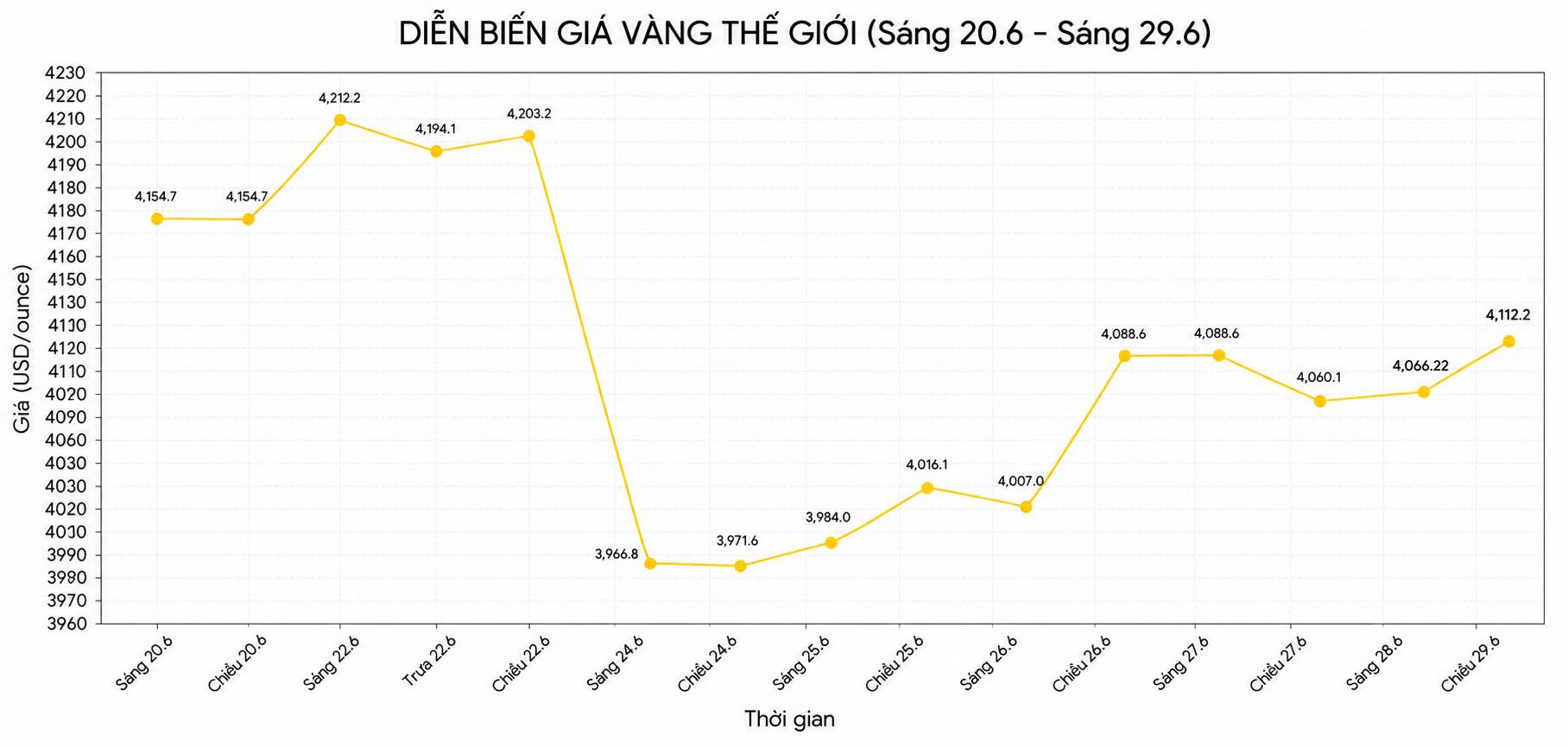
Gold prices fell to near the 4,000 USD/ounce mark after the US and Iran resumed attacks on each other in the Persian Gulf region, increasing pressure on the ceasefire agreement reached last week - a factor that once helped cool down energy prices and reduced expectations that the Fed would soon raise interest rates.
Spot gold prices at one point fell by 0.9% after increasing by 1.6% in the last session of last week. Meanwhile, oil prices rebounded after a Qatari crude oil tanker was hit by bullets in retaliatory attacks between the two sides, causing transportation through the Strait of Hormuz to continue to be disrupted.
However, according to Axios quoting unnamed US officials, Washington and Tehran later agreed to end the attacks and will meet in Doha on Tuesday to continue dialogue.
Mr. Justin Lin - an analyst at Global X ETFs Australia - said that the fact that gold prices still maintain above the 4,000 USD/ounce mark despite escalating tensions shows that bottom-fishing buying power has returned.
The fact that gold still holds above the 4,000 USD/ounce mark despite renewed tensions in the Strait of Hormuz shows that investors buying when prices fall are ready to protect this important support zone," he said.
New developments in the Middle East appeared right after the US announced the Personal Consumption Price Index (PCE) - an inflation measure prioritized by the Fed. Although inflation is still high, the published data is generally consistent with market forecasts.
After this report, US Treasury bond yields fell as the May PCE index only increased by 0.4% compared to the previous month, thereby partly easing pressure on the gold market.
Since the US and Israel launched airstrikes against Iran from the end of February, gold prices have fallen by about 23%. The sharp increase in energy prices during that period increased inflationary pressure and boosted expectations that central banks would maintain high interest rates for longer, unfavorably for gold - a non-rotating asset.
According to Mr. Justin Lin, gold may gradually become less sensitive to geopolitical fluctuations in the Middle East.
I believe that gold will become increasingly resistant to fluctuations in the Middle East, especially when this precious metal has wiped out all the increases from the beginning of the year and most short-term investors may have withdrawn from the market," he said.
As of 10:03 am Vietnam time, spot gold prices fell 0.37% to 4,066.22 USD/ounce. Silver prices fell 1.1% to 58.50 USD/ounce. Platinum and palladium prices also simultaneously went down, while the Bloomberg Dollar Spot Index increased slightly.