
Many investors seem to be falling into a state of confusion when determining the role of gold in their portfolios. However, for central banks, the position of this precious metal in foreign exchange reserves is becoming increasingly clear.
This is also the reason why many experts believe that the demand for buying gold from central banks will continue to be a pillar supporting the market in the coming time.
A new development is changing the perception of gold. Central banks not only accumulate gold, but also actively exploit the monetary value of this asset as an important source of liquidity. Gold is no longer simply a precious metal stored in warehouses, but is gradually restoring the position of a monetary asset in the context of an increasingly fragmented world.
This change shows a notable shift: Central banks hold gold not only for traditional reserve purposes, but because they see the real value of this asset in the current period of instability.
That value continues to be shaped by a major dominant factor, which is geopolitical instability.

A recent survey of central banks shows that geopolitical tensions are currently considered the biggest risk to the global economy this year, surpassing inflation and many other traditional concerns. This is an important detail, because it explains why central banks continue to buy gold even when prices are high.
In that context, gold becomes a tool to directly respond to risks. Unlike legal tender or government bonds, gold does not come with partner risks, cannot be blockaded, punished or controlled by foreign governments. As financial systems are increasingly used as geopolitical tools, the independence of gold becomes even more valuable.
This also explains why the demand for gold from central banks is stable and intentional. Many countries such as Poland, Uzbekistan or China are still continuously increasing gold reserves, even taking advantage of buying more during price adjustments.
These are not short-term speculative transactions, but strategic steps to strengthen financial resilience and reduce dependence on external shocks.
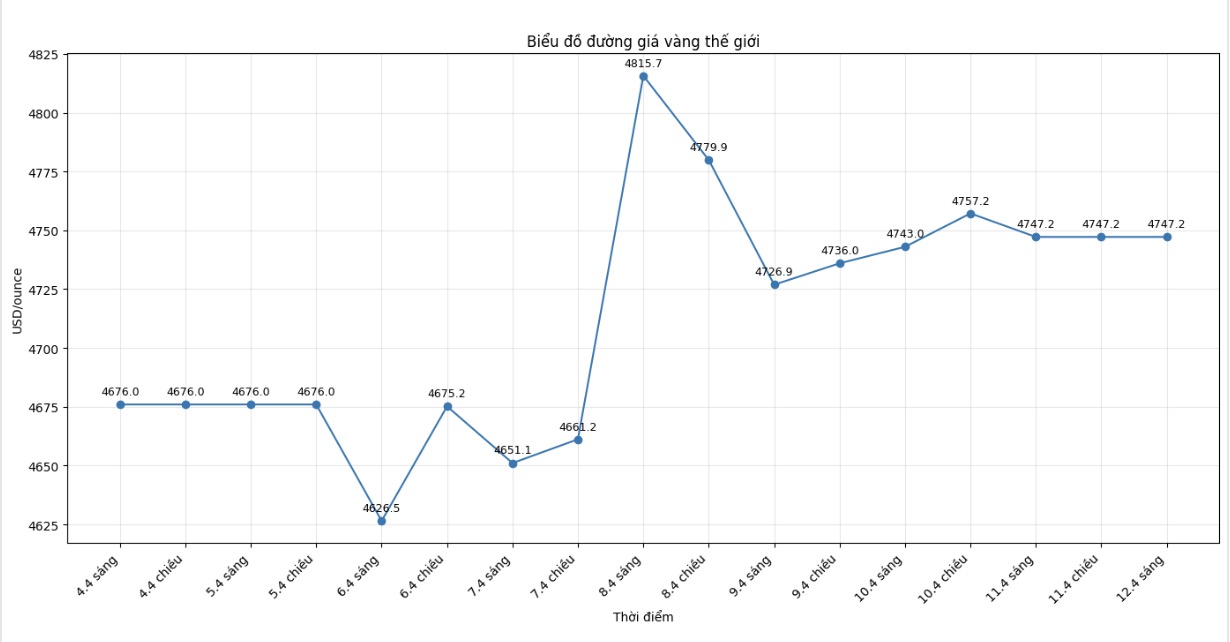
Not only changing in stockpiling activities, central banks are also changing the way they use gold. This precious metal is no longer an asset "lying in storage".
Last month, under the leadership of the Turkish Central Bank, gold was mobilized and used as a source of liquidity, thereby strengthening the role of gold as a monetary asset with practical functions, rather than just a place to store value.
For investors, this shift cannot be underestimated. While many individual investors are still focusing on short-term price volatility or interest rate expectations, central banks are preparing for a more complex and uncertain global picture.
Institutional investors are also starting to follow this trend, seeing gold as a portfolio fulcrum in the context of traditional diversification strategies increasingly under pressure.
Of course, that does not mean gold will avoid fluctuations in the short term. Gold prices will still be affected by interest rate expectations, exchange rate fluctuations or changes in speculative positions in the market. However, these short-term risks are taking place in a more solid long-term structural trend.
Therefore, although they may be disappointed with the price movements in each period, investors still need to look at a larger picture to correctly assess the true value of gold in the current volatile period.


