
In Saxo Bank's latest commodity analysis report, Ole Hansen - Head of Commodity Strategy - said that capital inflows into gold ETFs are returning, although the real yield of 10-year US Treasury bonds has increased to its highest level in more than two decades.
The real yield of 10-year US bonds increased to 2.63% in the last session of last week, 76 basis points higher than the beginning of 2026. Usually, increased real yields will put downward pressure on gold prices because precious metals do not generate cash flow like bonds.
However, recent developments show a notable difference. While real yields continue to rise, the amount of gold held by gold ETF funds has recovered after a period of decline in the first half of 2026.
According to Mr. Hansen, this is a sign that the reverse relationship, which is considered the law between gold and real yield, is becoming less clear.
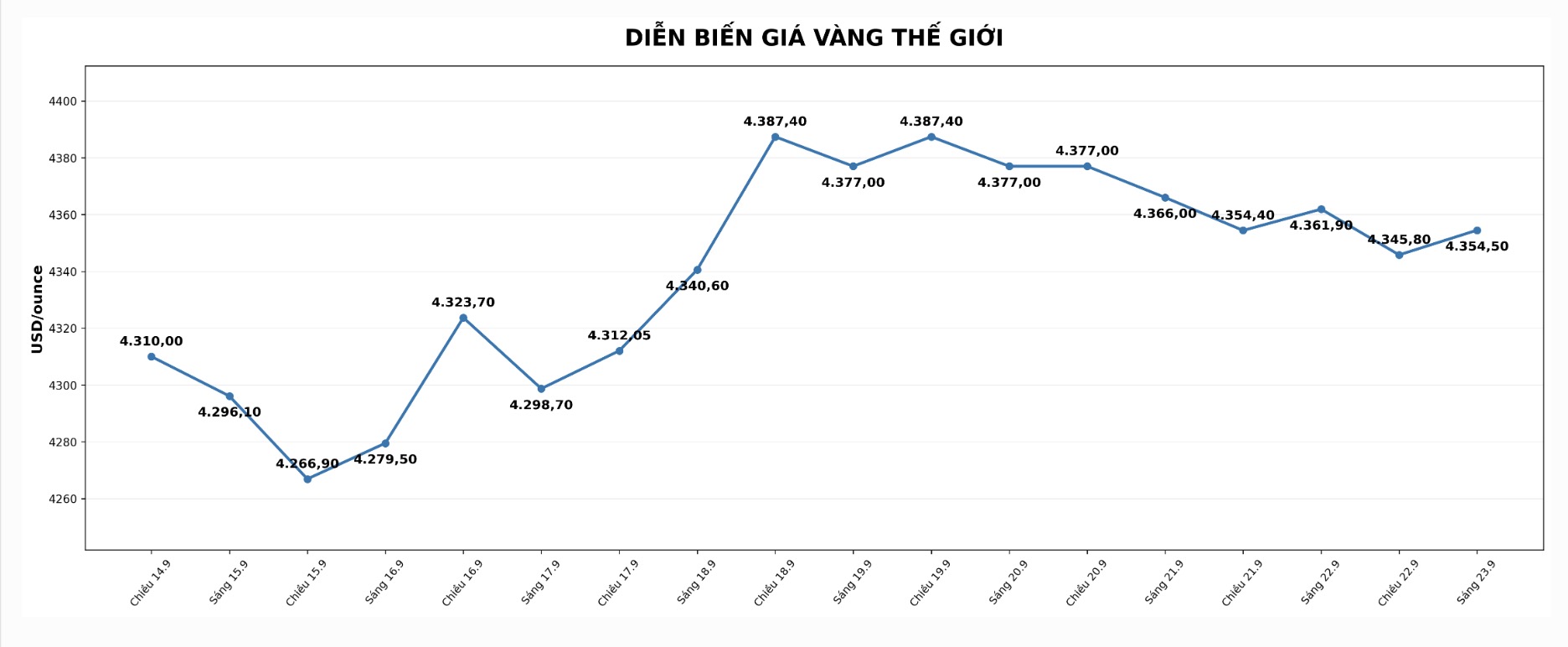
Gold is no longer under great pressure from interest rates
For many years, real yields have been considered one of the important factors determining gold price trends. When bond yields increase, investors tend to shift capital to profitable assets, causing the attractiveness of gold - an asset that does not pay interest or dividends - to decrease.
The 2022-2023 period is a typical example. When the US Federal Reserve (Fed) continuously increased interest rates to control inflation, real yields increased sharply. Gold ETF funds at that time recorded capital outflows due to investors reducing the proportion of holdings in precious metals.
However, gold prices still maintained relative stability thanks to strong buying power from central banks, helping to compensate for the amount of gold sold off from ETF funds.
Mr. Hansen said that in the previous period, gold prices were somewhat separated from the fluctuations of real yields, but the amount of gold held in ETFs still clearly reflects the impact of interest rates.
Currently, this trend is changing as even ETF capital flows no longer react strongly to high real yields.
Investors worry about fiscal risks
According to Saxo Bank experts, an important reason why gold maintains its appeal is the change in investors' perception of bond yields.
Instead of just seeing high yields as more attractive investment opportunities than gold, a part of investors are considering a sharp increase in long-term yields as a warning sign of fiscal pressure, public debt burden and government debt repayment costs.
In that context, gold is seen as an asset outside the traditional financial system, capable of protecting asset value when economic and financial risks increase.
Mr. Hansen believes that the current environment is quite different from the 2022-2023 period. Although interest rates are still high and the Fed's monetary policy is somewhat cautious, gold investment demand is still maintained thanks to the return of Western investors through ETFs, alongside strong buying power from Asia and central banks.
After the Fed's recent interest rate hike decision, gold prices did not record a strong negative reaction as many investors had expected. According to Mr. Hansen, this move shows that most of the impact from monetary policy has been reflected by the market before.
Currently, gold in ETF funds is said to have increased to the highest level in about 7 months, showing that long-term investment demand is still maintained despite pressure from yields.
Mr. Hansen continues to maintain a positive view on gold, saying that interest rate hikes may slow down the upward momentum of the precious metal but are not enough to reverse the trend as supporting factors such as central bank demand, investment cash flow and financial risk concerns still exist.
The article only updates the developments of the gold market and factors affecting the price of precious metals, not investment recommendations.


