
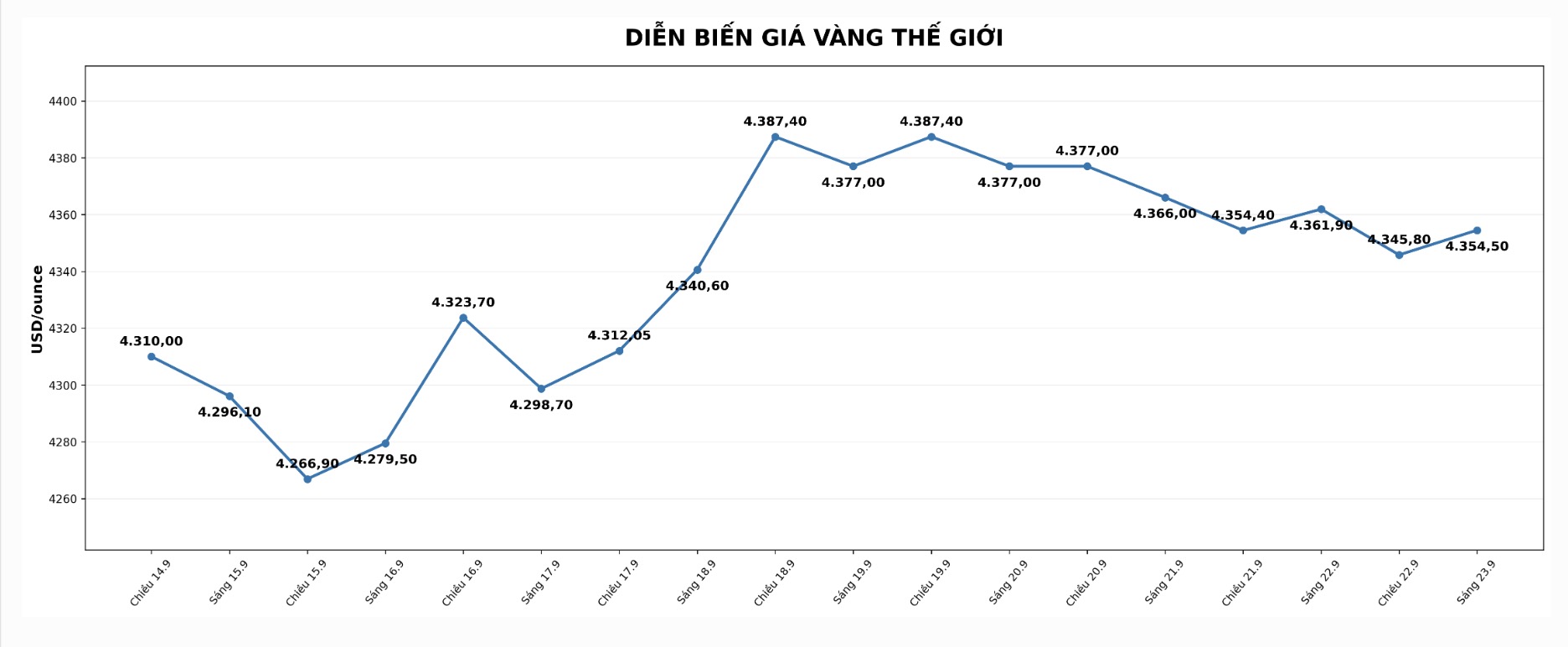
At the time of writing (8:00 AM on September 23rd), the spot world gold price was listed around 4,354.5 USD/ounce, down slightly 0.05% compared to the previous session. Spot silver price increased by 0.14%, to 67.05 USD/ounce.
The developments of gold are currently affected by many opposite factors. On the one hand, geopolitical instability still creates momentum for the demand to hold safe assets. However, the cooling of oil prices and the USD maintaining at a high level make the upward momentum of the precious metal unable to expand.
In the most recent trading session, the market continued to closely monitor developments in the Hormuz Strait area - which once increased concerns about the risk of disruption of global energy supply. However, concerns have somewhat eased as signs show that oil transportation activities may be restored.
Brent oil prices, after once falling below 98 USD/barrel, have stabilized around 99.25 USD/barrel. The cooling of energy prices helps reduce inflationary pressure in the short term, while weakening part of the safe-haven demand for gold.
Besides geopolitical factors, US monetary policy continues to be the focus of the market. Investors are assessing whether the interest rate hike in September by the US Federal Reserve (Fed) is just a single adjustment move or the beginning of a new period of tightening.
The yield on 10-year US government bonds is currently maintained around 5%, while the USD Index is fluctuating at a high level. These are two factors that put direct pressure on gold, because the precious metal does not generate yields and is often affected when the greenback appreciates.
On the stock market, US indices diễn biến phân hóa. The S&P 500 index remained almost unchanged, falling less than 0.1% to 7,764.64 points. The Dow Jones fell 185.14 points, equivalent to 0.4%, to 51,863.69 points. Conversely, the Nasdaq Composite increased 0.5% to a record high closing level of 27,244.28 points.
In the coming sessions, investors will focus on a series of US economic data, including the preliminary index of manufacturing and services in September, the number of unemployment claims, the report on durable goods orders in August and the consumer confidence index.
If data shows that the US economy still maintains strength, the USD and bond yields may continue to put pressure on gold prices. Conversely, weakening signs of the economy may open up opportunities for precious metals to recover.
Technically, gold prices are testing the resistance zone around 4,393-4,400 USD/ounce. If it crosses this area, the price may head towards the target zone of 4,480-4,500 USD/ounce. In the opposite direction, the near support zone is around 4,333 USD/ounce, followed by the 4,300 USD/ounce mark.
For silver, the upward trend is being maintained as the price approaches the resistance zone of 67.23-68 USD/ounce. If it passes this zone, the precious metal may head towards higher targets around 70 USD/ounce and 71 USD/ounce. Conversely, the nearest support zone is defined around 65.9 USD/ounce.
In the context that the market is still simultaneously affected by monetary policy, the strength of the USD, energy prices and geopolitical risks, gold and silver prices are forecast to continue to have strong fluctuations.
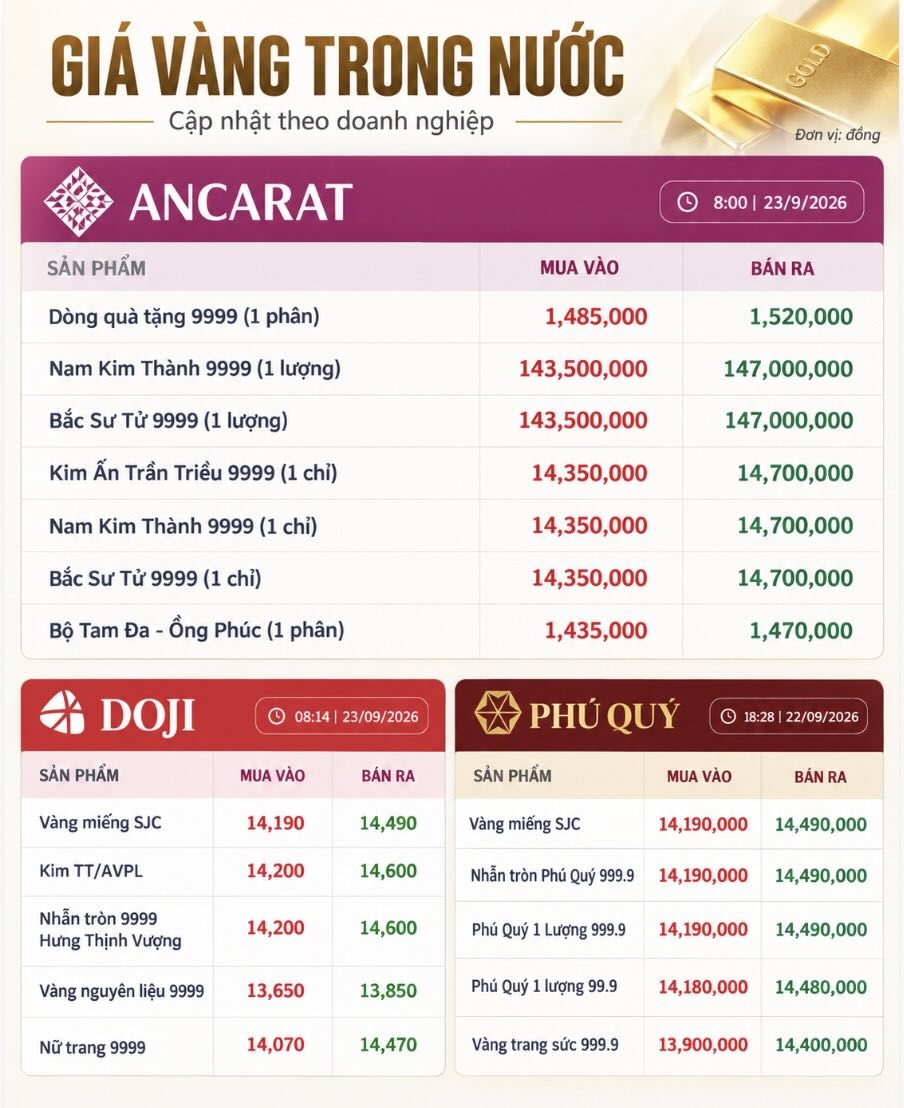
Update on domestic gold prices
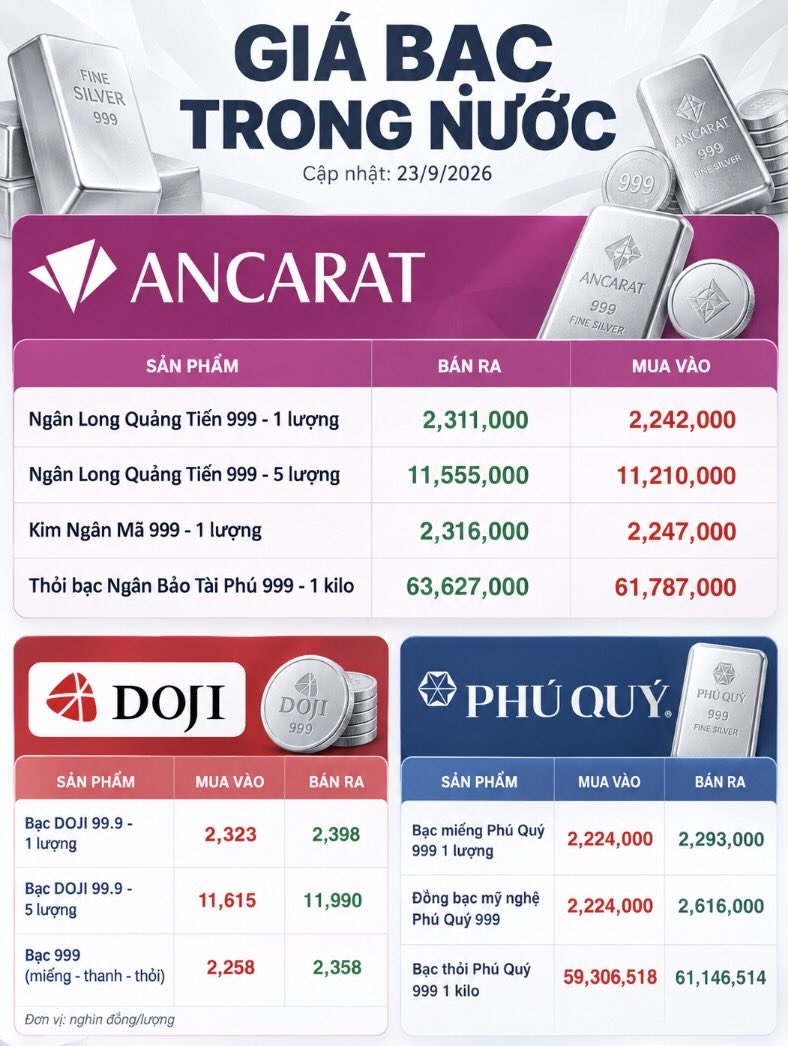
Update on domestic silver prices
The article only updates the developments of the gold market and factors affecting the price of precious metals, not investment recommendations.


