
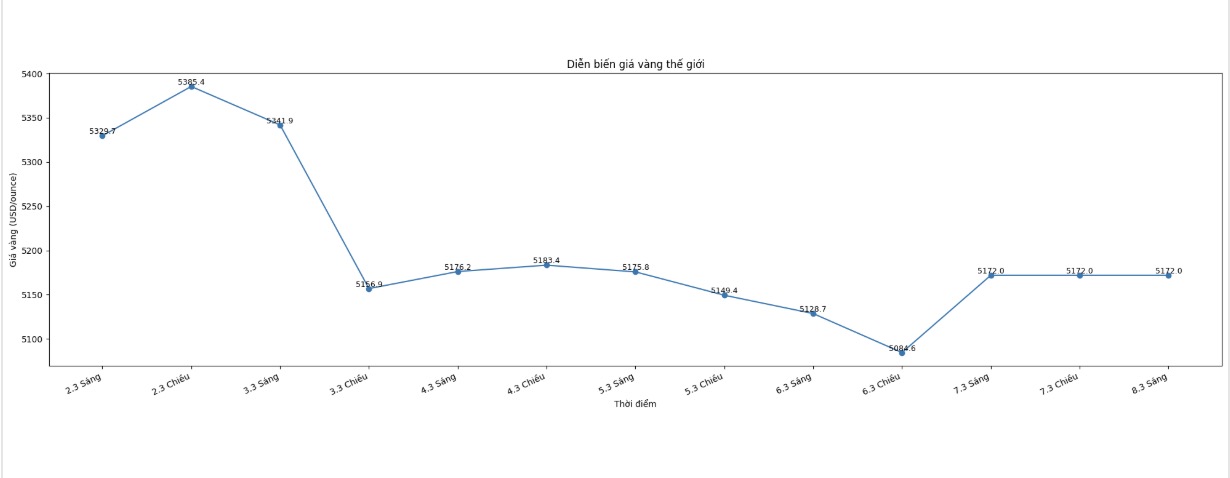
In the first session of last week, spot gold prices fluctuated around 5,408 USD/ounce, after a previous strong increase. However, market sentiment remained cautious as geopolitical instability in the Middle East region showed no signs of cooling down.
Tensions escalated significantly at the weekend when reports appeared of coordinated airstrikes between the US and Israel targeting targets in Iran. This development initially caused strong financial market volatility.
By Tuesday's session, gold prices unexpectedly fell nearly 4%, to about 5,075 USD/ounce.

During this period, gold faced difficulties in maintaining above the 5,200 USD/ounce mark, while the 5,311 USD/ounce zone became an important resistance level, limiting the recovery momentum.
However, buying pressure returned at the end of the week. By March 5, spot gold prices recovered to the 5,141 - 5,175 USD/ounce range, up about 1% in the session.
Technical analysts said that the price chart has formed the "Inverted Hammer" model near the support zone of 5,107 USD/ounce, which is often seen as a signal for the possibility of upward reversal.
Meanwhile, the 5,000 USD/ounce mark continues to play an important psychological threshold, as gold prices have maintained above this level for most of February and early March.
Considering the long-term context, the trend of gold is still positively assessed. In the past 12 months, the price of the precious metal has more than doubled, from about 2,624 USD/ounce to the current level, after setting a historical peak of 5,595.42 USD/ounce on January 29.
Foundation factors supporting the gold market remain, including strong buying activity by central banks, the weakening trend of the USD, and expectations that the US Federal Reserve (Fed) will cut interest rates this year.
According to the World Gold Council, global physical gold ETFs recorded a record capital inflow of 18.7 billion USD in January alone, showing that the investment demand of financial institutions is still very large, contributing to supporting gold prices whenever the market adjusts.
In March, many forecasts still maintained a cautious but optimistic view of the precious metal. Some experts believe that gold prices may approach the 5,500 USD/ounce mark, if buying demand from central banks continues to be maintained and the USD weakens.
Technically, the levels to be monitored include 5,380 USD/ounce and the 5,419 - 5,450 USD/ounce area in the upward direction. Conversely, if the gold price closes the day below 5,160 USD/ounce, the short-term uptrend may be weakened.
In addition, the fact that gold prices still maintain above the 20-day moving average is considered a positive signal for the market trend.
Developments in the past week once again show that the upward momentum of gold does not always run in a straight line, but the demand to hold precious metals in the market is still maintained at a steady level.


