
Gold price loses important support level
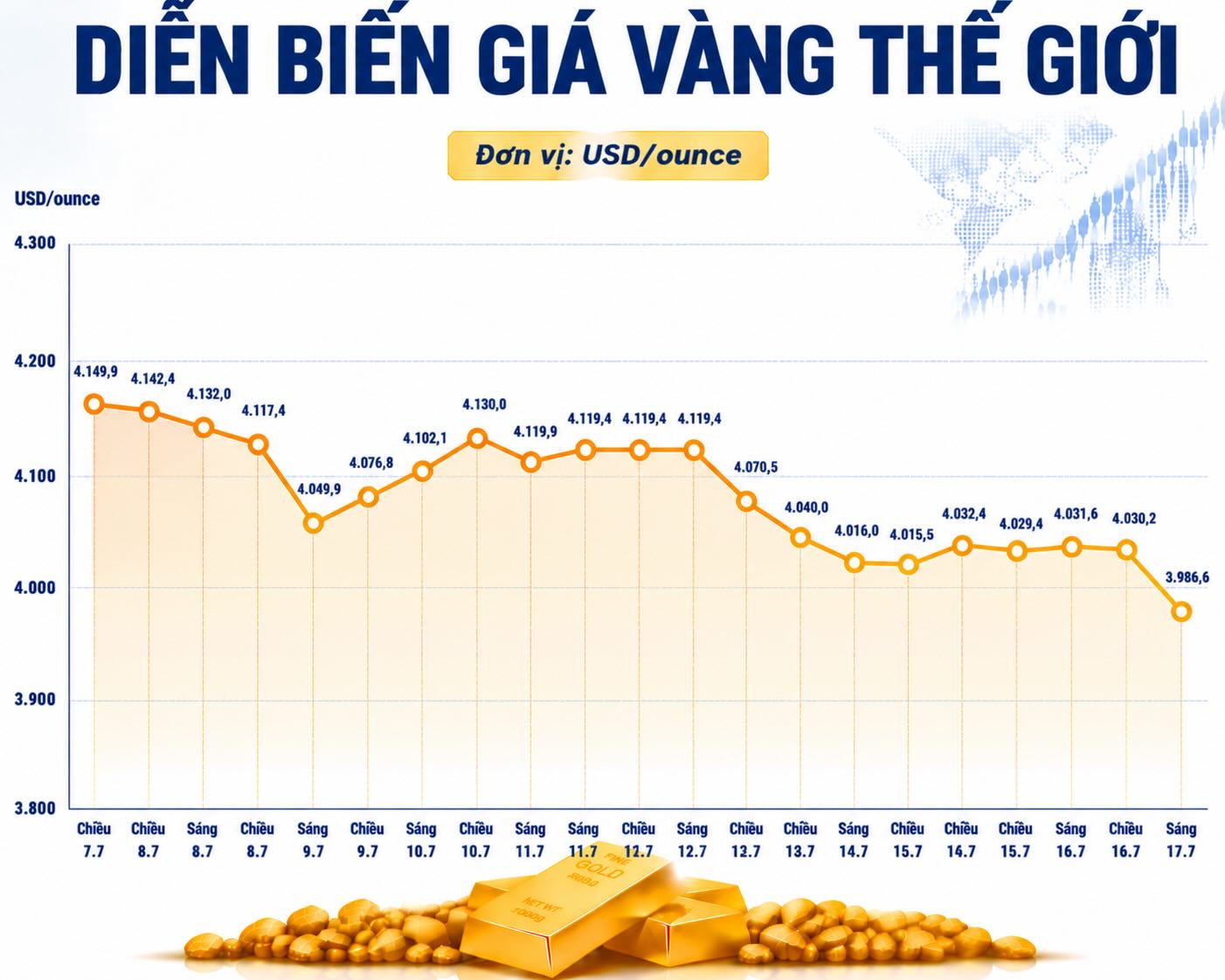
World gold prices fell sharply before the opening of the North American market, continuing to break through the important support zone of 4,000 USD/ounce. At one point, spot gold prices retreated to around 3,975 USD/ounce, down more than 2% during the day and prolonging the ongoing correction.
Silver prices are under stronger selling pressure, falling about 3.3% to nearly 55.9 USD/ounce. The fact that silver broke through the 57.15 USD/ounce support zone shows that cautious sentiment is covering the precious metals market.
The decline occurred even though US inflation figures released this week showed that price pressure had eased. The consumer price index in June fell 0.4%, while the producer price index fell 0.3%. Initially, this figure increased expectations that the US Federal Reserve (Fed) could shift to a softer stance in monetary policy management.
However, the positive response quickly weakened as new reports showed the US economy still maintained resilience. June retail sales increased 0.2%, as forecast. First-time jobless claims fell 8,000, to 208,000, the lowest in 10 weeks and lower than expected.
Consumer spending has not weakened significantly, causing investors to believe that the Fed does not need to move to easing soon. The market still leans towards the possibility that the Fed will keep interest rates unchanged at the meeting at the end of July, but the yield of 10-year US government bonds has returned to the 4.57% zone. The USD index also increased to nearly 100.54 points.
These factors reduce the attractiveness of gold, because non-profit precious metals often face disadvantages when bond yields and the USD rise together.
Many conflicting factors
The US consumer landscape is not entirely positive. Core retail sales, excluding cars, fell 0.2% in June, lower than forecast. However, the sales group used to calculate GDP increased by 0.5%, in line with expectations.
Meanwhile, the housing market continues to send weak signals. The US home pending contract index fell 5.4% in June, much stronger than the forecast of a 0.5% decrease. Compared to the same period last year, this index fell 0.3%.
Meanwhile, tensions in the Strait of Hormuz continue to create major fluctuations. Transportation has not been completely closed but faces military pressure and the risk of blockade. Brent oil prices rose to nearly 86 USD/barrel, while WTI oil is around 80.70 USD/barrel.
Geopolitical risks often support safe-haven demand. However, rising oil prices also raised concerns about inflation returning, pulling bond yields up and limiting gold's recovery.
Technically, the 3, 973-3, 959 USD/ounce zone is near support. If it falls 3, 959 USD/ounce, gold prices may fall back to 3, 942 USD, or even 3, 886 USD/ounce.
In the opposite direction, gold needs to exceed 4.044 USD/ounce to improve the short-term trend, before heading towards the 4.094-4.140 USD/ounce zone.
The article only provides reference information about market developments, not investment recommendations. Gold prices may fluctuate sharply due to changes in interest rates, exchange rates, economic and geopolitical situations. Investors need to be cautious, consider their financial capacity, level of risk acceptance and avoid chasing buying psychology when prices rise sharply.


