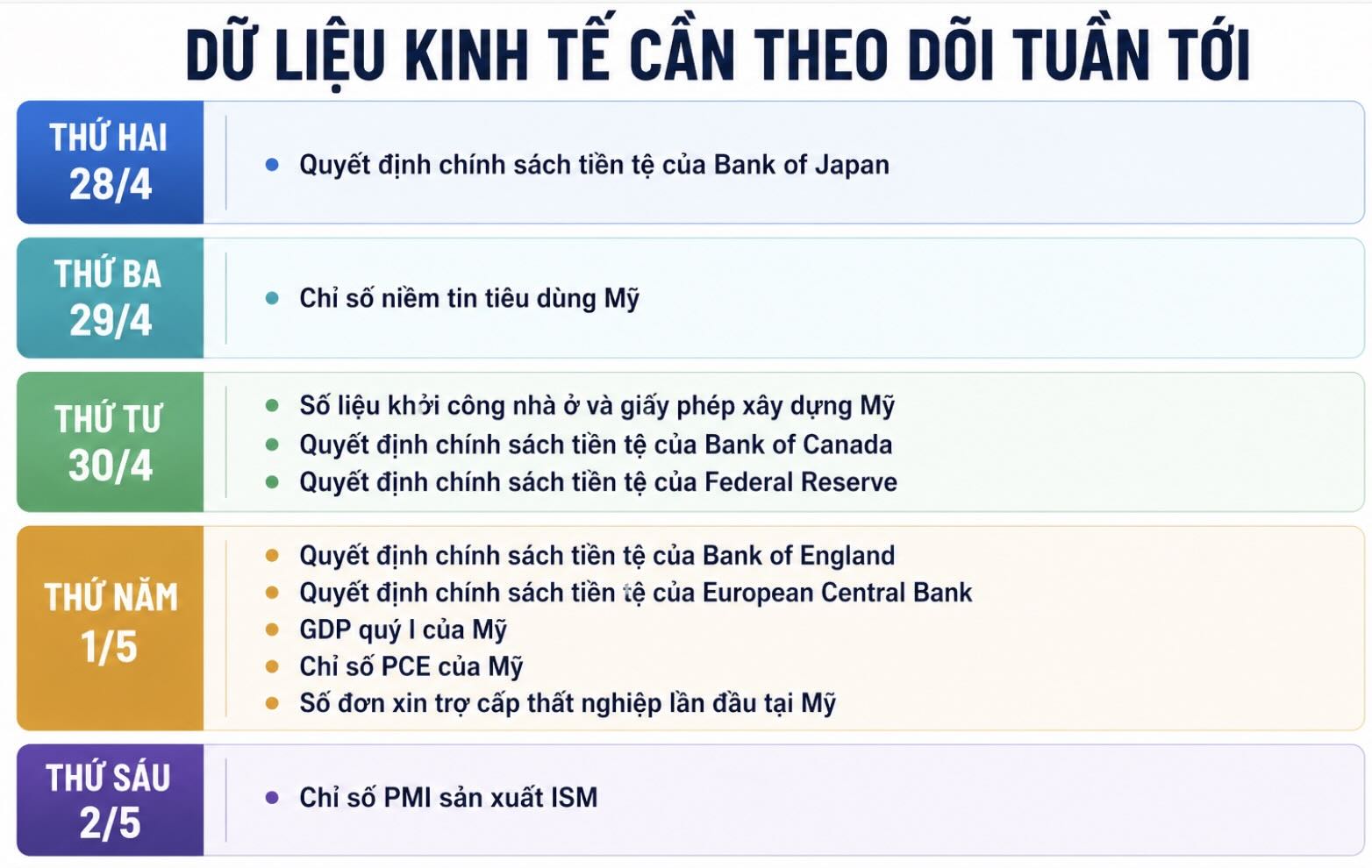
After many weeks of absence of major economic events, the gold market enters a new trading week with a dense data release schedule. The focus will be a series of monetary policy decisions from major central banks, especially the US Federal Reserve.
The most important factor for gold is still interest rate expectations. If the Fed signals continued caution, not rushing to cut interest rates due to persistent inflation, the USD and bond yields may increase again. At that time, gold will be under adjustment pressure because the opportunity cost of holding non-performing assets increases.
Conversely, if the Fed appears softer, or admits that economic growth is slowing down, gold prices may be supported. Investors will then increase expectations about the possibility of policy easing in the near future, thereby weakening the USD and pulling yields down.
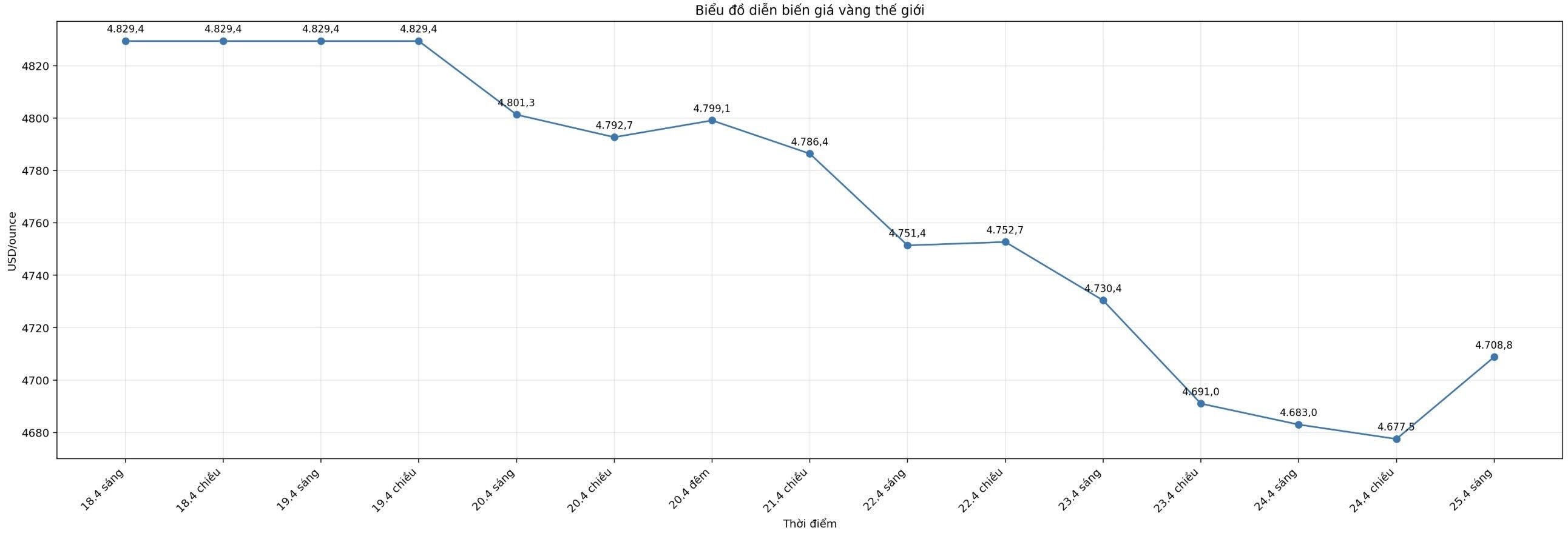
US data in the week will also play an important role. Consumer confidence index, number of start-up houses, construction permits, GDP, PCE and number of unemployment claims can all affect market perceptions of the health of the US economy. If data is weaker than forecast, gold may benefit from safe-haven demand and expectations of the Fed reducing interest rates. Conversely, strong data will strengthen the view that high interest rates will last longer, adversely affecting precious metals.
In which, PCE is the data that needs to be closely monitored because this is an inflation measure prioritized by the Fed. A PCE report higher than expected could cause the market to reduce bets on the scenario of interest rate cuts, creating downward pressure on gold. Conversely, a cooling down in PCE will be a positive signal for gold prices.
In addition to the Fed, decisions from the Banks of Japan, Canada, the UK and the ECB may also indirectly affect gold through exchange rate fluctuations and global risk appetite. If many central banks signal caution or growth concerns, safe-haven demand may increase.
In general, gold prices are likely to fluctuate strongly. The positive scenario for gold is that US data weakens and the Fed sends soft signals. Conversely, if inflation remains hot, growth is steady and the Fed maintains a tough stance, gold may face profit-taking or short-term adjustment pressure.
Below are detailed economic data schedules that need attention and may affect gold prices: