Expanding space exploration
In December 2025 alone, China carried out more than 10 flight missions, notably the successful launch of the 1st Missile Launcher carrying 9 satellites.
In May 2025, the Tianjin-2 probe began its 10-year journey "following the traces of stars". This is the first time China has conducted asteroid exploration and taken samples to bring back to Earth. This makes aerospace experts believe that China is transitioning from a country with a large aerospace industry to an aerospace superpower... China this year also completed the targets of lunar exploration "flying around, landing, bringing samples back" and Mars exploration "flying around, landing, surveying".
The Tiananmen-2 mission with the roadmap "to get star dust first, then comet exploration" is seen as a sign that China is catching up with the world's advanced level in the field of asteroid exploration. This is considered a premise for the goal of bringing Chinese people to set foot on the Moon before 2030.
Also in 2025, the number of launches of the Truong Chinh propulsion missile line exceeded 600. Notably, the Truong Chinh missile lines took 37 years to complete the first 100 launches, while the first 100 launches took only 22 months. To make the "ticket to space" cheaper, China is also developing reusable propulsion missile technology. In December, the Chu Tuoc - 3 and Truong Chinh-12A propulsion missiles respectively conducted first flight tests and recall tests, collecting key technical data in actual conditions.
Sending people to the moon - US worried about being overtaken
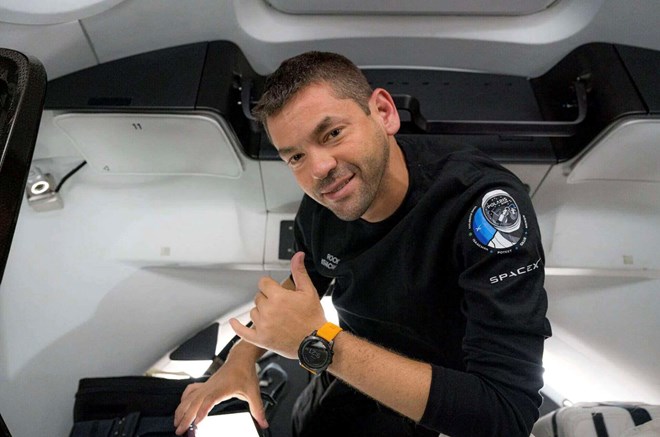
On December 18, Jared Isaacman, 42, when taking office as Director of NASA, announced that he would maintain the leading position of the US in space; focus on bringing Americans back to the Moon; build a long-term presence, as a foundation for the goal of flying the flag on Mars... On the same day, Mr. Trump signed an executive order on the US return to the Moon.
On the Chinese side, this country has repeatedly emphasized that it has no intention of participating in the space race with any country and also pursues "space dominance".
However, recently, at the Deep Space Exploration Laboratory in Hefei city, Anhui province, China, an experiment was conducted on the "on-site 3D lunar soil printing system" - which is the first step of testing the construction of a scientific research station on the Moon. This experiment is based on the principle of considering lunar soil as a building material, taking sunlight instead of furnaces. This solves the problem of taking advantage of the lunar resources to build a sustainable research station. In the experiment, scientists used parabolic mirrors to converge sunlight to create high temperatures above 1,300°C, and then transmit this convergence energy remotely through a soft fiber optic cable. Like an accurate "light pen", combined with 3D printing technology, printing lunar soil materials into solid bricks or components with customized shapes.
Professor Chu My Phuong said that the research team has successfully developed an automatic fiber-making device that adapts to high vacuum and low gravity environments on the Moon, opening up new possibilities for making on-site composite materials on the Moon surface in the future.
Incident Response
In 2025, the Chinese aerospace industry had to respond to the fact that the Shenzhou - 19 flight crew had to postpone the return time by 1 day due to strong winds.
Fearing that the Shenzhou-20 ship was hit by space debris, the Shenzhou-20 flight crew "changed tickets" to the Shenzhou-21 ship to return safely. After that, the unmanned Shenzhou-22 ship completed the first emergency launch of the Chinese manned aerospace program.
As a result, in 20 days, China completed the exchange of ships for astronauts to return and launch ships in emergency.