
Practice analytical thinking
Unlike the psychology of waiting for sample exams to guess the type of questions as before, students preparing for the Math exam need to start from firmly grasping knowledge. With the 2018 General Education program, the knowledge standards and requirements to be achieved are the most important "guideline" for the entire review process.
Sharing about this issue, Ms. Pham Thu Trang - Head of Mathematics Department, Galileo High School (Hanoi) - said that sticking to the program from the beginning not only helps students have a solid foundation but also creates flexible adaptability to all changes in the exam questions. When understanding the nature of knowledge, students will not be confused no matter what form the question is asked.
A noteworthy point in the trend of question design in recent years is the increase in questions related to practice. This is a type of question that does not simply require applying formulas, but requires students to read and understand data, analyze context and transform it into mathematics.
This part is becoming a challenge for many students. Many students face difficulties when facing long questions, containing a lot of practical information due to lack of data dissection skills.
Ms. Thu Trang recommends that during the review process, students need to practice analytical thinking more instead of memorizing how to solve samples. For the basic group of students, the priority is to consolidate basic knowledge, avoid losing points in core questions. Meanwhile, the group of good and excellent students needs to gradually increase the level of practice with high application problems to conquer the score milestone of 9, 10.
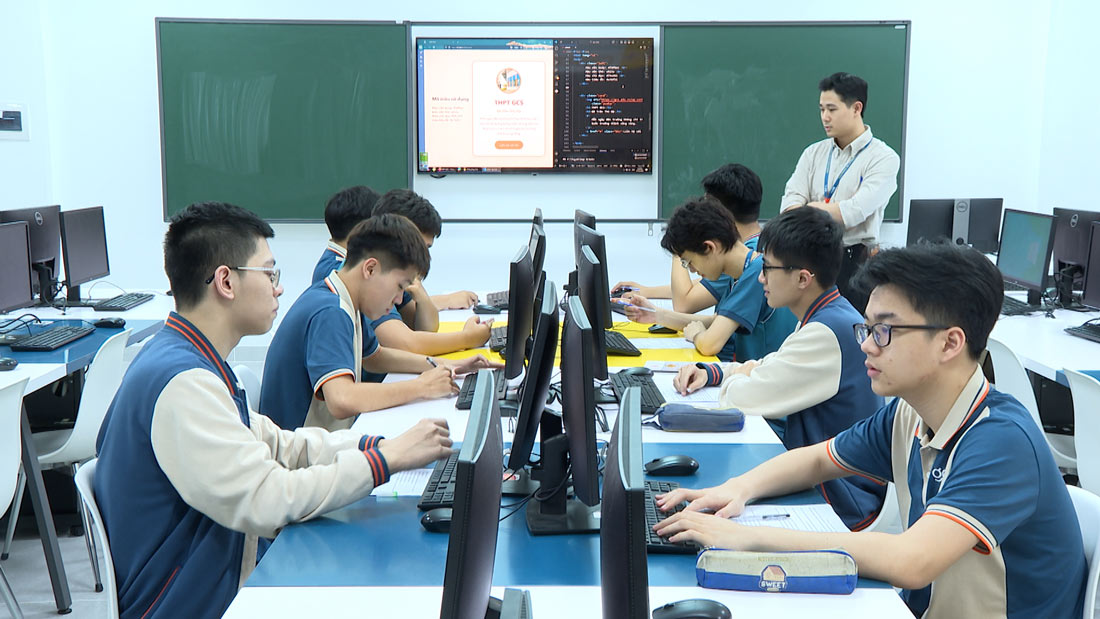
Deep understanding, solid training and flexible thinking
A common mistake of students is rushing into solving many questions but lacking a clear roadmap. According to Ms. Thu Trang, effective Math exam preparation needs to follow each step: starting from firmly grasping basic question types, then switching to general practice and finally practicing complete questions within the time limit.
Practicing questions according to time pressure is a particularly important step. This is not only a way to test knowledge but also helps students form skills to allocate time reasonably, avoiding the situation of getting bogged down in difficult questions and missing out on easy questions.
Psychology when doing the test also significantly determines the exam results. A calm student who knows how to read the questions carefully and analyze them correctly often has a much greater advantage than rushing to apply the formula immediately.
In the context of exam questions increasingly aimed at assessing actual competence, Mathematics is no longer a race of memorizing formulas or guessing questions correctly. To achieve high results in the 2026 high school graduation exam, students need to change their learning methods: deep understanding, solid practice and flexible thinking in all types of questions.
In addition to getting acquainted with previous year's exam questions, students should also practice more expanded types of questions and practical math problems to increase the reflex to handle situations.


