
Few people thought that a small online bookstore could disrupt the traditional publishing industry - a field that has existed stably for hundreds of years.
However, Amazon's story is clear proof of that.
Journalist Brad Stone's book "The Everything Store" recounts Amazon's impressive journey to rise - from a modest startup to a "giant" in both retail and cloud computing.
Behind that journey is Jeff Bezos' different vision and bold decisions.
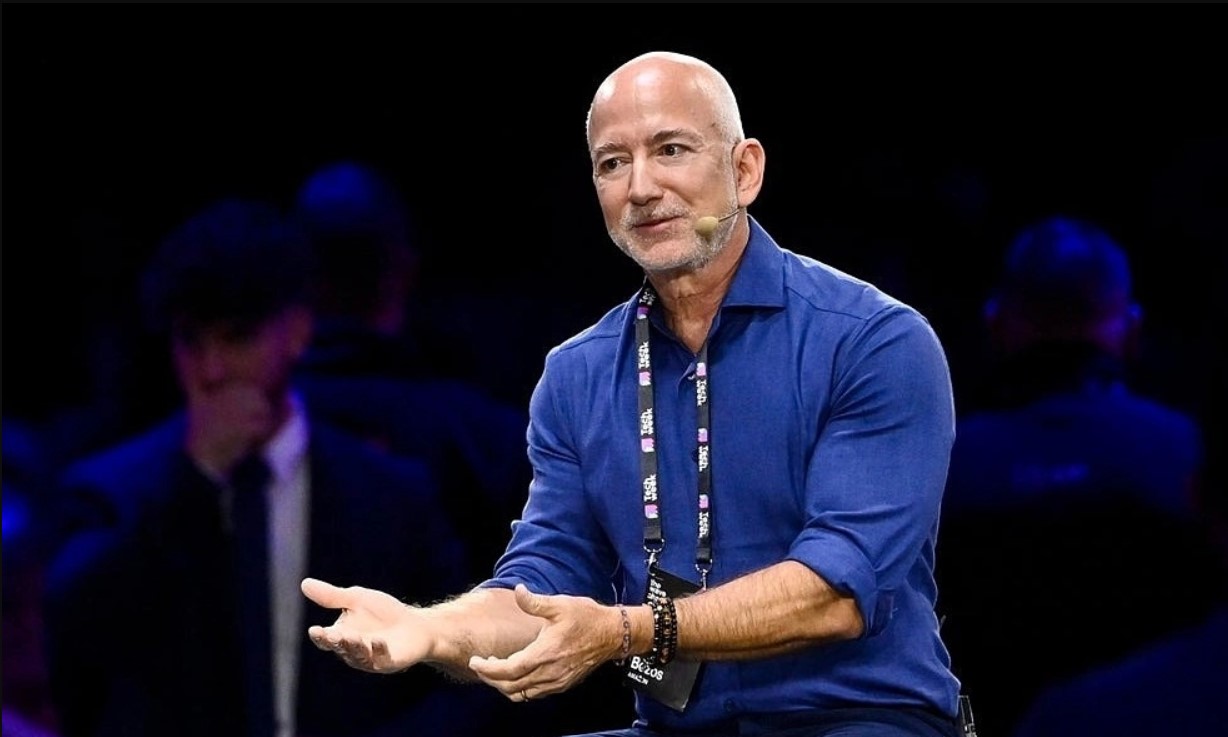
In 1994, when e-commerce was still a concept unfamiliar to most people, Jeff Bezos - then just over 30 years old - left his stable job at a hedge fund to pursue an online business idea.
He started with an online bookstore located right in his garage in Seattle. At that time, this choice was no different from a gamble: the market did not exist, consumer habits had not yet formed, and trust in online shopping was almost zero.
But Bezos did not simply want to sell books. From the beginning, he positioned Amazon as the "largest bookstore on Earth" - where users can find any book they need.
That ambition has shaped the company's development: constantly expanding product portfolios, optimizing customer experience and investing heavily in technology.
Three decades have passed, the small bookstore of the past has become a global empire. Jeff Bezos has been in the group of the richest people in the world for many years, with estimated assets of about 215 billion USD (about 5.6 million billion VND) in March 2025, according to Forbes.
But the number of assets is only a part; what is more noteworthy is how Amazon has changed a whole industry.
One of the most important turning points took place in 2007, when Amazon launched the Amazon Kindle e-reader.
With a price of 399 USD (about 10 million VND), Kindle is not a cheap device, but it brings a completely new experience. The E-Ink screen helps users read for a long time without eye strain, almost like reading on real paper - a big difference compared to electronic devices at that time.

More importantly, Kindle does not operate independently. It is closely integrated with the Kindle Store - a huge e-book store, allowing users to buy and download books in just seconds.
As soon as it was launched, this platform had tens of thousands of titles, creating a superior advantage over competitors. Previous products like Sony Librie were quickly overshadowed because they did not have a similar strong content ecosystem.
If Kindle opens the door to reading digital books, then the Kindle Direct Publishing (KDP) platform is the tool that helps Amazon completely change the way books are published.
Launched in 2007, KDP allows anyone to publish their own books on Amazon without going through traditional publishers. This means that the barrier to joining the industry is almost removed.
Previously, an author who wanted to bring books to the market had to go through many steps: finding a publisher, waiting for approval, editing, printing and distribution. With KDP, the entire process is simplified to just a few online operations. The author can reach readers around the world, while retaining most of the revenue instead of sharing with many intermediaries.
The influence of this model is increasing rapidly. By 2026, KDP is estimated to account for about 68% of global independent e-book sales.
Not stopping there, Amazon also controls most of the e-book market and a significant part of printed book sales in the US.
This makes Amazon one of the most influential forces in the modern publishing industry.
It can be seen that from a small garage in Seattle to global dominance, Amazon's journey is proof of the power of long-term vision and continuous innovation.
And above all, it's the story of how a seemingly simple idea - selling books online - can completely change how people write, publish and read books in the digital age.


