
One bridge, two spans of development
Only separated by a Cua Dai bridge, but the two banks of the Thu Bon River are carrying two very different development spans. On the other side is Hoi An Dong ward with Cam Thanh coconut village bustling with tourists, basket boats, restaurants, services, with tourism service revenue of hundreds of billions of VND each year. On this side is Duy Nghia commune - a land with sea, rivers, craft villages, and historical depth - but still without worthy tourism products.
That disparity is clearly shown in the story of Mr. Huynh Dac Hung, a fisherman in Duy Nghia. After many years of sticking to the sea, he understands the situation of "one meal is good, one meal is bad" when making a living depends on water and weather. Now he and his two sons go to Cam Thanh to row basket boats to serve tourists. The work is hard but steady, giving a more stable income than the fishing profession.
Going to Cam Thanh to roam basket boats, on days when there are customers, there is money. I just hope Duy Nghia will also have tourism and services in the future so that people can do it right in their hometown," Mr. Hung said.
That desire is not only of his family. That is the common expectation of many Duy Nghia people before the still dormant potential of the southern Cua Dai land, especially the space of Trung Phuong ancient port.
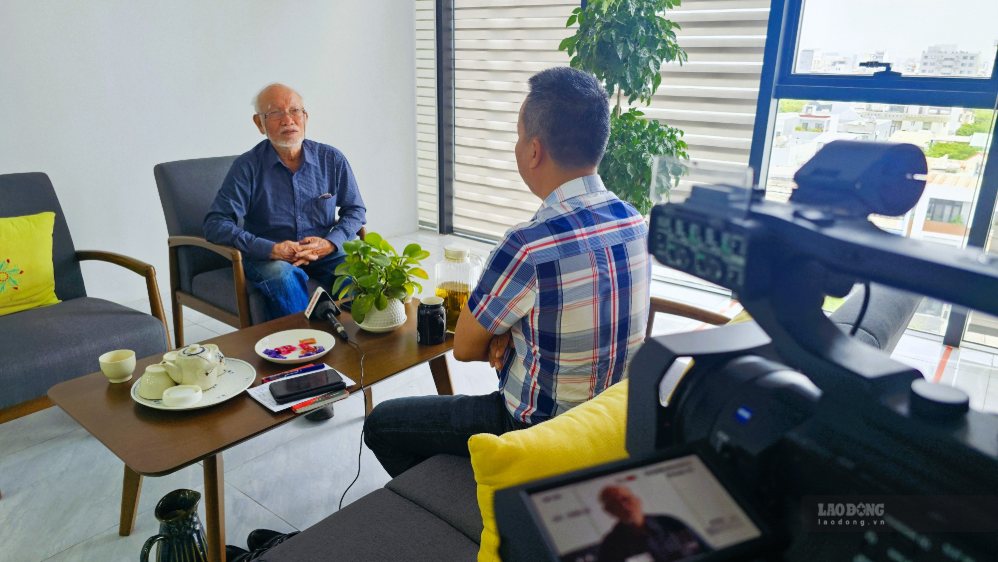
According to researcher Bui Van Tieng - Chairman of the Da Nang City Historical Science Association, Trung Phuong is not just an ordinary coastal village. The location in the lower reaches of the Thu Bon River, near Cua Dai - Dai Chiem, connecting with Truong Giang, Tra Kieu, Dong Duong, My Son and the East Sea has created a special advantage for this place in the history of trade. Many documents suggest that Trung Phuong was once a connecting point between the coastal region and the inland, between the ancient Champa centers and the international maritime route.
The remaining traces such as the ancient well, Thanh Luong pagoda, Cham bricks, anchors, ceramics, memories of Bau boats, Trung Phuong - Cua Khe fish sauce profession, An Luong fish market... are suggesting a sea heritage space that is both tangible and intangible.
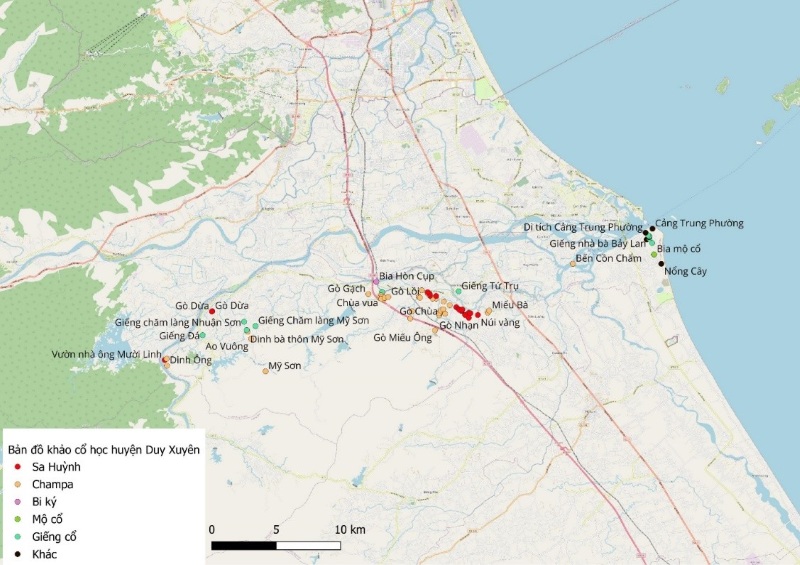
Mr. Cao Tri Dung - Chairman of Da Nang Tourism Association acknowledged that this is Duy Nghia's distinct advantage: not copying Hoi An, nor repeating the Cam Thanh model, but can develop towards archaeological tourism, marine cultural tourism, experiencing craft villages, coastal beliefs and community life.
Turning heritage into sustainable livelihood
At An Luong fish market, sea trips ashore at 4-5 am, fresh seafood is quickly taken to cities and villages. If organized methodically, this is not only a people's market but can become an experience point: watching the early market, enjoying seafood, listening to seafood stories, feeling the rhythm of life of Cua Dai residents.
What the government and people of Duy Nghia expect is not simply to build a new tourist attraction. Deeper down, it is to restore the values of Trung Phuong to create sustainable livelihoods. Secretary of the Party Committee of Duy Nghia commune Nguyen Van Hoa said that the local aspiration is to preserve and promote the value of Trung Phuong ancient port, not only to develop tourism, but more importantly to create jobs for people. To do so, it is necessary to have methodical research, appropriate planning, community participation and the companionship of the city, scientists, and businesses.
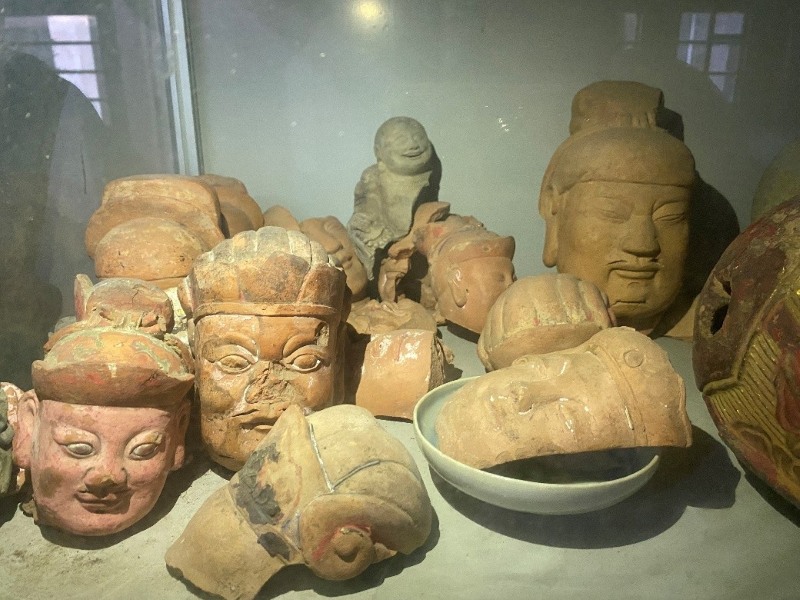
To truly revive Trung Phuong, Duy Nghia needs to start with fundamental tasks: continue surveying, excavating, digitizing data, mapping heritage; inventorying ancient wells, Thanh Luong Pagoda, Ong Mausoleum, ancient tombs, steles, imperial decrees, and artifacts still preserved among the people. On that basis, the locality can build an exhibition house or "real-scene museum" about the ancient port city, introducing the history of trading ports, seafood industry, fish sauce industry, the memory of Bau boats and the life of coastal residents.
In parallel, it is necessary to form a coastal heritage tourist route south of Da Nang, connecting Trung Phuong with Hoi An, Cu Lao Cham, Tra Kieu, Dong Duong, My Son. People must be placed in the center: trained in providing services, interpretation, homestay, selling local products, participating in heritage protection and benefiting from heritage.


